
TL;DR:
- Drain relining repairs pipes internally without excavation, saving time and property damage.
- Proper diagnosis with CCTV surveys is essential before opting for relining.
- Relining is cost-effective, durable, and suitable for most residential drain issues except full collapses.
If your drains keep blocking, you might assume the problem is what went down them. Grease, hair, debris. So you pour in a chemical cleaner, call someone to unblock it, and move on. A few months later, it happens again. The real culprit is often structural damage inside the pipe itself, and no amount of unblocking will fix a crack or a root intrusion. Drain relining is the solution most homeowners never hear about until they've already spent a small fortune on repeated call-outs. This article explains exactly what it is, when you need it, and how to find the right specialist.
Table of Contents
- What is drain relining and how does it work?
- When is drain relining the right solution?
- Benefits of drain relining for homeowners in the South of England
- How to choose a drain relining specialist
- A professional perspective on the role of drain relining
- Get expert help with drain relining in the South of England
- Frequently asked questions
Key Takeaways
| Point | Details |
|---|---|
| Relining restores drains without digging | Most relining projects avoid the mess and cost of excavation. |
| Suits common drainage problems | Cracked, leaking, or root-damaged pipes are ideal cases for relining. |
| Saves time and money long-term | Relinings frequently cost less over time and reduce repeat blockages. |
| Choose specialists for lasting results | Professional CCTV surveys and reputable experts ensure effective, durable work. |
| Best for older homes in the South | Relining is especially valuable for properties with mature drainage systems and established gardens. |
What is drain relining and how does it work?
Drain relining is a repair method that restores a damaged pipe from the inside, without digging up your garden, driveway, or flooring. Instead of removing the old pipe entirely, engineers insert a flexible resin-coated liner into the existing pipe. Once it's in position, the resin is cured (hardened) to form a smooth, seamless new interior surface. The result is essentially a pipe within a pipe, structurally sound and resistant to future damage.
As official CIPP lining guidance from British Water confirms, relining restores damaged pipes without excavation, making it one of the most practical advances in residential drainage repair. CIPP stands for Cured-in-Place Pipe, which is the technical name for this process.
Here is what a professional drain relining job looks like, step by step:
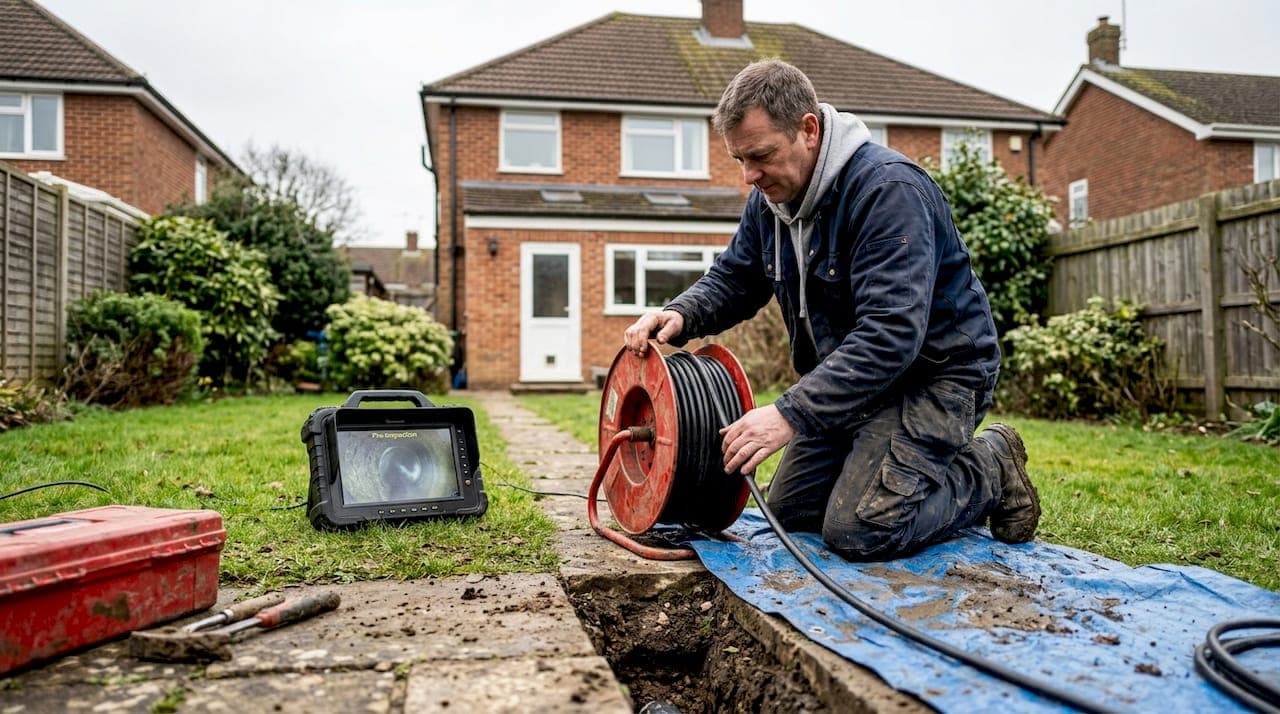
- CCTV inspection — An engineer sends a camera through the drain to identify cracks, root ingress, corrosion, or displaced joints.
- High-pressure jetting — The pipe is thoroughly cleaned to remove debris and ensure the liner bonds properly to the pipe wall.
- Liner preparation — A felt or fibreglass liner is saturated with epoxy or polyester resin.
- Liner insertion — The liner is fed into the pipe and positioned precisely over the damaged section or along the full pipe run.
- Curing — Hot water, steam, or UV light is used to harden the resin in place.
- Final CCTV check — A second camera pass confirms the liner is correctly set and the pipe is clear.
Relining is typically used for cracked or fractured pipes, pipes suffering root intrusion from nearby trees, pipes with leaking joints, and older clay or cast iron pipes that have deteriorated over time. It works on pipes ranging from 75mm to 900mm in diameter, covering most domestic drainage systems.
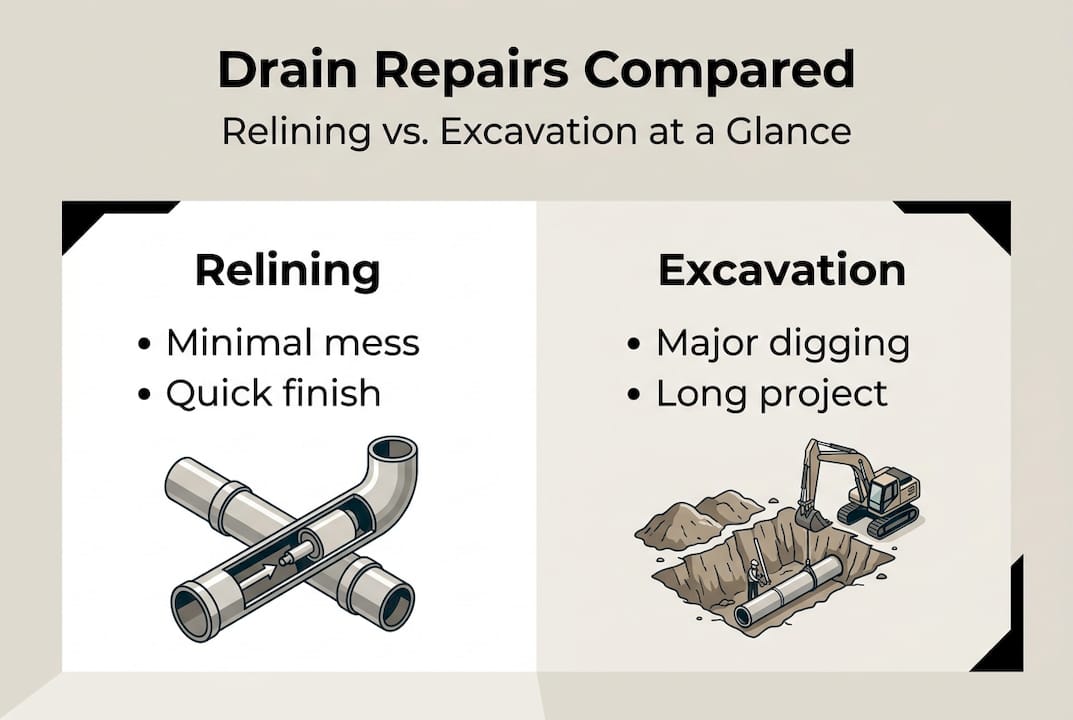
| Feature | Drain relining | Traditional excavation |
|---|---|---|
| Disruption to property | Minimal | Significant |
| Typical job duration | Hours to one day | Several days |
| Garden or driveway damage | None | Likely |
| Suitable for complex layouts | Yes | Difficult |
| Long-term durability | 50+ years | Depends on new pipe |
You can explore the full range of drainage repair services available to homeowners in the South of England if you want to understand which option fits your situation.
Pro Tip: Before hiring any contractor, ask whether they carry out a CCTV survey before quoting. If they recommend relining without first inspecting the pipe, walk away.
When is drain relining the right solution?
Relining is not a universal fix. It works brilliantly in the right circumstances, but it has limits. Understanding those limits helps you avoid paying for a repair that won't hold.
According to when relining is appropriate guidance from Homeserve, relining suits minor fractures but is not viable for completely collapsed pipes. If a pipe has lost its structural shape entirely, there is nothing for the liner to bond to. In those cases, full pipe replacement is the only option.
Here is a practical comparison to help you decide:
| Situation | Relining suitable? | Replacement needed? |
|---|---|---|
| Hairline cracks or fractures | Yes | No |
| Root intrusion (pipe intact) | Yes | No |
| Leaking joints | Yes | No |
| Partial collapse | Sometimes | Often |
| Full pipe collapse | No | Yes |
| Severe misalignment | No | Yes |
| Corroded but structurally sound | Yes | No |
Warning signs that suggest relining could be the right answer include slow-draining water in multiple fixtures, recurring blockages despite regular clearing, damp patches near drain runs, and subsidence near drain lines. These often point to structural pipe damage rather than a simple blockage.
Red flags that suggest relining may not be enough include visible sinkholes above drain routes, sewage smells that persist after unblocking, and ground movement near the property foundations. These warrant a full structural survey first.
Before any inspection, it helps to ask the right questions:
- Has the drain been inspected with a CCTV camera before?
- What is the pipe material and approximate age?
- Is the damage localised or spread across the full run?
- Are there tree roots within three metres of the drain?
- Has there been any recent ground movement or building work nearby?
A professional CCTV drain inspection gives you definitive answers to all of these, and removes the guesswork entirely. If you've already had repeated blockages, drain unblocking solutions can provide short-term relief while you arrange a proper survey.
Benefits of drain relining for homeowners in the South of England
For homeowners across Hampshire, Surrey, Berkshire, and the wider South of England, drain relining offers some particularly relevant advantages. Many properties in this region are older, with Victorian-era clay drainage systems that were never designed to cope with modern household demand. Relining is ideally suited to these complex, aging layouts.
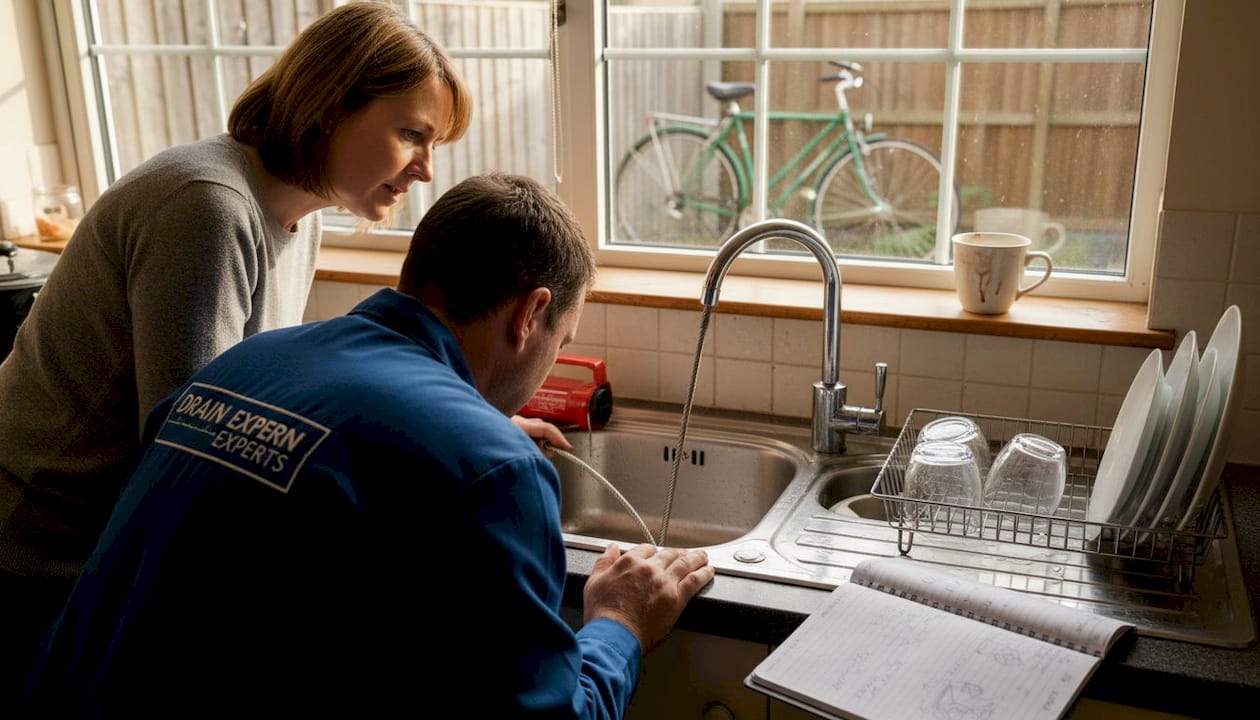
As drain relining benefits research from UKDN Waterflow highlights, relining is less disruptive and often more cost-effective than excavation-based repairs. For homes with mature gardens, block-paved driveways, or tiled paths, that matters enormously.
Here is what relining typically delivers for residential properties:
- No excavation — Your garden, patio, or driveway stays intact throughout the repair.
- Faster completion — Most domestic relining jobs are finished within a single day.
- Longer lifespan — A correctly installed liner can last 50 years or more.
- Blockage resistance — The smooth resin interior reduces the likelihood of future build-up.
- Leak prevention — Sealed joints and repaired cracks stop groundwater infiltration and sewage leaks.
- Structural reinforcement — The liner adds rigidity to pipes that have weakened over time.
Statistic: Relining typically costs 30 to 40 per cent less than full pipe replacement for equivalent lengths of residential drain, according to industry estimates from drainage specialists across the UK.
For older properties with complex underground layouts, the savings are often even greater. Excavating around Victorian drainage systems frequently uncovers secondary problems that push costs up sharply. Relining avoids that risk entirely.
Pro Tip: After relining, avoid pouring cooking fat or oil down the drain. Even with a smooth new interior, fat accumulation is the single biggest cause of recurring blockages. Flush drains monthly with hot water to maintain flow.
You can find practical drainage maintenance advice on the 777 Drains blog, and if you want to understand how local drainage expertise applies to your specific area, that resource covers regional considerations in detail.
How to choose a drain relining specialist
Not every drainage company offering relining has the equipment or experience to do it properly. Choosing the wrong contractor can mean a liner that fails within a few years, or worse, a repair that masks a more serious problem.
A trustworthy specialist will always begin with a thorough assessment. As choosing a drain relining specialist guidance from Checkatrade confirms, a reputable drain service will always conduct a CCTV survey before recommending relining. Any company that quotes without first inspecting the pipe is guessing, and guessing with your money.
Here is what to look for when evaluating a specialist:
- CCTV survey as standard — This is non-negotiable. No survey means no accurate diagnosis.
- Written report with footage — You should receive a copy of the camera survey, not just a verbal summary.
- Clear explanation of options — A good engineer explains why relining is recommended over replacement, not just what they plan to do.
- Evidence of previous work — Ask for case studies or reviews from similar residential jobs in your area.
- Warranty on the liner — Reputable installers offer guarantees of at least 10 years on the completed repair.
- Accreditation and insurance — Check for membership of trade bodies and valid public liability insurance.
Red flags include pressure to book immediately, vague quotes with no breakdown of costs, and reluctance to share camera footage. If an engineer seems unwilling to explain the diagnosis clearly, that is a problem.
"A CCTV survey is the foundation of any honest drain repair recommendation. Without it, you're relying on guesswork rather than evidence." — Industry guidance, Checkatrade drainage advice.
For professional drainage services that include full survey reports and transparent pricing, it's worth working with specialists who treat the inspection as the starting point, not an optional extra.
A professional perspective on the role of drain relining
Here is something the drainage industry rarely says out loud: most repeat call-outs are entirely avoidable. Homeowners spend years paying for blockage clearances when a single relining job would have solved the problem permanently. The focus on unblocking rather than repairing is partly habit, partly cost perception, and partly because relining isn't as well understood as it should be.
From our experience, the homeowners who get the best long-term outcomes are the ones who treat drainage as infrastructure, not an inconvenience to manage. A cracked pipe doesn't fix itself. Root intrusion doesn't stop because you've cleared the blockage. These problems compound over time, and the longer they're left, the more expensive the eventual repair becomes.
Relining is particularly underused in older southern England properties, where the original clay pipework is often still in place after 80 or 100 years. That pipework has served its time. Investing in a liner now is genuinely cheaper and less stressful than waiting for a collapse. You can find more expert drainage insights on our blog if you want to understand the full picture.
Get expert help with drain relining in the South of England
If recurring drain problems have been a source of frustration, it's time to address the cause rather than the symptom. 777 Drains provides full drain relining services across the South of England, backed by CCTV surveys, experienced local engineers, and transparent pricing.

Whether you need a diagnostic survey, a one-off repair, or a long-term maintenance plan, our team is ready to help. We offer fast response times and clear advice with no pressure to commit before you understand your options. Find your drainage expert and book a survey today, or visit 24/7 drainage support for immediate assistance. Protecting your home's drainage system starts with a single inspection.
Frequently asked questions
How long does drain relining last?
A properly relined drain can last 50 years or more, often matching or exceeding the lifespan of the original pipe. CIPP lining offers long durability when installed correctly by a qualified specialist.
Can all types of drains be relined?
Most household drains can be relined successfully, but fully collapsed pipes or severely misshapen sections may require full replacement rather than lining.
Is drain relining messy or disruptive?
Relining is less disruptive than digging and is typically completed within a single day, with no damage to gardens, driveways, or paved surfaces.
How much does drain relining cost?
Costs depend on pipe length and access, but relining is often more cost-effective than full replacement for most residential drains, typically saving 30 to 40 per cent compared to excavation-based repairs.