
Blocked drains are frustrating enough. But when the same problem keeps coming back, or you simply cannot work out where the issue lies, the costs and stress can spiral fast. Many homeowners assume that finding an underground drainage fault means tearing up the garden or lifting floorboards. That is rarely true. Drain tracing is a professional technique that locates, maps, and diagnoses your drainage system without unnecessary destruction. This guide explains what drain tracing is, how it works, when you need it, and what it costs, so you can make informed decisions about your home's drainage.
Table of Contents
- What is drain tracing and why does it matter?
- How does the drain tracing process work?
- When should drain tracing be used in your home?
- Cost, compliance and choosing the right drainage professional
- The expert's take: what most guides forget about drain tracing
- Professional drainage help when you need it
- Frequently asked questions
Key Takeaways
| Point | Details |
|---|---|
| Drain tracing explained | Drain tracing uses advanced tools to locate issues and map pipes without destructive digging. |
| When to use | Ideal for repeat blockages, property surveys, and before renovations to avoid costly mistakes. |
| Cost and value | Prices average £90–£350, but accuracy and regulatory compliance save money long-term. |
| Choose professionals | Qualified experts ensure safe, accurate, and regulation-compliant tracing and reports. |
| Prevention benefits | Early tracing can detect developing problems and give peace of mind for homeowners. |
What is drain tracing and why does it matter?
Drain tracing is the process of identifying the exact route, depth, and condition of underground pipes. Think of it as giving your drainage system an X-ray. Rather than guessing where a blockage or fault sits, engineers use specialist tools to follow the pipe's path and pinpoint problems with precision.
There are several methods used in practice, each suited to different situations:
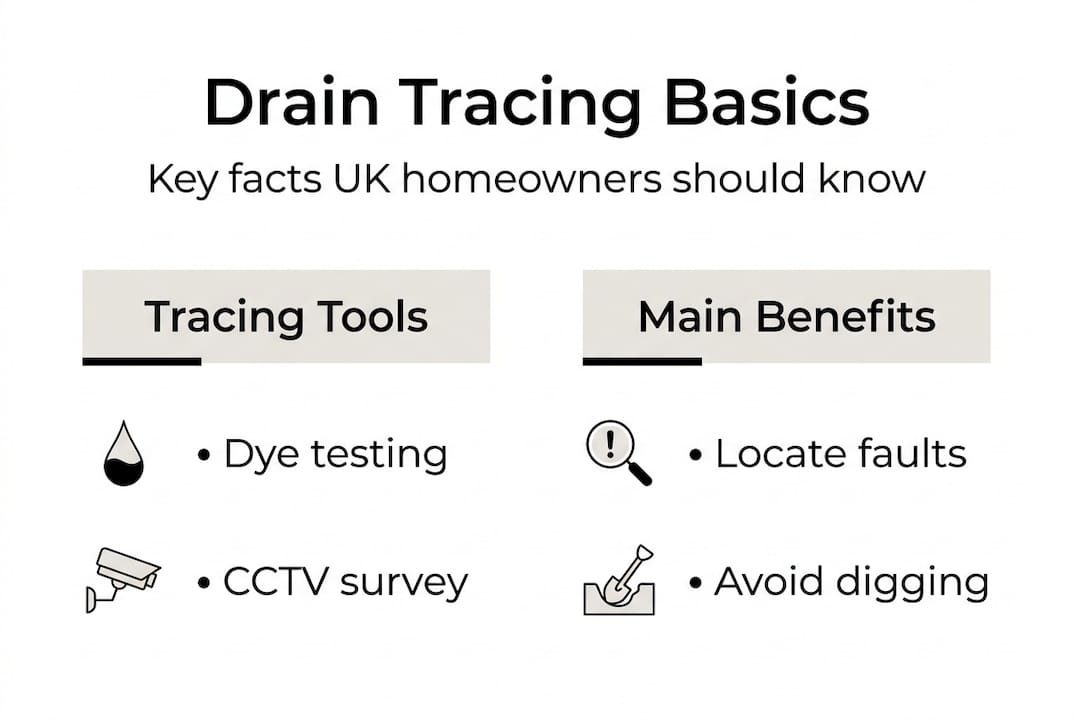
- Dye tracing: A coloured, non-toxic dye is introduced into the system. Engineers then observe where it emerges, confirming flow paths and connections.
- CCTV surveys: A small camera is fed through the pipe, transmitting live footage so engineers can see blockages, cracks, or root intrusion directly.
- Sonde and tracer wire: An electronic signal is sent through the pipe or a flexible rod. A surface locator picks up the signal, mapping the pipe's route and depth above ground.
| Method | Accuracy | Cost | Invasiveness |
|---|---|---|---|
| Dye tracing | Moderate | Low | Minimal |
| CCTV survey | High | Medium | None |
| Sonde/tracer wire | Very high | Medium to high | None |
Knowing where your pipes run is not just convenient. It is often a legal and practical necessity. Drain tracing supports UK building regulations under Parts H and M, as well as SuDS (Sustainable Drainage Systems) standards, which govern how surface water is managed on residential land. If you are extending your home, selling it, or dealing with a drainage dispute, accurate pipe mapping can be essential documentation.
Using the right drainage techniques from the start also prevents unnecessary costs. Digging blindly to find a fault can damage other utilities, disturb landscaping, and cost far more than a targeted trace ever would.
Pro Tip: Always have a qualified professional carry out drain tracing. DIY methods are unreliable and can miss critical faults that only specialist equipment will detect.
How does the drain tracing process work?
Understanding what actually happens during a drain tracing visit removes a lot of the uncertainty. Here is a clear step-by-step picture of what to expect.
- Initial investigation: The engineer reviews your property layout, any existing drainage records, and the symptoms you have reported, such as slow drainage, gurgling, or recurring blockages.
- Method selection: Based on the property type and the nature of the problem, the engineer selects the most appropriate tracing method, whether that is CCTV, sonde, or dye.
- Executing the trace: Equipment is introduced into the drainage system via an access point such as a manhole or inspection chamber. The trace follows the pipe's route, recording data as it goes.
- Interpreting results: The engineer analyses the footage or signal data, identifying blockages, pipe damage, incorrect falls, or cross-connections.
- Reporting: A written report, often with video or mapped diagrams, is produced for your records.
The tools involved are more sophisticated than most homeowners expect. Electronic locators can detect pipe depth to within centimetres, while CCTV drain tracing cameras can navigate bends and junctions that would otherwise be completely inaccessible. Professional drain surveys using these methods have demonstrated real results: effective blockage resolution and a 20% reduction in inflow and infiltration problems across drainage networks.
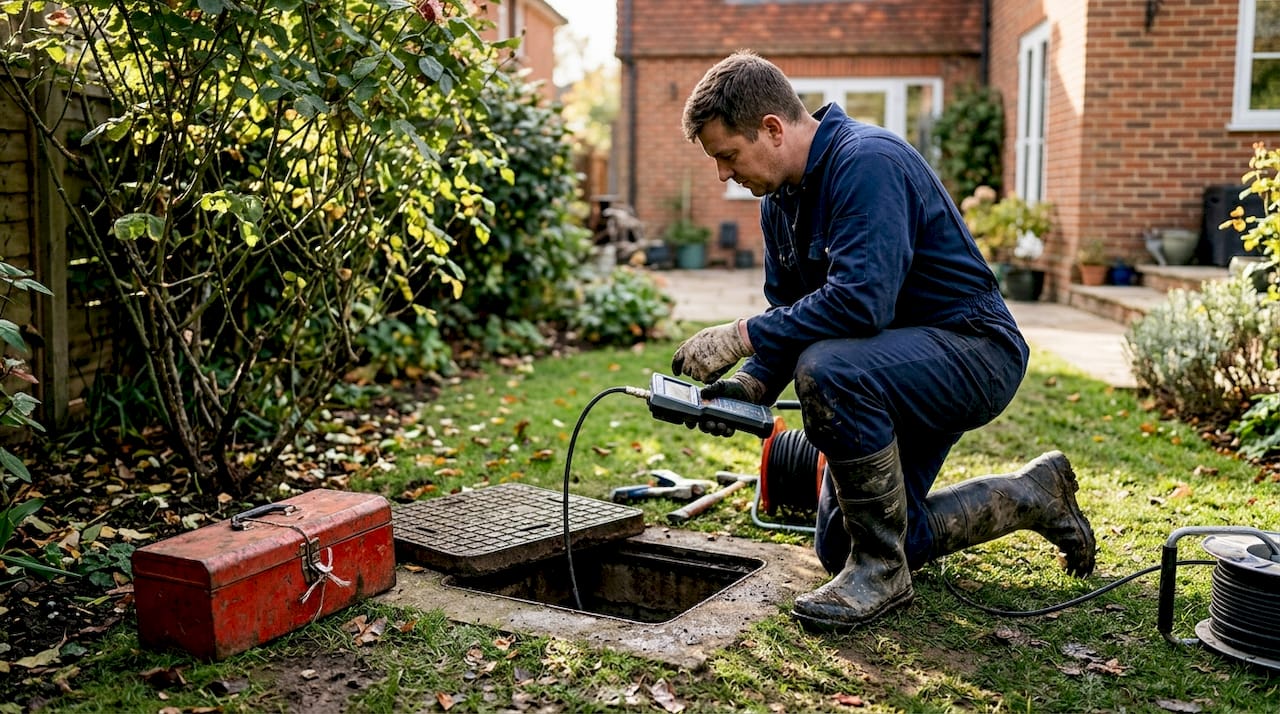
Most residential visits take between one and two hours, though larger or more complex properties may take longer. The process is clean, quiet, and causes no damage to your garden or home.
Pro Tip: Always request a written post-trace report from your engineer. This document is invaluable if you need future repairs, want to sell your property, or need to make an insurance claim.
When should drain tracing be used in your home?
Drain tracing is not just for emergencies. There are several situations where it is the smartest, most cost-effective first step.
- Recurring blockages: If the same drain keeps blocking despite repeated clearing, there is likely an underlying structural issue that needs locating.
- Slow drainage throughout the house: When multiple fixtures drain slowly, the problem is usually further down the system and harder to reach without tracing.
- Before renovations or extensions: Any building work near drains requires accurate pipe mapping to avoid accidental damage and to comply with building regulations.
- Pre-purchase property checks: Buying a home without checking the drainage is a significant risk. Pre-purchase drain checks can reveal hidden faults before they become your problem.
- Unexplained wet patches or subsidence: These can indicate a leaking or collapsed pipe underground.
Drain tracing prevents costly mistakes. Knowing exactly where your pipes run before any digging or construction starts is the single most effective way to avoid damaging other utilities or creating new problems.
This matters more than many homeowners realise. Underground pipes often run close to gas mains, electrical conduits, and water supply lines. Excavating without a clear map risks serious safety incidents and expensive remedial work.
Using drain tracing for surveys before any groundwork is not just sensible, it is increasingly expected under current regulations. Professional over DIY approaches is strongly recommended for accuracy and safety when tracing drains. A typical residential CCTV or tracing survey in the UK costs between £90 and £350, which is a fraction of what emergency excavation work can run to.
Cost, compliance and choosing the right drainage professional
Understanding the financial and regulatory side of drain tracing helps you plan properly and avoid being caught out.
| Service type | Typical cost (UK residential) |
|---|---|
| Basic dye trace | £90 to £150 |
| CCTV drain survey | £120 to £250 |
| Full sonde trace and mapping | £200 to £350 |
| Combined survey and report | £250 to £400 |
CCTV surveys with tracing cost £90 to £350 for most residential UK properties, making it an accessible and worthwhile investment compared to the alternative of reactive, expensive repairs.
From a compliance perspective, if you are carrying out any construction, drainage alteration, or new connection to the public sewer, you are likely to need documented drainage mapping. Building Regulations Part H covers drainage and waste disposal, and SuDS requirements mean that surface water drainage must be properly managed and recorded on new and altered properties.
When choosing a drainage professional, look for the following:
- Relevant certifications: NADC (National Association of Drainage Contractors) membership or equivalent industry accreditation.
- Modern equipment: CCTV cameras, electronic locators, and the ability to produce a formal report.
- Verified reviews: Genuine customer feedback, particularly for residential work in your area.
- Public liability insurance: Essential for any work carried out on your property.
- Clear pricing: A reputable specialist will give you a fixed or clearly estimated cost upfront.
You can check CCTV survey prices and compare what is included before committing. If you are unsure where to start, find a drainage specialist with local knowledge and a proven track record in your area.
Avoid unqualified or purely DIY approaches. Inaccurate tracing can lead to wrong diagnoses, failed compliance checks, and ultimately more expensive work down the line.
The expert's take: what most guides forget about drain tracing
Most guides cover the basics well enough. They explain the methods, list the costs, and remind you to hire a professional. What they rarely mention is the long-term value of documentation.
When a drain tracing survey is carried out properly and a full report is produced, that document becomes a permanent asset. It can speed up future repairs by giving engineers an accurate starting point. It can support an insurance claim by proving the location and condition of pipes at a specific point in time. It can even add value during a property sale by demonstrating that the drainage system has been professionally assessed.
Yet most homeowners either skip the report entirely or file it away and forget it exists. That is a missed opportunity.
The other thing guides consistently overlook is preventative tracing. Most people only think about drain tracing when something has already gone wrong. But scheduling a survey every few years, particularly in older properties, can catch deteriorating pipes, root intrusion, or slow-developing blockages before they become urgent. The expert drain tracing approach is proactive, not reactive. For more practical drainage advice on keeping your system in good shape year-round, it pays to stay informed rather than wait for a crisis.
Professional drainage help when you need it
If you have been dealing with a persistent blockage, slow drains, or simply want to understand your property's drainage before starting any work, professional tracing is the clearest path forward.

At 777 Drains, we provide comprehensive drainage services for homeowners across the UK, from rapid-response unblocking to detailed CCTV drain surveys with full written reports. Our engineers are available 24 hours a day, seven days a week, so whether you have an urgent problem or want to book a routine survey, help is always close at hand. Contact 777 Drains today to arrange a visit or get a quote, and take the guesswork out of your drainage for good.
Frequently asked questions
How long does a typical drain tracing appointment take?
Most residential drain tracing appointments take between one and two hours, depending on the complexity of your drainage system and the method used.
Is drain tracing disruptive or damaging to my property?
Modern drain tracing is entirely non-destructive. Camera and dye methods require no digging, and tracing supports compliance while actively preventing the excavation damage that guesswork can cause.
How much does drain tracing cost in the UK?
On average, a residential CCTV or tracing survey costs between £90 and £350. Surveys cost £90 to £350 depending on property size, complexity, and your region.
Does my home insurance cover drain tracing?
Some home insurance policies do cover drain tracing, particularly when it is required to resolve a confirmed blockage or drainage fault. Always check your policy wording and speak to your provider before booking.
When is drain tracing recommended over a standard unblocking service?
Drain tracing is the right choice when you cannot identify the blockage location, when problems keep recurring, or when you need pipe mapping before construction. Drain tracing supports UK regulations and is essential for pinpointing issues safely in these situations.