

TL;DR:
- Drainage compliance ensures UK properties meet legal standards, avoiding fines, insurance issues, and sale delays.
- Responsibility for drainage varies; homeowners must maintain internal drains and adhere to regulations for new work.
- Private systems like septic tanks have strict regulations, with recent rules requiring discharge to ground and regular inspections.
Most UK homeowners assume their drainage is someone else's problem until a solicitor flags a non-compliant system during a house sale, or an insurer rejects a claim because the drains were never signed off. Non-compliant drainage can invalidate your home insurance, stall property transactions, and even attract enforcement action from regulators. Yet the rules are not especially complicated once you understand where your responsibility begins and ends. This guide breaks down UK drainage compliance in plain language, covering everything from Building Regulations to septic tank rules, shared drains, and what to do before you renovate.
Table of Contents
- What is drainage compliance and why does it matter?
- UK drainage rules for homes: Key requirements and your responsibilities
- Private drainage: Septic tanks, off-mains, and compliance essentials
- Edge cases and common pitfalls: Shared drains, renovations, and exception scenarios
- A fresh perspective on drainage compliance: What most guides overlook
- Expert drainage help and peace of mind
- Frequently asked questions
Key Takeaways
| Point | Details |
|---|---|
| Responsibility lines | You must maintain drains inside your boundary; outside or shared drains are usually managed by the water company. |
| Drainage rules change | Recent UK regulations mean stricter rules for septic tanks, new builds, and using SuDS. |
| Compliance protects your home | Proper paperwork and following the rules prevent legal, insurance, and property sale headaches. |
| Edge cases require care | Shared drains and renovations need extra checks, permissions, and records to avoid disputes. |
What is drainage compliance and why does it matter?
Drainage compliance means your property's drainage systems meet the legal and regulatory standards set by UK law. That covers how water flows off your roof, how foul water from your toilets and sinks is managed, and whether those systems were correctly installed and approved. It is not just a box-ticking exercise. Getting it wrong has real consequences.
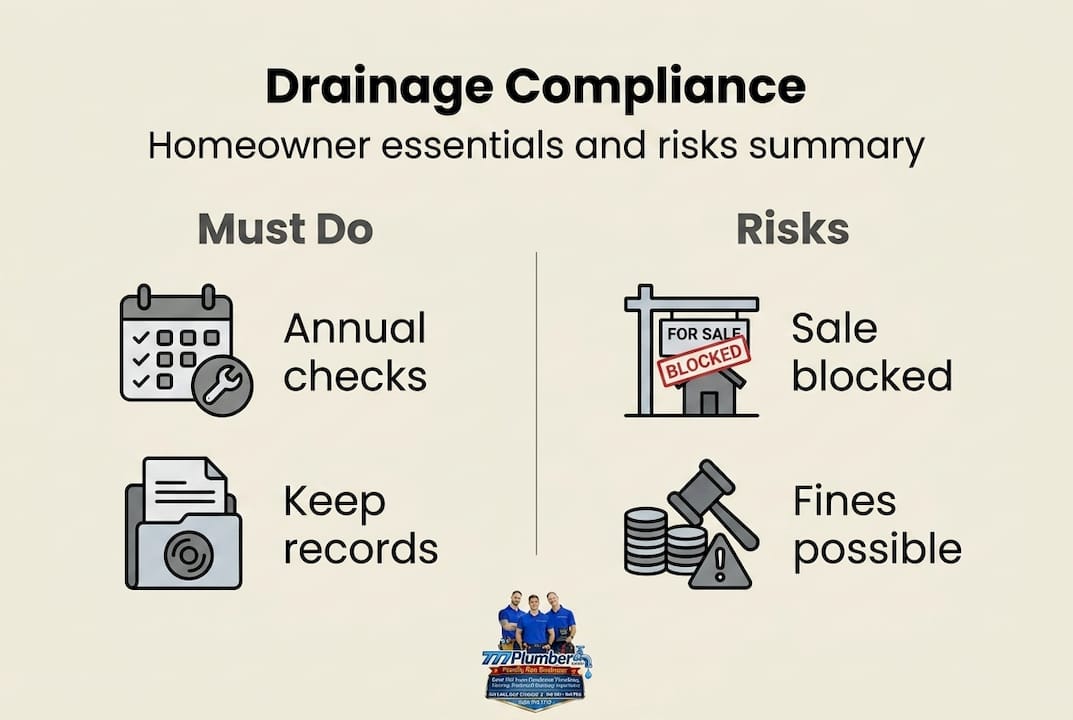
Non-compliance can lead to:
- Fines and enforcement notices from the local authority or Environment Agency
- Invalidated home insurance, leaving you exposed if flooding or sewage damage occurs
- Blocked property sales, because solicitors and surveyors routinely check drainage certificates
- Environmental hazards, including pollution of watercourses and groundwater
- Health risks, from sewage backing up into living spaces
One of the most common misconceptions is that your water company is responsible for everything underground. In reality, their responsibility only begins once water leaves your private drain and enters the public sewer. Everything on your side of that boundary is yours to maintain and keep compliant. Getting professional help from a drainage services overview provider can clarify exactly where that boundary sits on your property.
The key piece of legislation to understand is Building Regulations Approved Document Part H, which governs foul water drainage, rainwater drainage, and drainage for paved areas. It sets the minimum standards for pipe sizing, gradients, inspection access, and the separation of foul and surface water. As foul water regulations state, foul and surface water must be kept entirely separate to prevent pollution and system overload, and violating this risks enforcement action, financial penalties, and serious health hazards.
"The assumption that drainage is always the water company's problem is one of the most expensive beliefs a homeowner can hold. Once you know where private responsibility ends and public responsibility begins, the whole picture becomes far clearer."
If you are unsure about your current drainage layout, a professional drain survey inspection using CCTV equipment can map your system precisely, identify any non-compliant connections, and give you documented evidence that your drains are sound. That documentation matters enormously when you come to sell or extend your home.
UK drainage rules for homes: Key requirements and your responsibilities
Understanding who owns what is the foundation of drainage compliance. Since October 2011, private sewers and lateral drains that were previously shared between properties were transferred to water companies under the Water Industry (Schemes for Adoption of Private Sewers) Regulations. This was a significant change. Before 2011, homeowners shared responsibility for communal runs of drain. After 2011, your personal liability shrank considerably, but you are still fully responsible for drains within your property boundary that serve your home only.
Here is a summary of the key requirements most homeowners need to know:
| Requirement | What it means for you |
|---|---|
| Separate foul and surface water | Never connect a rainwater downpipe to a foul sewer |
| Soakaway distances | Soakaways must be at least 5 metres from buildings and 2.5 metres from boundaries |
| SuDS for new developments | Sustainable drainage systems required for most new-build planning applications |
| Building over drains | Permission required from the water authority before any construction |
| Part H compliance | All new drainage work must meet Approved Document Part H standards |
The rules on sustainable drainage systems, or SuDS, deserve special attention. Under Part H3 rainwater requirements, drainage for new developments must prioritise infiltration to ground first, then discharge to a watercourse, with connection to a sewer only as a last resort. SuDS are now effectively a planning standard for new developments in England and Wales, and this shapes any extension or major landscaping project you might plan.
Key responsibilities as a homeowner:
- Maintain all drains within your boundary in working order
- Ensure any new drainage work is carried out to Part H standards
- Obtain Building Control sign-off for new or altered drainage
- Keep copies of all completion certificates
- Notify your water company before building over or close to any drain
Pro Tip: Always request a completion certificate from Building Control after any drainage work. Without it, you will struggle to prove compliance when you sell, and your solicitor will almost certainly ask for it.
For a broader breakdown of your obligations as a property owner, the full drainage guidance on our site covers this in practical detail.
Private drainage: Septic tanks, off-mains, and compliance essentials
For the estimated 500,000-plus UK homes relying on private drainage rather than a mains sewer connection, the compliance picture is considerably more involved. Private drainage includes septic tanks, sewage treatment plants, and cesspools, and the rules have tightened noticeably in recent years.
The most important change came in January 2020. Under the General Binding Rules, direct discharge of septic tank effluent to a surface water drain, ditch, or watercourse became prohibited. All septic tank outflow must now drain to ground through an appropriate drainage field. If your property still has a system discharging directly to a watercourse, you are almost certainly non-compliant and face Environment Agency enforcement.
Here is a quick comparison of old and new rules:
| Rule area | Pre-2020 position | Post-2020 requirement |
|---|---|---|
| Discharge point | Surface water allowed in some cases | Ground drainage only via drainage field |
| Permits | Exemption registration in many cases | Binding rules apply; permit needed if discharging to surface water |
| Inspection record | Informal | Must be maintained for compliance evidence |
| Sale disclosure | Often overlooked | Required; non-compliance can block sale |
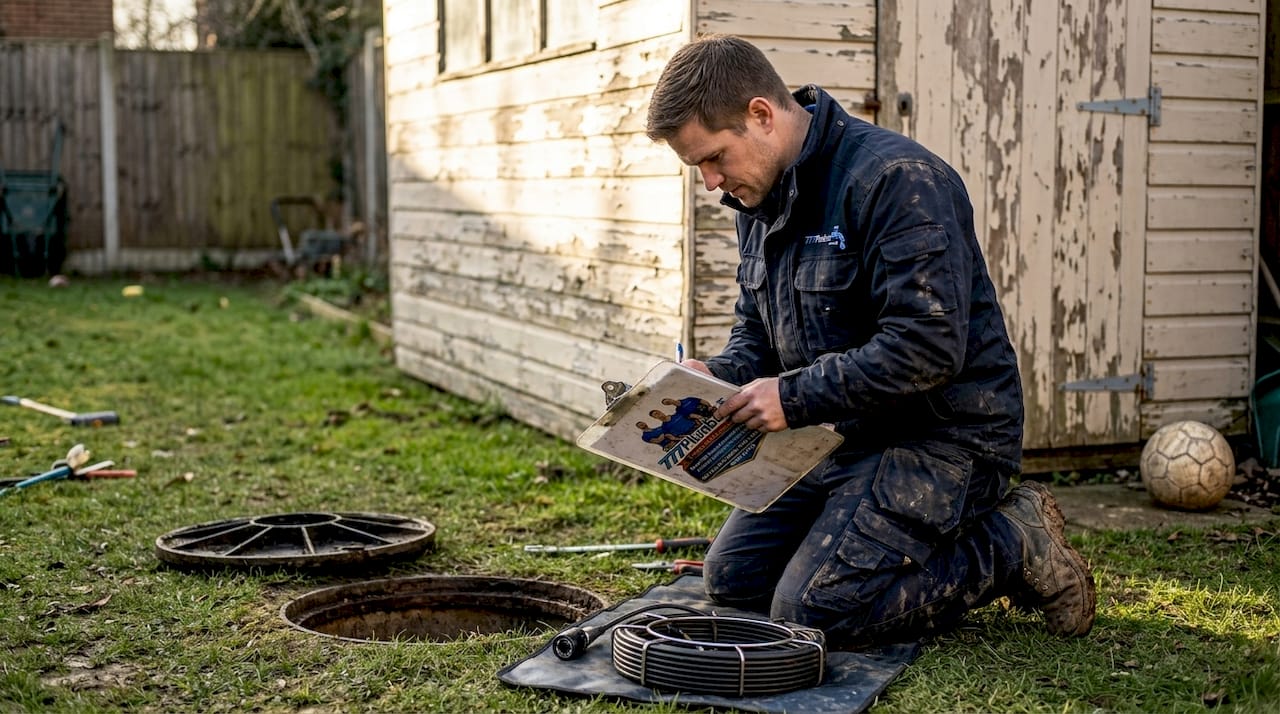
Compliance checklist for off-mains homeowners:
- Confirm your system discharges to ground, not to a ditch or stream
- Check the drainage field is the correct size for your property's occupancy
- Ensure your septic tank or treatment plant is registered if required
- Arrange annual inspection by a qualified engineer
- Keep records of all desludging, inspections, and repairs
- Verify pipework meets the 100mm pipe at 1:40 gradient standard for domestic foul drains
Failing to comply does not just attract regulatory risk. It can make your property unmortgageable. Many lenders now specifically ask about private drainage compliance before approving a purchase. For off-mains properties in particular, speaking to a specialist about drainage for off-mains homes before putting your house on the market is genuinely worth doing.
Edge cases and common pitfalls: Shared drains, renovations, and exception scenarios
Even once you understand the core rules, real-world situations often introduce additional complexity. Shared drains are a classic example. In older terraced or semi-detached properties, a single drain run may serve multiple homes before connecting to the public sewer. While shared drains on private land remain private in legal terms, the 2011 transfer legislation means that many of these runs are now the water company's responsibility. The problem is that deeds do not always reflect this clearly.
Common pitfalls and edge cases to be aware of:
- Ambiguous deeds: Older title documents may not accurately identify shared drain routes or responsibilities
- Renovation notifications: Adding a bathroom, utility room, or rerouting drainage during an extension requires Building Control notification, not just planning permission
- Building near drains: Water authority consent is needed, and specific minimum distances must be observed from drain centrelines
- Cost-sharing disputes: Where shared drains remain private, neighbours share repair costs, but agreeing that split can be contentious without clear records
- Missing certificates: One of the most frequent sale-blockers is a previous owner's drainage work that was never signed off
Pro Tip: Before any renovation involving drainage, contact your water company and Building Control at the same time. Do not wait until the work is finished. Early dialogue prevents costly retrospective approvals and avoids delays when you come to sell.
For complex situations involving disputed drain ownership or unusual property configurations, independent drain surveys can provide impartial evidence. We have seen cases documented in drain problem case studies where a simple CCTV survey resolved a neighbour dispute that had been running for years. When in doubt, get the evidence in writing. And for properties where repairs are needed before compliance can be demonstrated, drain repairs guidance can point you in the right direction.
A fresh perspective on drainage compliance: What most guides overlook
Most drainage compliance advice focuses on the rules themselves, which is useful but incomplete. What gets left out is the behavioural side: why homeowners consistently underestimate their exposure until something goes wrong.
The truth is that the "water company sorts it" assumption is deeply embedded in how people think about their homes. We have seen properties where homeowners lived with a non-compliant drain connection for a decade without incident, then faced an insurance dispute the moment a small leak caused significant damage. The insurer found the illegal surface water connection. The claim was denied.
Regular checks and documented maintenance are not bureaucratic tedium. They are financial self-protection. As the Part H building regulations guidance makes clear, homeowners must notify Building Control for new or renovated drainage works, and the completion certificate that follows is essential for future sales and insurance claims. Without it, you are relying on goodwill from a buyer's solicitor, which is not something you can count on.
The homeowners who manage this best treat drainage compliance the way they treat boiler servicing: scheduled, documented, and never left until something fails. If you want a practical starting point, reading about resolving real-world blockages shows how quickly a small drainage issue can escalate when compliance records are absent.
Expert drainage help and peace of mind
If this guide has raised questions about your own property, the most practical next step is a professional inspection. Knowing your drains are compliant is not just reassuring; it protects your investment when you sell, extend, or make an insurance claim.

At 777 Drains, our engineers carry out thorough drainage compliance solutions assessments for homeowners across the UK, identifying any non-compliant connections, missing approvals, or structural issues before they become expensive problems. A full drain survey using CCTV technology gives you a clear picture of your entire system, with written evidence you can share with solicitors, insurers, or Building Control. Get in touch today and take drainage compliance off your list of unknowns.
Frequently asked questions
Who is responsible for fixing a blocked drain on my property?
You are responsible for drains within your property boundary that serve your home only. Since October 2011, lateral drains and shared sewers transferred to water companies, so anything outside your boundary usually falls to them.
Can a non-compliant drainage system affect selling my house?
Yes. Non-compliant systems and missing approvals can delay or completely block a property sale, and they may also invalidate your home insurance cover.
How often should a septic tank be inspected or emptied?
Septic tanks should be inspected annually and regularly desludged to remain compliant with UK General Binding Rules and Environment Agency requirements.
Do I need permission to build over or near a drain?
Yes. Building over sewers requires water authority permission, and you must adhere to minimum distance rules from the drain centreline before any construction can proceed.