
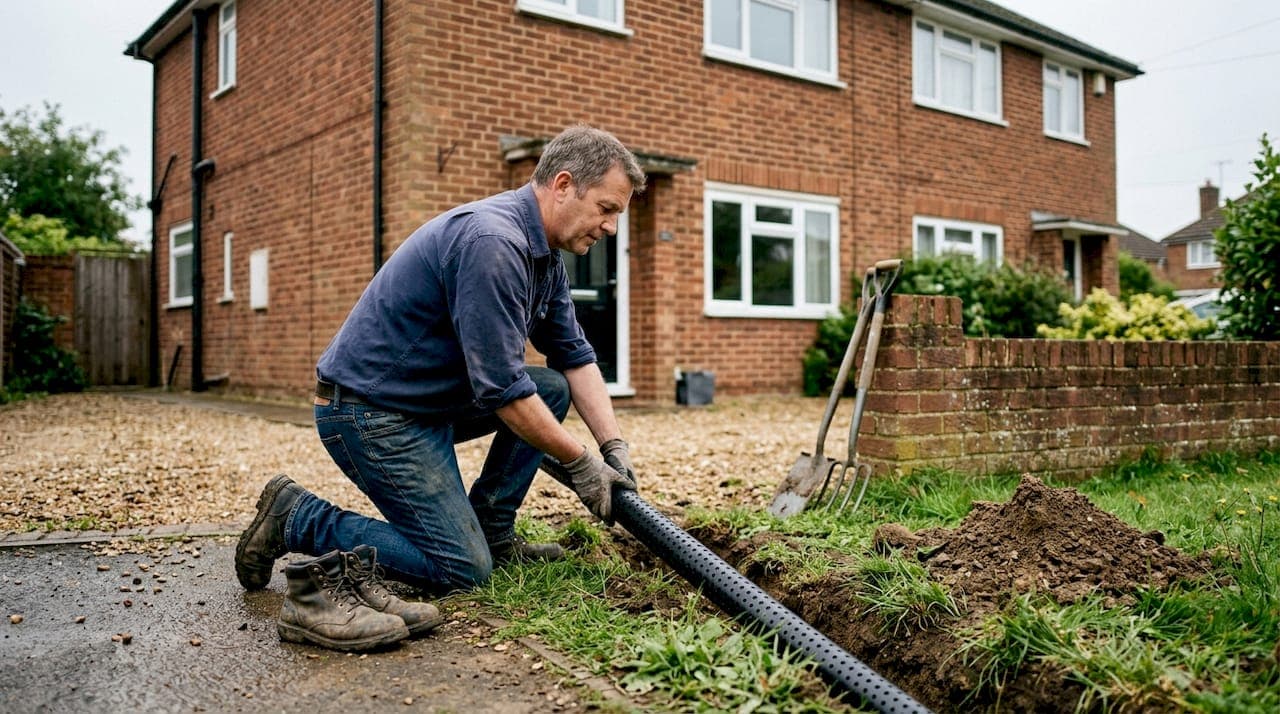
Drainage problems in Thames Valley are not simply inconvenient. The region's heavy clay soils, seasonal flooding risks, and dense housing mean that water has nowhere obvious to go when it rains hard. Whether you are dealing with a waterlogged lawn, a flooded driveway, or persistent pooling near your foundations, the solution you choose must match your specific property and soil conditions. There is no single fix that suits every home. This guide walks you through how to select the right approach, compares the most practical options available locally, and gives you the maintenance habits that keep everything working long after installation.
Table of Contents
- How to choose the right drainage solution for your home
- Practical examples of drainage solutions for Thames Valley homes
- Comparing drainage solutions: Which option suits your situation?
- Maintaining your drainage system: Tips for homeowners
- Expert perspective: What most homeowners miss about drainage choices
- Find your drainage solution with 777 Drains
- Frequently asked questions
Key Takeaways
| Point | Details |
|---|---|
| Tailored solutions matter | Effective drainage depends on soil conditions, household needs, and expert advice. |
| Diverse options available | French drains, soakaways, and rain gardens all address different drainage challenges for local homes. |
| Maintenance prevents issues | Regular inspections and clearing debris keep drainage systems working efficiently. |
| Eco-friendly choices benefit homes | Sustainable options improve drainage while supporting the environment. |
| Professional help is accessible | Local experts like 777 Drains provide tailored services for Thames Valley homeowners. |
How to choose the right drainage solution for your home
Selecting a drainage solution starts with understanding what is happening beneath your feet. Thames Valley properties sit predominantly on clay-heavy ground, which absorbs water slowly and holds it near the surface. That is why so many gardens here turn boggy after a few days of rain. Before spending a penny, you need to assess your soil type, the gradient of your garden, and where water is currently pooling.
Budget matters, but it should not be the first consideration. A cheap fix that fails in two years costs far more than a well-installed system that lasts two decades. Think about access too. Some solutions, such as soakaways, require open ground and reasonable depth. Others, like channel drains, can be retrofitted into existing paving with minimal disruption.
Eco-friendly options are worth serious consideration. Permeable paving, rain gardens, and sustainable drainage systems (known as SuDS) reduce runoff, support local biodiversity, and can even lower your flood insurance risk. The Royal Horticultural Society provides thorough garden drainage advice that covers soil testing and plant-based solutions alongside structural ones.
Here is a practical checklist before you commit to any solution:
- Test your soil drainage by digging a 30cm hole, filling it with water, and timing how long it takes to drain
- Identify where water enters your garden and where it needs to go
- Check whether your property connects to a soakaway or a mains sewer
- Consider future maintenance access when positioning any new drain
- Review local planning rules if you are near a flood zone or conservation area
- Explore garden drainage options to understand what professional installation involves
Pro Tip: If water drains away in under an hour during your soil test, a soakaway or rain garden will likely work well. If it takes several hours or more, you will need a system that actively redirects water rather than simply absorbing it.
Matching your solution to your conditions from the start is the single biggest factor in avoiding repeat problems. Investing time in this stage, and in preventing blockages before they develop, saves significant money down the line.
Practical examples of drainage solutions for Thames Valley homes
With selection criteria in mind, let us examine proven drainage solutions that work for Thames Valley homes.
French drains are one of the most versatile options available. A perforated pipe is laid in a gravel-filled trench, collecting subsurface water and directing it away from problem areas. They work particularly well along fence lines, around foundations, and beneath lawns. French drains offer effective subsurface water control for gardens and driveways, making them a reliable first choice on clay-heavy plots.
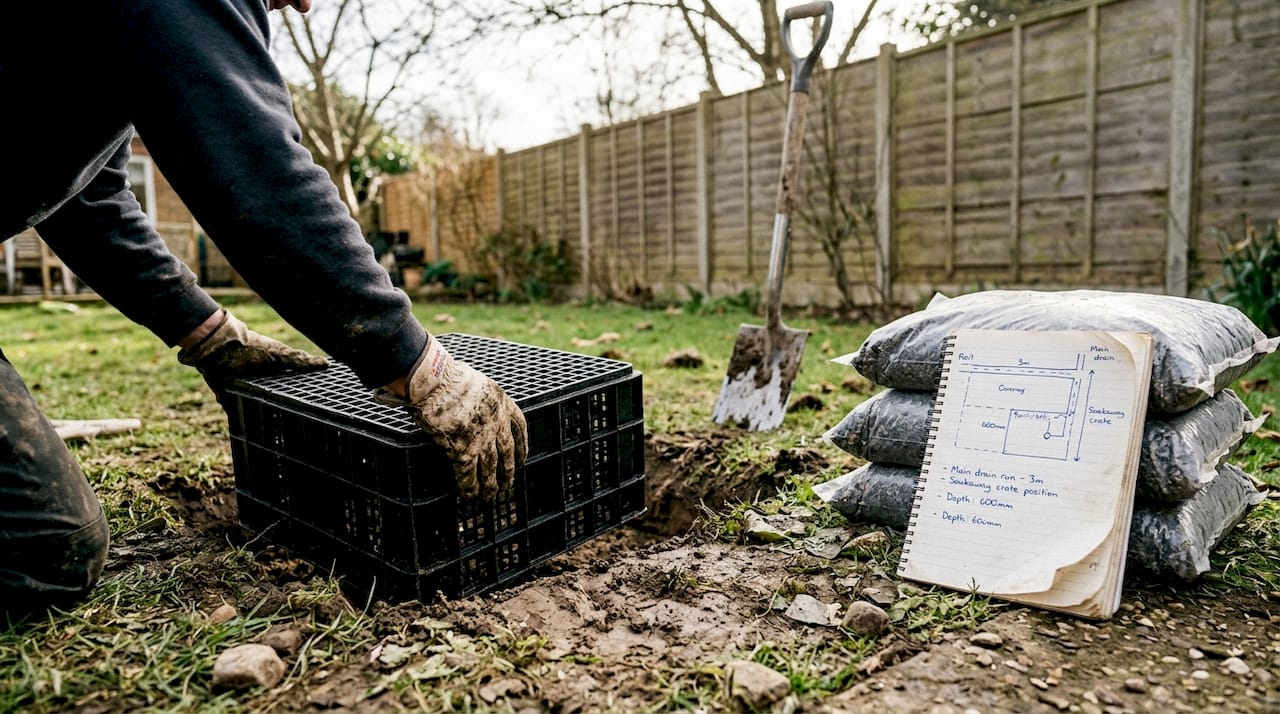
Soakaways are gravel-filled or crate-filled pits that collect rainwater and allow it to percolate slowly into the ground. They are cost-effective and low-maintenance, but they only work where the subsoil has reasonable permeability. On pure clay, they will fill up and overflow.
Channel drains are long, narrow surface drains set flush into driveways, patios, and paths. They intercept surface water before it spreads and direct it to a suitable outlet. They are especially popular for block-paved driveways where water would otherwise run towards the house.
Rain gardens are planted depressions that collect and absorb runoff. They look attractive, support pollinators, and reduce the load on drainage systems. Local water authority advice highlights their value as part of a wider sustainable drainage approach.
Gully pots are the small roadside-style drains you often see at the edge of driveways. They collect surface water and channel it underground. Regular clearing is essential because they block easily with leaves and silt.
Pro Tip: Before installing any new drainage system, consider booking drain inspection methods using CCTV survey technology. This reveals existing pipe conditions and prevents you from connecting new drainage to a system that is already compromised.
| Solution | Typical cost | Best use | Maintenance level |
|---|---|---|---|
| French drain | £500 to £2,000 | Subsurface waterlogging | Low |
| Soakaway | £300 to £1,500 | Rainwater dispersal | Low |
| Channel drain | £200 to £1,000 | Driveways and patios | Medium |
| Rain garden | £150 to £800 | Eco-friendly runoff management | Low |
| Gully pot | £100 to £500 | Surface water collection | Medium to high |
If you are already experiencing blocked drains or slow-running outlets, address those issues before installing new systems. Connecting new drainage to a compromised network simply moves the problem.
Comparing drainage solutions: Which option suits your situation?
After exploring specific examples, a direct comparison helps clarify which solution matches your needs.
The right choice depends heavily on your specific scenario. A flood-prone property near the River Thames needs a different approach to a small garden with occasional pooling after rain.
| Scenario | Recommended solution | Why it works |
|---|---|---|
| Heavy clay soil, large garden | French drain | Redirects water below surface without relying on soil absorption |
| Sandy or loamy soil, average garden | Soakaway | Allows natural percolation with minimal disruption |
| Paved driveway or patio | Channel drain | Captures surface water at source before it spreads |
| Eco-conscious homeowner | Rain garden | Sustainable, attractive, and effective for moderate rainfall |
| Small garden with limited space | Gully pot | Compact, inexpensive, and easy to retrofit |
Channel drains are ideal for paved areas prone to surface water accumulation, and they are one of the most frequently installed solutions in Thames Valley driveways for this reason.
Here are the scenarios where each solution performs best:
- French drain: Properties with persistent subsurface waterlogging or sloped gardens where water travels underground
- Soakaway: New builds or extensions where roof water needs dispersal away from foundations
- Channel drain: Any hard-surfaced area where water pools or flows towards the house
- Rain garden: Gardens where aesthetics matter and moderate drainage improvement is sufficient
- Gully pot: Existing systems that need a simple surface water collection point
The most common mistake we see is homeowners choosing a solution based on what a neighbour installed, without checking whether their soil conditions are the same. Two houses on the same street can have very different drainage needs depending on ground levels and subsoil composition.
For properties in areas with known eco-friendly drainage requirements or planning restrictions, sustainable options such as rain gardens and permeable paving are increasingly the right choice both practically and legally.
Maintaining your drainage system: Tips for homeowners
Choosing the right drainage solution matters most if you maintain it well. Here is how to keep your system in top condition.
Regular inspection prevents costly blockages and prolongs system life, which is why building a simple routine into your calendar makes a real difference. Most drainage problems do not appear overnight. They develop gradually through accumulated debris, root ingress, and silt build-up.
Follow this maintenance routine to stay ahead of problems:
- Inspect visually twice a year, ideally in autumn before leaf fall peaks and in spring after winter weather. Look for slow drainage, pooling water, or unusual smells.
- Clear gully pots and channel drain covers of leaves, grit, and debris every two to three months. A blocked gully can overflow within hours during heavy rain.
- Flush French drains with a garden hose annually to dislodge silt. If flow seems restricted, a professional jetting service restores capacity quickly.
- Check soakaway inspection chambers (if fitted) for signs of silt accumulation. A full soakaway stops working entirely and needs professional attention.
- Book a professional drain survey every three to five years, particularly if your system is more than ten years old. Drainage maintenance tips from a qualified engineer can identify problems before they become expensive.
- Use eco-friendly drain cleaning products rather than harsh chemicals. Enzyme-based cleaners break down organic matter without damaging pipe joints or harming local waterways.
Pro Tip: After any significant flooding event, walk your garden and check all visible drain covers and outlets. Flood debris blocks systems fast, and catching it early prevents secondary damage.
For persistent or recurring blockages, professional help is often more cost-effective than repeated DIY attempts. A guide to resolving blockages explains when to call in an expert and what to expect from the process.
Expert perspective: What most homeowners miss about drainage choices
Most homeowners approach drainage as a problem to solve once and forget. That mindset is where things go wrong. In our experience working across Thames Valley properties, the biggest oversights are not about which product to buy. They are about ignoring the specific conditions of a plot and assuming a standard solution will do.
Clay soil behaves differently in summer than in winter. It shrinks when dry and expands when wet, which means a soakaway that performs well in July can be completely overwhelmed by November. Choosing a solution without accounting for seasonal variation is a common and costly error.
Eco-friendly options are also persistently underestimated. Many homeowners assume rain gardens or permeable paving are compromise solutions. In reality, they often outperform traditional systems on moderate rainfall events and require less ongoing maintenance.
The most important thing we can tell you is this: get a proper assessment before committing. Tailored outdoor drainage designed around your actual soil, gradient, and usage will always outperform a generic off-the-shelf product. One hour with a drainage engineer can save years of recurring problems.
Find your drainage solution with 777 Drains
If this guide has helped you identify what your property needs, the next step is getting it assessed and installed properly.

At 777 Drains, we work with Thames Valley homeowners to design and install drainage systems that suit the specific conditions of their property. From CCTV surveys that reveal hidden problems to full installation of French drains, soakaways, and channel systems, our engineers bring the right equipment and local knowledge to every job. We are available 24 hours a day for emergencies, and our drainage service options cover everything from routine maintenance to urgent call-outs. If you want to explore what is right for your home, our team is ready to help. Visit us for expert drainage advice tailored to your situation.
Frequently asked questions
What is the most effective drainage solution for a clay-soil garden?
French drains are effective for subsurface control in clay soils because they actively redirect water rather than relying on the ground to absorb it. They are the most reliable option where permeability is poor.
How often should homeowners check their drainage systems?
Regular inspection prolongs system life and prevents blockages, so twice yearly is the minimum recommended frequency, with additional checks after heavy rainfall or flooding.
Are eco-friendly drainage solutions suitable for residential use?
Rain gardens are a sustainable drainage option for homes and work well for moderate rainfall management, offering both practical performance and environmental benefit.
What maintenance steps help prevent blocked drains?
Regular inspection and debris clearing are essential maintenance steps, alongside periodic professional surveys to catch silt build-up and root ingress before they cause failures.
Who can I contact for drainage emergencies in Thames Valley?
777 Drains offers a 24-hour professional service for drainage emergencies throughout Thames Valley, covering everything from blocked outlets to urgent system failures.