
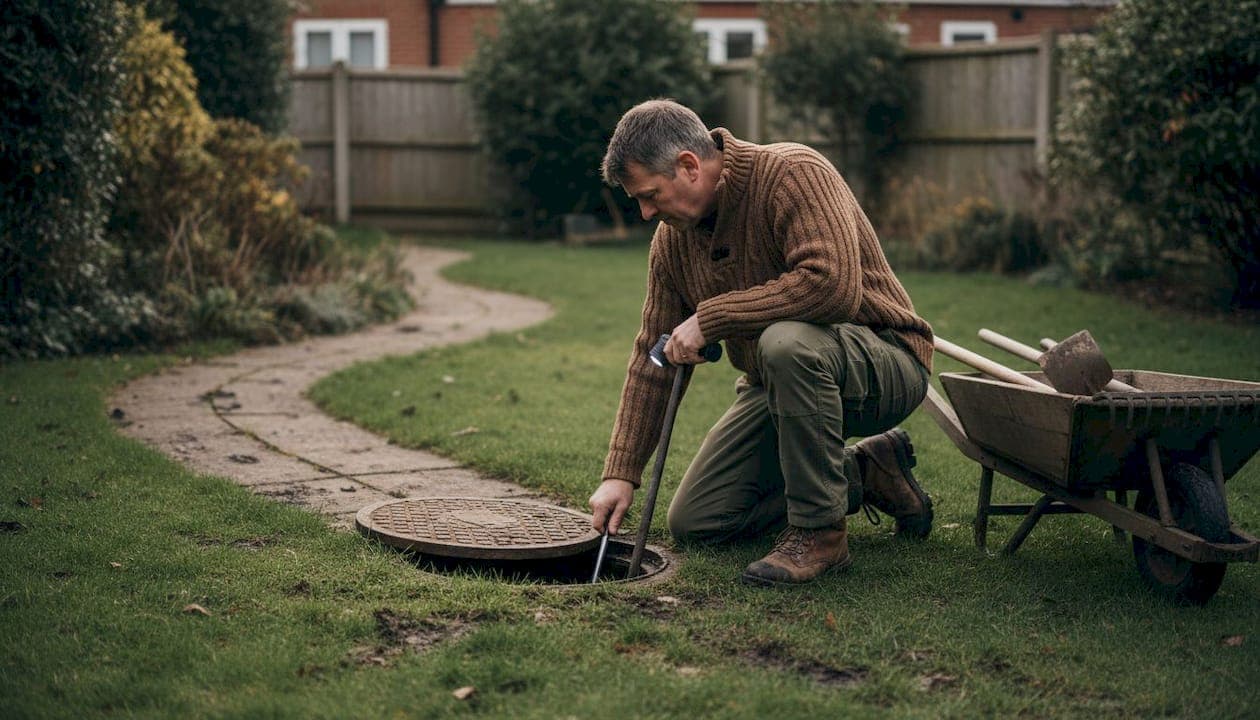
TL;DR:
- UK homeowners often lack knowledge about their drainage systems, leading to costly issues.
- Drainage systems include foul water, surface water, combined, and modern sustainable solutions.
- Responsibility for maintenance primarily lies with homeowners within their property boundary since 2011 regulations.
Most UK homeowners could not tell you whether their property uses a combined or separate drainage system. Fewer still know where their legal responsibility ends and the water company's begins. This gap in knowledge is not just inconvenient — it can lead to unnecessary repair bills, neighbour disputes, and recurring blockages that never quite get fixed properly. Whether you have noticed a slow-draining sink, a gurgling toilet, or standing water on your driveway, understanding your drainage system is the first step to sorting it out confidently. This guide walks you through what a drainage system actually is, the main types found in UK homes, how they work, who owns what, and how to keep yours running well.
Table of Contents
- What is a drainage system? The essential UK definition
- The main types of drainage systems in UK homes
- How drainage systems work: gravity, construction, and regulations
- Ownership and repair responsibilities for UK homeowners
- Common drainage problems, repairs, and how to prevent them
- Why understanding your drainage system saves more than money
- Need help with your drainage system?
- Frequently asked questions
Key Takeaways
| Point | Details |
|---|---|
| Clear system definition | A drainage system collects household waste and rainwater and removes it safely from your property. |
| Multiple drainage types | Homes can have foul, surface, combined, or sustainable drainage systems—knowing yours helps with maintenance. |
| Ownership rules | You’re responsible for drains within your boundary; water companies take over shared lines beyond. |
| Prevention is best | Regular inspections and swift repairs prevent costly blockages and disputes. |
| Seek expert advice | Professional diagnosis is crucial for complex problems or boundary checks. |
What is a drainage system? The essential UK definition
The word "drain" gets used loosely, but in a residential context it covers far more than a single pipe under your sink. A drainage system explained is a network of pipes, channels, inspection chambers, gullies, and other components that removes foul wastewater from toilets, sinks, and appliances, and surface rainwater from roofs, driveways, and gardens, directing it away from the property to public sewers, soakaways, or treatment systems.
In practical terms, your drainage system has two core jobs: removing the wastewater your household produces every day, and handling the rainwater that lands on your roof and hard surfaces. Both matter, and both can cause serious problems when they fail.
Here is a quick breakdown of the main components you will find in a typical UK residential drainage system:
- Foul water pipes: Carry waste from toilets, baths, showers, sinks, and washing machines.
- Surface water drains: Channel rainwater from roofs, patios, and driveways via gullies.
- Inspection chambers (manholes): Access points that allow engineers to inspect, clear, or repair pipes.
- Soakaways: Underground structures that allow surface water to disperse into the ground.
- French drains: Gravel-filled trenches with a perforated pipe that redirect groundwater away from buildings.
- Sustainable Drainage Systems (SuDS): Modern systems designed to manage rainwater closer to where it falls, common in new builds.
| Component | Function | Where found |
|---|---|---|
| Foul water pipe | Removes household wastewater | All UK homes |
| Surface water drain | Handles rainwater runoff | Most properties |
| Inspection chamber | Provides access for maintenance | Along drain runs |
| Soakaway | Disperses surface water into ground | Gardens, driveways |
| French drain | Redirects groundwater | Wet or sloped gardens |
| SuDS | Sustainable rainwater management | New build properties |
"A drainage system for UK homeowners is a network of pipes, channels, inspection chambers, gullies, and other components that removes foul wastewater from toilets, sinks, and appliances, and surface rainwater from roofs, driveways, and gardens, directing it away from the property to public sewers, soakaways, or treatment systems."
Knowing these components by name helps enormously when speaking to an engineer or reading a survey report.
The main types of drainage systems in UK homes
With a firm definition in place, it is time to examine the actual types of drainage systems you might find at home. Not every property is the same, and the type of system you have affects everything from how blockages occur to who is responsible for fixing them.
According to types of UK drainage, the main types include foul water drainage (wastewater to sewer or septic), surface water drainage (rainwater via gullies and soakaways), combined systems (both in older properties, now discouraged), subsurface or French drains (groundwater), and Sustainable Drainage Systems (SuDS) for new builds.
Here is how each one works in practice:
- Foul water drainage: Carries sewage and household waste to the public sewer or a private septic tank. This is the system most people picture when they think of drains.
- Surface water drainage: Manages rainwater only. It typically runs to a soakaway, watercourse, or separate surface water sewer. Mixing foul and surface water in this system is both illegal and a common cause of flooding.
- Combined drainage: Found in many older UK properties, this single system carries both foul water and surface water together. It is no longer permitted in new builds because it places excessive load on treatment works during heavy rain.
- French drains: Useful for properties with waterlogged gardens or high groundwater. They redirect water away from foundations rather than into the sewer network.
- SuDS: Required in new developments since 2010, these systems slow down and filter rainwater using ponds, permeable paving, and green roofs before it enters any sewer.
| System type | Handles | Common in | Typical issue |
|---|---|---|---|
| Foul water | Sewage and waste | All homes | Blockages, root ingress |
| Surface water | Rainwater only | Most properties | Flooding, silting |
| Combined | Both | Pre-1970s homes | Overloading in storms |
| French drain | Groundwater | Wet gardens | Silting, collapse |
| SuDS | Rainwater sustainably | New builds | Maintenance neglect |
Pro Tip: Not sure what system your property uses? Look for two separate manholes rather than one. A single manhole usually suggests a combined system. For certainty, drain surveys for system type give you a definitive answer without any guesswork.
How drainage systems work: gravity, construction, and regulations
Spotting your system type is just the beginning. Understanding how drains move waste and what rules govern their design helps you spot problems early and ask the right questions when something goes wrong.
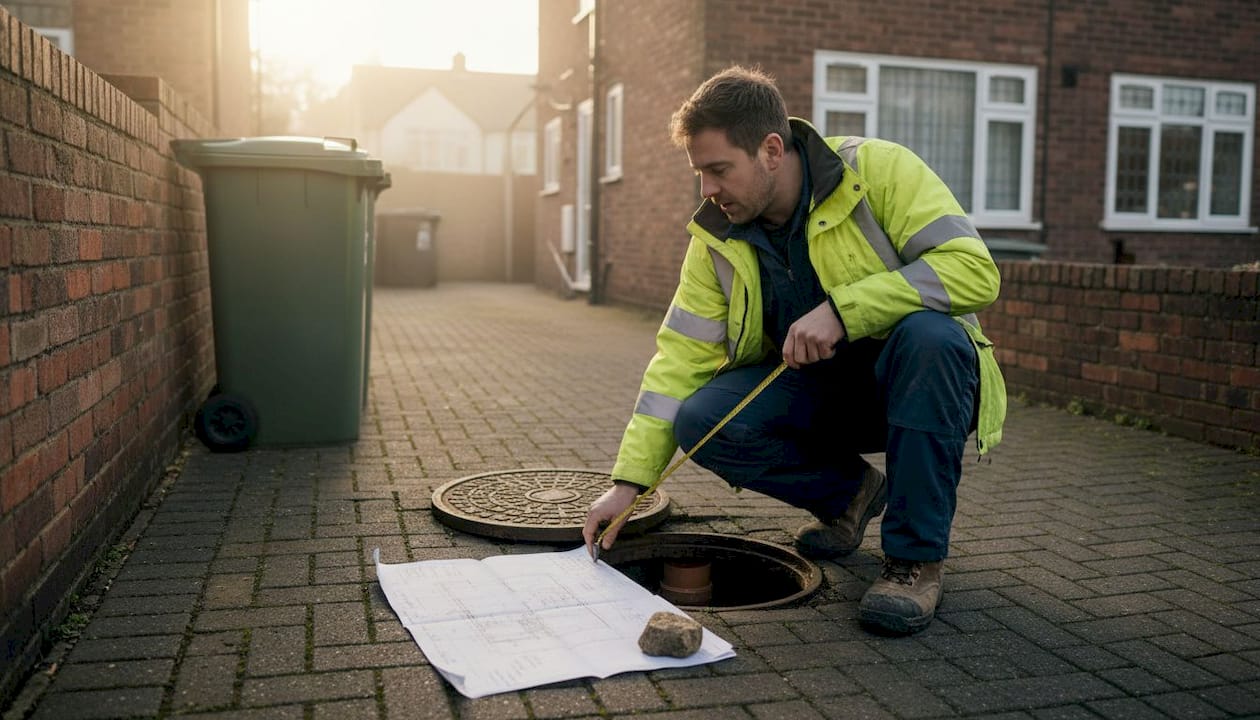
The good news is that most drainage systems are elegantly simple. They rely almost entirely on gravity. Waste and water flow downhill through pipes laid at a carefully calculated angle called a gradient. The standard drainage gradient is 1:40, which means the pipe drops one metre for every 40 metres of horizontal run. This slope creates enough flow speed to carry solids without letting them settle and build up. Too steep, and the water outruns the solids, causing blockages. Too shallow, and everything stagnates.
Here is the step-by-step journey waste takes from your home:
- Waste leaves your toilet, sink, or appliance through a branch pipe.
- Branch pipes connect to a main drain running beneath or alongside your property.
- The main drain passes through one or more inspection chambers, which allow access for maintenance.
- From there, it connects to a lateral drain (outside your boundary) and then into the public sewer.
- The public sewer carries waste to a treatment works or, in some rural cases, a private septic tank.
Pipes are typically laid at 300 to 600mm depth to protect them from frost and surface loads. Inspection chambers are positioned at every change of direction or junction to ensure the full system can be cleared if needed.
Building Regulations Part H sets out the legal standards for drainage in England and Wales. It requires foul and surface water to be kept in separate drainage systems in all new builds, preventing contamination and reducing the risk of sewage backing up during storms.
Pro Tip: If you notice slow drainage throughout your home rather than at a single point, the issue is likely in the main drain rather than a branch pipe. That is a job for a professional with jetting equipment, not a plunger.
Ownership and repair responsibilities for UK homeowners
Understanding the mechanics sets the foundation. Next, it is crucial to know where your legal and financial responsibilities begin and end, because this is where many homeowners get caught out.
The rules changed significantly in 2011. Before that, homeowners were often responsible for shared drains even when they ran outside their property boundary. The Water Industry (Schemes for Adoption of Private Sewers) Regulations 2011 transferred most of those shared drains to water companies. As shared drain law guidance confirms, homeowners are responsible for private drains within their property boundary, while water companies handle shared drains and lateral drains outside that boundary.
Here is what that means in plain terms:
- Your responsibility: Any drain that runs solely from your property and sits within your boundary. This includes the pipes from your toilets, sinks, and gullies up to the point where they join a shared drain.
- Water company's responsibility: Shared drains, lateral drains, and public sewers outside your boundary, even if they run beneath your garden.
- Grey areas: If a drain serves more than one property but sits within your boundary, ownership can be disputed. This is where a property drainage responsibilities check becomes genuinely useful.
Checking your property's drainage boundary map is straightforward. Your water company can provide one, and it will show exactly where your responsibility ends. Do not rely on assumptions based on where a pipe physically sits.
"Homeowners are responsible for private drains within their property boundary; water companies handle shared drains and lateral drains outside that boundary following the 2011 regulations."
If a blockage occurs in a shared drain and your neighbour blames your property, a CCTV survey provides independent evidence of where the fault actually lies. Getting professional drainage help before disputes escalate is almost always cheaper than resolving them afterwards.
Common drainage problems, repairs, and how to prevent them
Knowing your responsibilities lets you tackle real-world problems with confidence. Here is how to handle the most common drainage issues and keep your system in good health.
The most frequent problems in UK residential drainage are blockages, root ingress, and pipe collapse. According to 2026 drainage repair costs, common issues include blockages from grease, roots, and debris, as well as collapses in old clay pipes. Repairs range from high-pressure jetting at £100 to £300, pipe relining at £600 to £1,500, and full excavation at £1,500 or more.
Here are the warning signs to watch for:
- Slow drainage at multiple points in the house.
- Gurgling sounds from toilets or sinks when water drains elsewhere.
- Unpleasant smells from gullies or inspection chambers.
- Wet patches or subsidence in the garden above a drain run.
- Sewage backing up into ground-floor fixtures.
| Problem | Likely cause | Typical repair | Approximate cost |
|---|---|---|---|
| Slow drains | Grease or debris buildup | High-pressure jetting | £100 to £300 |
| Root ingress | Tree roots in pipe joints | Relining or root cutting | £600 to £1,500 |
| Pipe collapse | Age, ground movement | Excavation and replacement | £1,500 and above |
| Recurring blockages | Incorrect pipe gradient | Re-laying with correct fall | Varies |
No-dig relining is now the preferred repair method for damaged pipes. An engineer inserts a resin-coated liner into the existing pipe, inflates it, and leaves it to cure in place. The result is a smooth, joint-free pipe inside the old one, with no need to dig up your garden or driveway.
For drain repair and unblocking, the starting point is always a clear diagnosis. A CCTV drain survey sends a camera through the pipe to show exactly what is happening and where, saving you from paying for the wrong repair.
Pro Tip: Fit a root barrier around any tree within five metres of a drain run. Tree roots are drawn to the moisture inside pipes and can crack even modern plastic pipework over time. Prevention costs a fraction of the repair.
Why understanding your drainage system saves more than money
Most homeowners only think about their drains when something goes wrong. That reactive approach is understandable, but it consistently leads to higher costs, more stress, and problems that keep coming back.
In our experience at 777 Drains, the homeowners who handle drainage issues most calmly and cheaply are the ones who already know the basics. They know which system type they have, where their boundary sits, and who to call first. That knowledge cuts through the panic and gets to a solution faster.
There is also a legal dimension that catches people off guard. Disputes between neighbours over shared drains can become genuinely serious, especially when insurance claims are involved. A homeowner who understands their drainage expertise position from the outset is far better placed to resolve those situations without solicitors.
The uncomfortable truth is that most drainage problems are predictable. Grease builds up. Roots grow. Old clay pipes crack. None of this happens overnight. Regular inspections and a basic understanding of your system mean you catch these things early, when the fix is simple and affordable, rather than late, when it is urgent and expensive.
Need help with your drainage system?
If reading this has raised questions about your own property, that is a good sign. It means you are thinking about drainage before a crisis forces you to.

At 777 Drains, our trusted drainage experts work with homeowners across the UK to diagnose, repair, and prevent drainage problems of every kind. Whether you need a blocked drain cleared today or want to understand exactly what system your property has before you buy or renovate, we can help. Our full drainage services cover everything from emergency unblocking to no-dig relining, and our professional drain inspection service uses the latest camera technology to give you a clear picture of what is happening underground. No guesswork. No unnecessary digging.
Frequently asked questions
What is the difference between a drain and a sewer?
A drain removes waste from a single property, while a sewer collects flows from multiple properties and carries them to a treatment works. Sewers are typically the water company's responsibility.
Am I responsible for blocked drains outside my house?
You are responsible for drains within your property boundary. After the 2011 regulations, shared and lateral drains outside your boundary became the water company's responsibility, not yours.
How can I tell what type of drainage system my property has?
Look for separate manholes for foul and surface water, check any available building plans, or arrange a CCTV survey. Properties built before 1970 often use combined drainage systems, while newer homes are more likely to have separate systems.
What are the most common causes of drainage problems?
Blockages from grease, wet wipes, and tree roots account for the majority of call-outs. Collapsed old clay pipes are the most common structural fault, particularly in properties built before the 1980s.