
TL;DR:
- Blocked drains can cause severe damage and costly repairs if ignored.
- Preventative measures like routine CCTV inspections and proper waste disposal reduce recurring issues.
- DIY methods should start gently, and professional help is recommended for persistent or main line blockages.
Blocked drains cause more disruption than most homeowners expect. What starts as a slow sink can escalate into sewage backups, structural pipe damage, and hefty repair bills within days. Across the UK, drain blockage costs run into tens of millions of pounds annually, with repeat callouts often stemming not from the original blockage, but from poor repair workflows that miss the root cause entirely. This guide walks you through a practical, step-by-step process for addressing blocked drains efficiently, covering tools, technique, troubleshooting, and long-term prevention, so you can avoid the cycle of recurring problems.
Table of Contents
- Essential tools and preparation for drain repair
- Step-by-step workflow for addressing blocked drains
- Troubleshooting common issues and avoiding mistakes
- Best practices for long-term drain health and prevention
- A smarter drain workflow: prevention pays off
- Get help from Reading's drain specialists
- Frequently asked questions
Key Takeaways
| Point | Details |
|---|---|
| Step-by-step workflow | Follow a clear workflow: assess, try gentle methods, escalate as needed, and call professionals for main line issues. |
| Prevention matters | Adopt monthly maintenance routines and annual CCTV checks to dramatically reduce future blockages. |
| Avoid common mistakes | Never overuse chemical cleaners, and always test multiple fixtures to pinpoint clog location. |
| Local response is rapid | Reading homeowners have access to emergency drain repairs within an hour for urgent blockages. |
Essential tools and preparation for drain repair
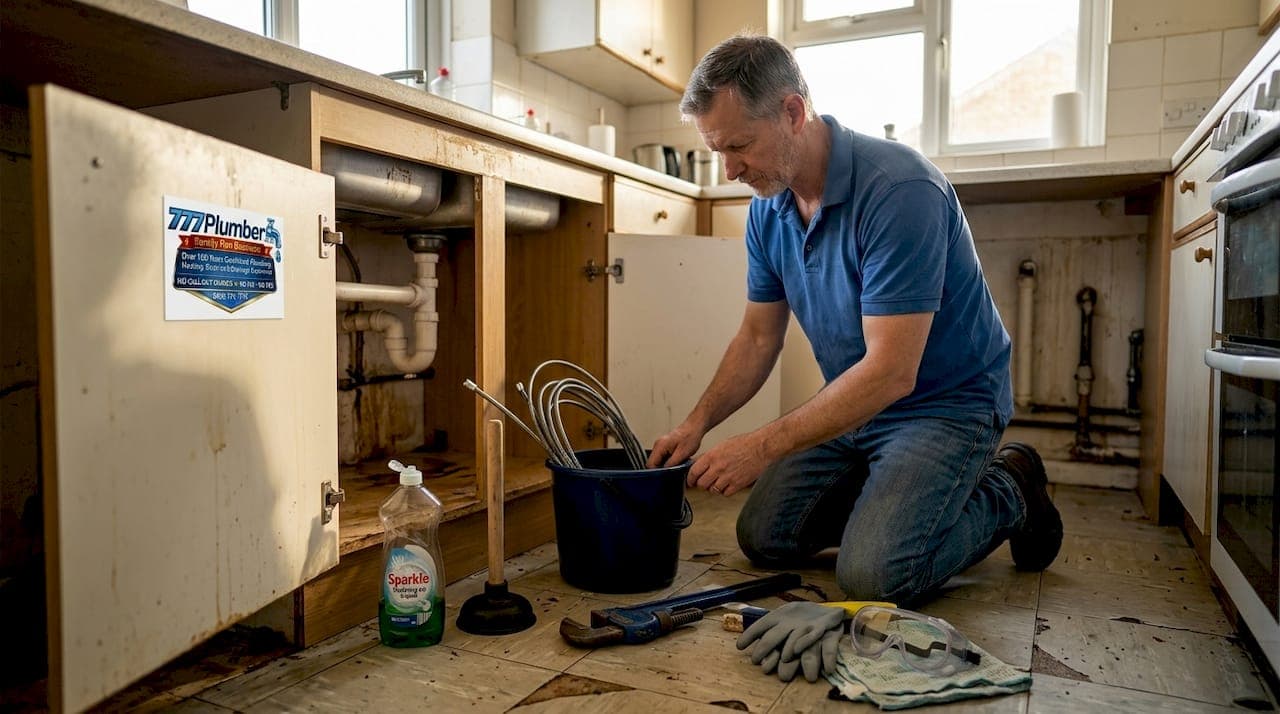
Having established the widespread problem, let's look at what you'll need to begin fixing drains safely. Rushing into a repair without the right preparation is one of the most common reasons blockages return within weeks. Taking 20 minutes to gather your equipment and assess the situation properly saves hours of frustration later.
Safety first
Before touching any pipe or drain fitting, put on rubber gloves and safety goggles. Drain water carries bacteria and pathogens that can cause serious illness if they contact your eyes or open cuts. If you suspect the blockage involves sewage (you'll usually know from the smell), add a face mask to your kit. Always work in a ventilated space and keep children and pets out of the area.
Your essential toolkit
Here's what you'll want on hand before starting:
- Rubber or nitrile gloves (heavy-duty, not the thin disposable type)
- Safety goggles
- Plunger (a flanged plunger for toilets, a cup plunger for sinks)
- Drain auger or hand snake (3 to 6 metres for most residential lines)
- Bucket and old towels
- Torch or headlamp
- CCTV drain scope (if available, or hire one)
- Pipe wrench and adjustable spanner
- Baking soda and white vinegar (for mild blockages)
- Enzyme-based drain cleaner (gentler than chemical alternatives)
Avoid harsh chemical drain cleaners unless you are certain your pipes are modern PVC or copper. Older clay or cast iron pipes can be damaged by caustic sodas, causing more problems than you started with. You can review typical service fees for drain repairs online before deciding whether to proceed yourself or call in a professional.
Identifying the blockage location and severity
This step is critical. Assessing clog location and severity before applying any method prevents you from using the wrong technique and pushing the blockage deeper. Run water in multiple fixtures simultaneously. If only one sink is slow, the clog is localised. If two or more fixtures back up at the same time, such as a toilet gurgling when you run the bath, the blockage is likely in the main line.
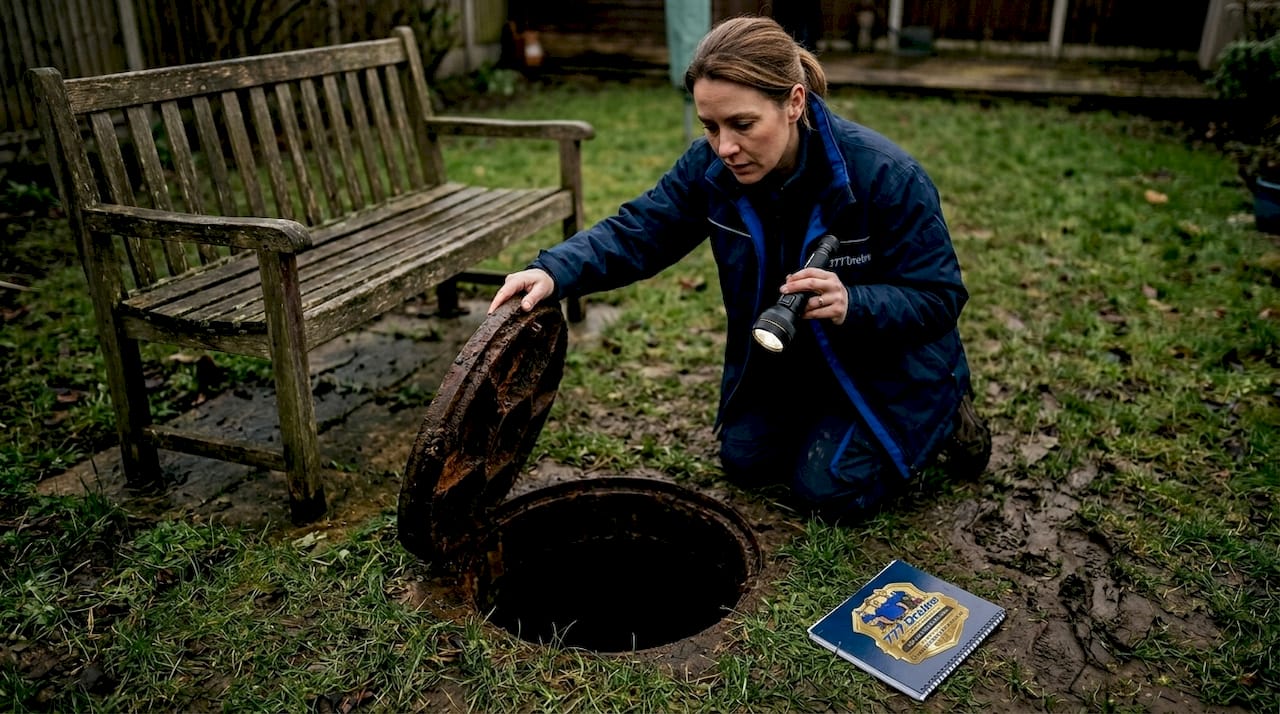
Pro Tip: Lift the manhole cover in your garden (if accessible) before doing anything else. If the chamber is full of water, the blockage is in the main line or beyond. If it's dry, the clog is inside the property.
| Symptom | Likely location | Recommended action |
|---|---|---|
| One slow sink | Local trap or branch pipe | Plunger or hand snake |
| Multiple fixtures backing up | Main drain line | Auger or professional jetting |
| Gurgling from toilet/bath | Partial main line blockage | Enzyme cleaner, then auger |
| Overflowing manhole | External main drain | Call a specialist immediately |
Step-by-step workflow for addressing blocked drains
Once you have gathered your tools and checked the blockage, here's how to tackle the problem, step by step. The most effective approach is to start gentle and progress methodically toward more powerful methods only when lighter techniques fail.
The standard repair workflow
-
Remove standing water. Use a bucket or wet vacuum to clear any pooled water from the sink or toilet bowl. This gives you clear access and reduces mess.
-
Try boiling water first. For kitchen sinks, slowly pour a full kettle of boiling water down the drain in two or three stages, allowing 30 seconds between each pour. This works well on grease and soap blockages.
-
Apply baking soda and vinegar. Pour half a cup of baking soda followed by half a cup of white vinegar. Cover the drain immediately and leave for 20 minutes. The fizzing reaction breaks down organic matter without damaging pipes.
-
Use a plunger. Fill the sink slightly with water to create a seal, then plunge firmly 10 to 15 times. For toilets, use a flanged plunger and push in a steady, controlled rhythm rather than aggressive jabs.
-
Deploy a hand drain snake. If plunging fails, feed the auger cable slowly into the drain, rotating the handle clockwise as you go. When you feel resistance, continue rotating to break through or hook the blockage. Withdraw slowly.
-
Check the P-trap. Under the sink, the curved pipe section (the P-trap) collects debris. Place a bucket underneath, unscrew the connections, and remove the trap to clear any buildup directly. This is often where hair and soap scum accumulate.
-
Escalate to a professional for main lines. If water continues to back up after steps 1 through 6, or if the manhole is overflowing, stop and call a drainage specialist. Main line blockages require high-pressure water jetting or CCTV survey for persistent problems to identify structural damage. For local assistance, emergency drain repairs in Reading are available around the clock.
Do not attempt to snake a main drain line without experience. Incorrect auger use can damage pipe joints, introduce new blockages, or leave broken cable inside the pipe, turning a simple clog into a costly repair.
For a broader overview of what works at home, these DIY unclogging tips offer useful supplementary guidance alongside professional advice.
Comparing approaches by blockage type
| Blockage type | Best first method | Escalation method |
|---|---|---|
| Grease/FOG buildup | Boiling water, enzyme flush | Professional jetting |
| Hair and soap scum | Plunger, hand snake | P-trap removal |
| Wipes or foreign objects | Do not plunge, call specialist | CCTV and jetting |
| Root intrusion | CCTV inspection first | Mechanical cutting or excavation |
Troubleshooting common issues and avoiding mistakes
Even with a sound workflow, unexpected problems can arise. Here's how to handle them safely.
The usual suspects
The most frequently encountered blockage causes in Reading properties are fats, oils, and grease (known as FOG), wet wipes (even those labelled "flushable"), hair, and soap scum. Wipes are a particularly stubborn problem. Research from the National Association of Drainage Contractors shows that wipes cause 93% of blockages in the UK's sewer systems, and jetting can clear them without digging in around 99% of cases. That is a staggering figure, and it underscores how a single household habit can cause a major infrastructure problem.
Beyond soft blockages, structural issues like cracked pipes, collapsed sections, and root intrusion are increasingly common, particularly in older Reading properties where original clay pipework is still in place.
Troubleshooting stubborn clogs
If your standard workflow has not cleared the blockage, work through these checks before assuming you need professional help:
- Re-examine the P-trap. Many homeowners skip this step, assuming it's clear. Soap scum and hair often form a dense plug here that resists plunging entirely.
- Check the vent stack. A blocked roof vent causes slow drains and gurgling across multiple fixtures. Debris, bird nests, and leaves are common culprits.
- Inspect the outdoor drain gullies. Leaves and debris at external gullies can restrict flow significantly, especially after autumn. Clear these with gloved hands before investigating further inside.
- Try an enzyme-based cleaner overnight. These products use live bacteria to digest organic material. They work slowly but are highly effective for grease and soap buildup, particularly when left in the pipe overnight.
Mistakes that make things worse
- Overusing chemical cleaners. Repeated applications of caustic soda or bleach-based products corrode pipe joints and seals. One or two applications are fine on modern PVC, but never use them on older pipework.
- Forcing an auger through resistance. If the snake meets firm resistance, do not force it. You may be hitting a pipe bend or a collapsed section. Forcing it can snap the cable or crack the pipe.
- Ignoring the risk of flooding. If you open a P-trap while an upstream blockage is present, you risk a sudden flood of backed-up water. Always confirm the upstream path is clear before disassembling any fittings.
For detailed local advice on resolving persistent drain blockages, particularly where standard methods have already failed, local specialists can diagnose issues quickly and without unnecessary excavation.
If your blockage returns within two weeks of clearing it, the root cause has not been addressed. A recurring blockage almost always signals either a structural defect or a behaviour that needs changing, such as disposing of FOG down the sink.
Best practices for long-term drain health and prevention
With repair complete and common pitfalls addressed, let's focus on keeping your drainage system healthy for the long term. Prevention genuinely costs far less than repair, and a small amount of regular maintenance dramatically reduces emergency callouts.
Habits that protect your drains
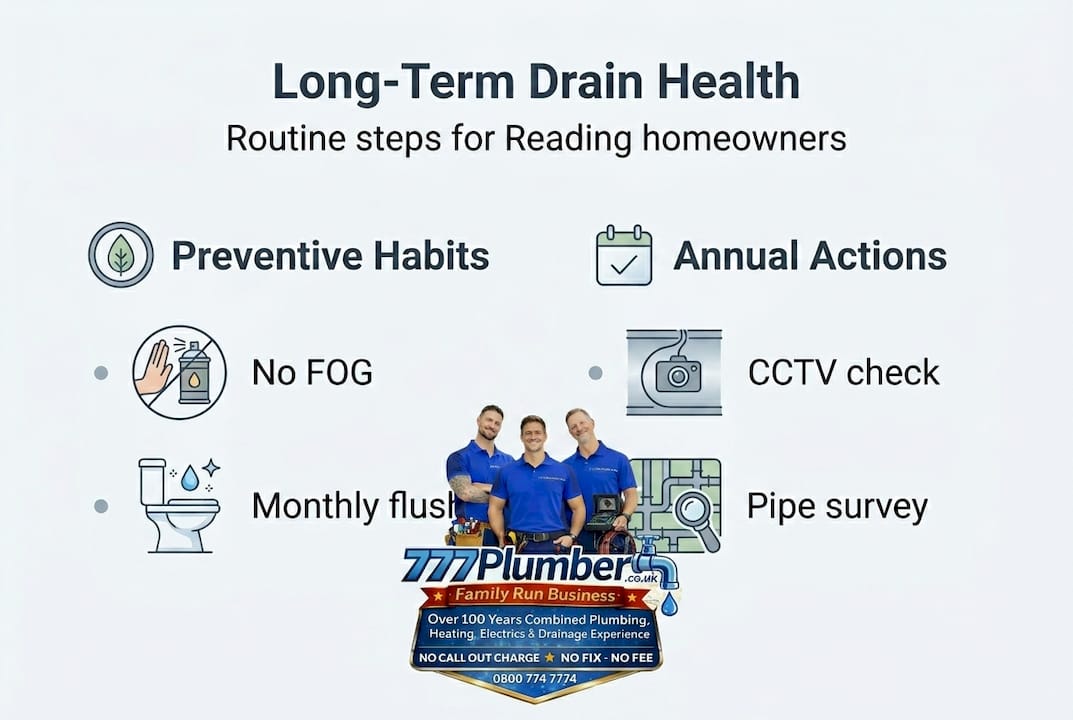
The most impactful prevention strategies are behavioural. Avoiding FOG, wipes, and non-biodegradable materials in your drainage system is the single most effective step any household can take. Pour cooled cooking fat into a sealed container and dispose of it in the bin. Use sink strainers in the kitchen and hair catchers in the shower. Bin wipes rather than flushing them, regardless of packaging claims.
Here is a straightforward prevention checklist:
- Install mesh strainers on all sink and bath drains, and empty them weekly
- Never pour FOG (fats, oils, grease) down any drain
- Bin all wipes, including those marketed as flushable
- Flush only toilet paper and human waste down the toilet
- Run hot water for 60 seconds after washing dishes to clear residual grease from the pipe walls
- Use an enzyme-based drain treatment monthly to digest organic buildup before it accumulates
Routine maintenance schedule
A little effort every month goes a long way. Pour a litre of boiling water mixed with a small amount of washing-up liquid down your kitchen sink weekly. Once a month, use an enzyme cleaner across all your household drains. These treatments work progressively, reducing buildup before it becomes a blockage.
Pro Tip: Note the date of your last drain maintenance in your home calendar or phone. Homeowners who track maintenance are far less likely to experience emergency blockages, simply because they spot slow drainage early and address it before it becomes a crisis.
The case for annual CCTV inspections
Important statistic: Properties over 30 years old have a significantly higher likelihood of cracked, offset, or root-invaded pipes that no amount of cleaning will resolve without professional intervention.
For older Reading properties, booking an annual CCTV drain check is one of the smartest maintenance decisions you can make. A camera survey takes under an hour, costs far less than an emergency excavation, and gives you a definitive picture of your pipe condition. You'll know whether you have a structural problem before it turns into a sewage backup.
Awareness campaign results across the UK show that public education is reducing the volume of wipes being flushed, but structural pipe deterioration continues to rise as housing stock ages. Routine inspections are filling the gap that better habits alone cannot close.
A smarter drain workflow: prevention pays off
Here is a perspective worth sitting with. The drainage industry talks a great deal about repair workflows, and rightly so. But in our experience working across Reading and the surrounding areas, the homeowners who call us most often are not making dramatic mistakes. They are simply reacting to problems rather than anticipating them.
The prevailing mindset is: "If it drains, it's fine." That works until it doesn't, usually at the worst possible moment. What we consistently see is that properties with recurring blockages have one thing in common: no prevention routine whatsoever. The pipe becomes a problem that gets fixed, forgotten, and then becomes a problem again.
Structural issues are now rising despite awareness campaigns, which tells us that behavioural changes alone are not enough. Pipes age, roots grow, and ground movement causes subtle damage that accumulates over years. The only reliable way to catch these issues early is through periodic camera surveys, not by waiting for a backup to confirm your suspicions.
Our advice: build a yearly prevention workflow as deliberately as you would schedule a boiler service. A CCTV drain survey once a year, combined with monthly enzyme treatments and basic strainer use, will almost entirely eliminate emergency callouts for the vast majority of homeowners.
Get help from Reading's drain specialists
Dealing with a blockage that keeps returning, or one that's clearly beyond DIY methods? You don't have to figure it out alone.

At 777 Drains, we provide fast, reliable drainage services across Reading and the surrounding areas. Whether you need 24hr drainage repairs Reading or a thorough CCTV drain surveys to find a problem you can't locate yourself, our engineers arrive equipped to diagnose and resolve the issue on the first visit. Booking is straightforward online, response times are rapid, and our work is carried out with minimal disruption to your household. For persistent, complex, or emergency drain issues, we are the local team Reading homeowners trust.
Frequently asked questions
How can I tell if a drain clog is in the main line or just a single fixture?
If multiple fixtures back up at once, the main line is likely blocked. Test several taps simultaneously to confirm whether the issue is isolated or widespread.
What is the safest method to unblock a kitchen sink?
Start with boiling water, then try baking soda and vinegar, followed by a plunger before considering professional help. Gentle methods are always preferable to chemicals on kitchen pipes.
Are chemical drain cleaners safe for old pipes?
Avoid chemical cleaners on fragile or older pipes, as they can corrode joints and seals, causing more damage than the original blockage.
How often should I have CCTV drain checks done?
For older properties, annual CCTV inspections are strongly recommended to catch structural deterioration before it leads to a full blockage or sewage backup.
What's the fastest emergency response for blocked drains in Reading?
In Reading, specialist firms including 777 Drains offer rapid emergency response with engineers available around the clock for urgent callouts.