
TL;DR:
- Recognize warning signs like water backup and foul smells to address blockages early.
- Use proper safety gear and tools, and know when to call professionals for complex issues.
- Regular maintenance and local expertise help prevent emergencies and ensure effective repairs.
A blocked drain never picks a convenient moment. One minute everything is fine, and the next you have water backing up in the sink, an awful smell drifting through the house, and a rising sense of panic. The good news is that most emergency blocked drain situations can be managed quickly if you know exactly what to do. This guide walks you through how to spot the warning signs, prepare safely, take the right action, and know when to call in a local expert. Follow these steps and you can limit the damage, protect your home, and get things flowing again fast.
Table of Contents
- Spotting the signs of a blocked drain emergency
- Prepare: What equipment and information you need before acting
- Step-by-step process to unblock a drain in an emergency
- What to do if DIY fails: Verifying, troubleshooting and getting help fast
- Why prevention and local expertise go hand in hand
- Get fast, expert drainage help in your area
- Frequently asked questions
Key Takeaways
| Point | Details |
|---|---|
| Act quickly | Immediate action stops damage and makes emergency fixes more effective. |
| Prepare properly | Get the right tools and safety gear before starting any blocked drain work. |
| Follow safe steps | Use step-by-step guides and never take risks with chemicals or pressure. |
| Know when to call experts | If DIY fails or risks arise, professional help is essential for safety and results. |
| Prevention saves money | Regular checks and maintenance help avoid costly and stressful emergencies. |
Spotting the signs of a blocked drain emergency
Not every slow drain is a crisis, but some signs tell you that you are dealing with something urgent. Catching these early can be the difference between a quick fix and a costly repair bill. Blocked drain risks are serious: ignoring the problem can lead to floods, property damage, and health hazards.
Here are the key warning signs to watch for:
- Water backing up in sinks, baths, or toilets instead of draining away
- Foul smells coming from plug holes or outside drain covers
- Gurgling sounds from pipes or toilets when water drains elsewhere
- Multiple fixtures affected at the same time, suggesting a shared pipe is blocked
- Slow drainage that has been getting steadily worse over days
- Water pooling around outside drain covers after rain
When just one fixture is slow, the blockage is likely local and easier to fix. When several fixtures are affected simultaneously, the problem is almost certainly deeper in your drainage system and far more urgent.
Speed genuinely matters here. Every hour you wait, pressure builds behind the blockage. Sewage can push back through the lowest point in your system, which is often a ground-floor toilet or shower. That is not just unpleasant. It is a health risk that requires specialist cleaning on top of the drain repair itself.
"A blocked drain left unattended can quickly become a flooding event, introducing harmful bacteria into your living space and causing structural damage to floors and walls."
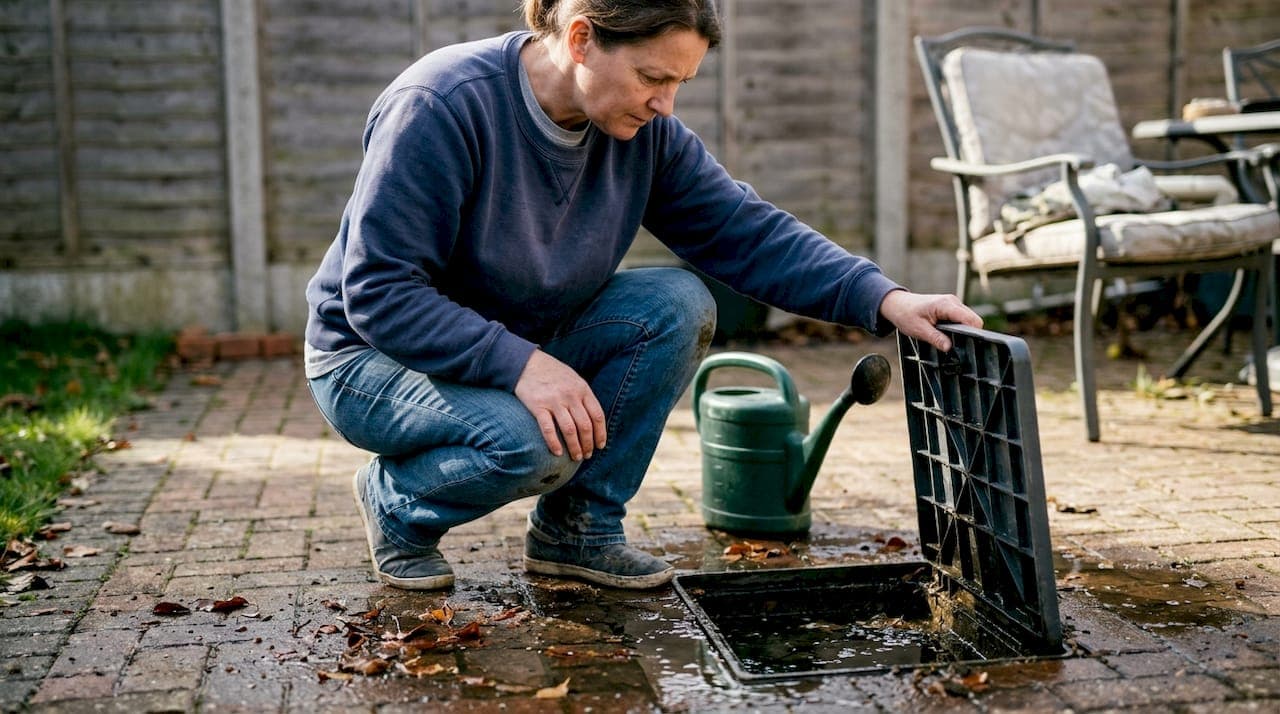
Pro Tip: Check your outside drain covers first. Lift the cover carefully and look inside. If the chamber is full of water, the blockage is almost certainly in the underground pipe. If it is empty, the problem is inside your home and you can start there.
For more detail on what drainage service advice recommends for local properties, it is worth familiarising yourself with the specific risks before you act.
Prepare: What equipment and information you need before acting
Once you have confirmed it is an emergency, resist the urge to dive straight in. A few minutes of preparation will save you time, mess, and potential injury.
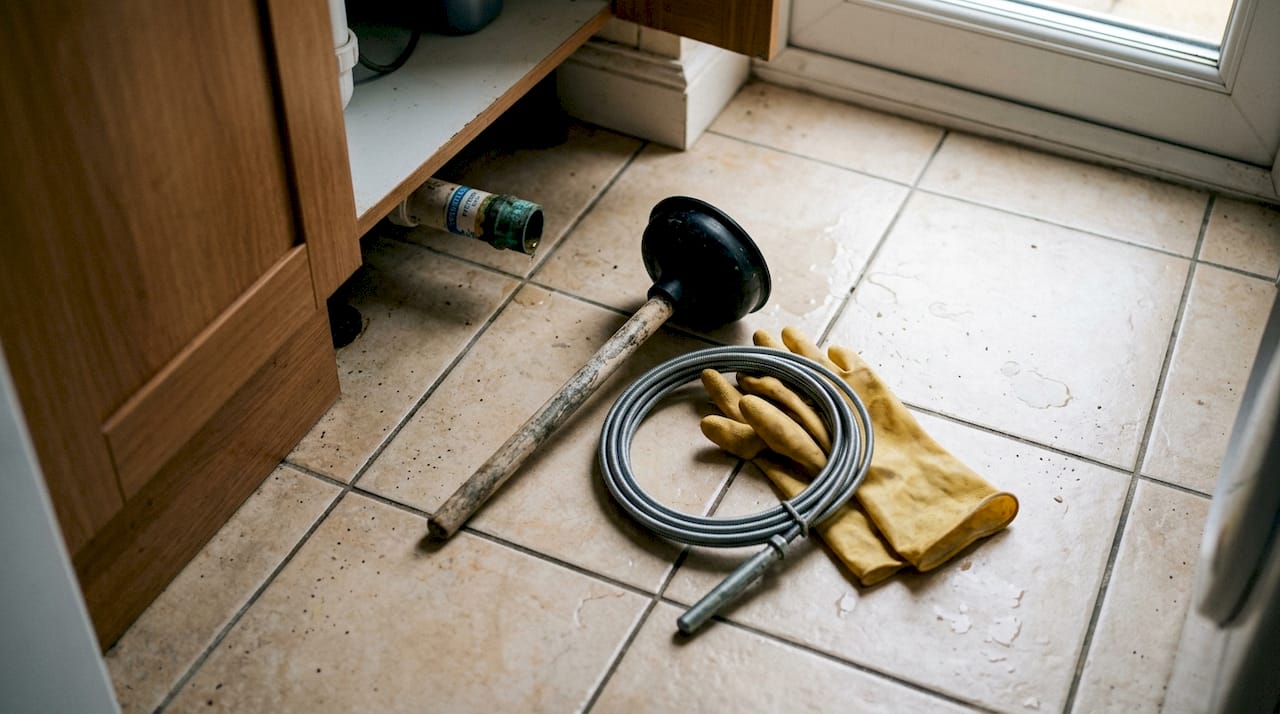
First, gather the right equipment. Not all tools are suitable for all blockages.
| Equipment | Best for | Limitations |
|---|---|---|
| Plunger | Sink and toilet blockages near the surface | Ineffective on deep or solid blockages |
| Drain rods | Outdoor drains and longer pipe runs | Requires care to avoid pipe damage |
| Wet and dry vacuum | Pulling out loose debris | Not suitable for compacted blockages |
| Drain snake (hand auger) | Bends and tight pipe sections | Limited reach on deeper blockages |
| High-pressure hose | Flushing debris downstream | Can spread contamination if misused |
Alongside your tools, you need the right safety gear. Proper safety equipment is critical when working on any drain, even a domestic one.
Your safety checklist before starting:
- Rubber gloves (heavy duty, not washing-up gloves)
- Safety goggles to protect against splashback
- Disposable face mask when dealing with sewage smells
- Old clothing you are happy to discard or wash thoroughly
- Disinfectant spray and paper towels for cleanup
There are also situations where you should not attempt a DIY approach at all. If sewage is already overflowing, if you can smell gas near drains, or if you have no idea where your drainage system runs, stop and call a professional immediately.
Pro Tip: Save your local drainage engineer's number in your phone before an emergency happens. When water is rising fast, you do not want to be searching online. Useful drain advice tips can also help you understand your home's layout in advance.
Step-by-step process to unblock a drain in an emergency
With your equipment ready and your safety gear on, follow these steps in order. Do not skip ahead.
- Turn off the water supply to the affected fixture if possible. This stops more water adding to the problem.
- Remove any visible debris from the plug hole or drain cover using gloved hands or a small tool.
- Use a plunger with a firm, steady pumping motion for at least 20 seconds. Cover overflow holes with a damp cloth first to create proper suction.
- Check the outside drain chamber. Lift the cover and look for standing water. If it is full, the blockage is in the underground pipe.
- Use drain rods if the blockage is in an outdoor pipe. Screw sections together and push them into the pipe with a clockwise twisting motion. Never turn anticlockwise as this can unscrew the rods inside the pipe.
- Flush with water once you feel the blockage shift. Run a tap or pour a bucket of water to confirm the pipe is clear.
- Disinfect the area thoroughly once the drain is flowing again.
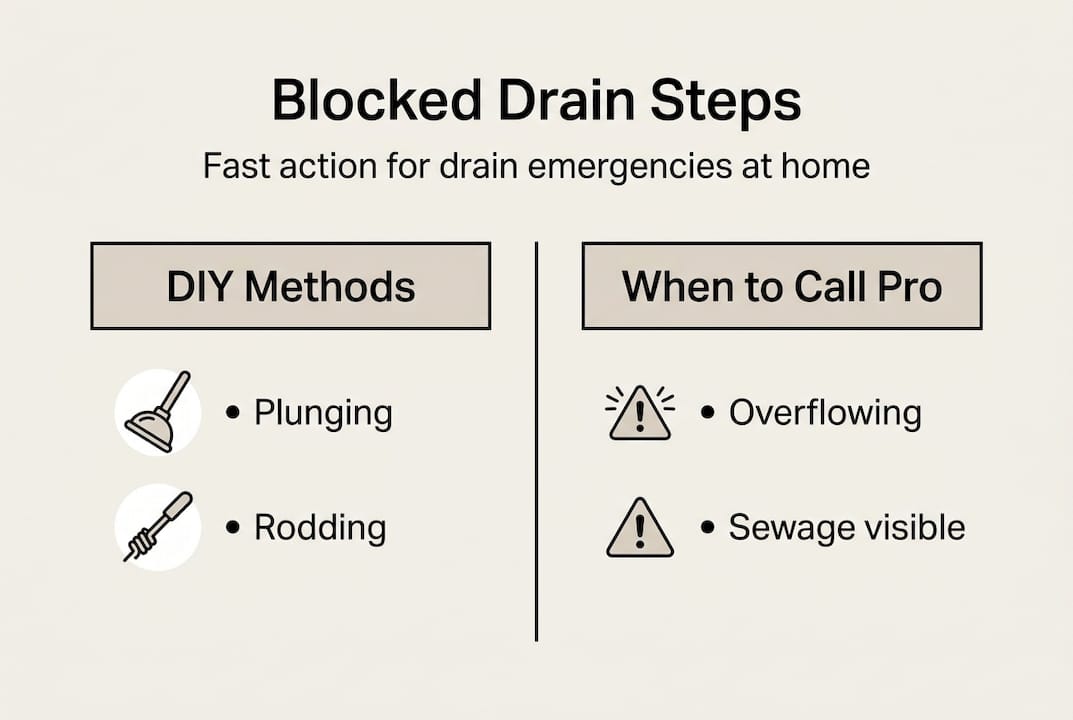
Know when to stop. If you have tried plunging and rodding without success, or if you notice the water level rising rather than dropping, that is your signal to call in expert help. Professional intervention may be needed if drains remain blocked after manual clearing.
| Approach | Typical success rate | Cost | Time to resolve |
|---|---|---|---|
| DIY plunging | High for surface blockages | Low | 15 to 30 minutes |
| DIY drain rods | Moderate for outdoor pipes | Low | 30 to 60 minutes |
| Professional jetting | Very high for all blockages | Moderate | 1 to 2 hours |
| CCTV and specialist repair | Near 100% for complex issues | Higher | Same day to next day |
For homeowners in areas like Newbury drain unblocking where older pipe systems are common, professional tools make a significant difference.
Pro Tip: Regular maintenance, such as monthly hot water flushes and using a drain guard, can prevent the vast majority of emergency blockages before they start.
What to do if DIY fails: Verifying, troubleshooting and getting help fast
If your efforts have not worked, do not keep trying with more force. That risks cracking older pipes or pushing the blockage deeper. Instead, take a step back and troubleshoot.
Common reasons a quick fix does not work:
- The blockage is further down the pipe than rods can reach
- Tree roots have intruded the pipe and created a physical barrier
- A section of pipe has collapsed or is heavily corroded
- Fat and grease have built up over months into a solid mass
- A foreign object (wipes, sanitary products) is wedged in a bend
Here is a quick reference to help you decide your next move:
| Sign you observe | What it likely means | Action to take |
|---|---|---|
| Water backing up in multiple rooms | Main sewer line blocked | Call a professional immediately |
| Drain clears then blocks again quickly | Partial blockage or root intrusion | Book a CCTV inspection |
| Sewage smell but no visible blockage | Vent pipe issue or partial collapse | Professional assessment needed |
| Outside chamber overflowing | Shared sewer blocked | Contact your water authority or a local engineer |
Persistent blockages or secondary flooding require immediate professional attention. Attempting to push through a collapsed pipe can make repairs far more expensive.
To prepare your home for a drainage team's arrival, clear access to all relevant drain covers, move any garden furniture or vehicles blocking the path, and let the engineer know which fixtures are affected and when the problem started.
Warning: If sewage is entering your home at ground level and you cannot stop it, leave the affected rooms immediately. Sewage contains harmful bacteria and pathogens. Do not allow children or vulnerable people to remain in contaminated areas.
For homeowners across the region, Oxford professional drain repairs and Bracknell 24hr drain service are available around the clock for exactly these situations.
Why prevention and local expertise go hand in hand
Here is something most emergency drain guides will not tell you: the advice that works in a new-build estate in Swindon is not the same advice that applies to a Victorian terrace in Reading or an older semi in Didcot. Local drainage systems vary enormously. Pipe materials, gradients, shared sewer layouts, and even local soil conditions all affect how blockages form and how they behave.
We have seen homeowners follow generic online advice and make things worse, not because they did anything reckless, but because the guidance simply did not account for their specific setup. A national helpline cannot tell you that a particular road in Oxford has a known history of root intrusion, or that certain older properties in Basingstoke have clay pipes that react badly to rodding.
Local expertise built through years of working in these specific towns is genuinely different from generic knowledge. It means faster diagnosis, fewer return visits, and solutions that actually last. Pair that with regular inspections and you are not just fixing emergencies. You are preventing them. The drainage advice articles we publish are written with these local realities in mind, not as one-size-fits-all templates.
Get fast, expert drainage help in your area
When DIY reaches its limit, you need a team that can be with you quickly and solve the problem properly the first time.

At 777 Drains, our accredited engineers cover Reading, Oxford, Newbury, Didcot, Swindon, Basingstoke, and Bracknell with 24/7 availability. Whether you need emergency drainage services right now or want to book a CCTV inspection before a small issue becomes a big one, we are ready to help. Our Oxford drain team and Newbury blocked drain experts are on call around the clock. Get in touch today and we will have an engineer with you fast, with no unnecessary call-out delays.
Frequently asked questions
What are the main causes of emergency blocked drains?
Drains commonly block from wipes and fat or from outside debris such as tree roots and leaf build-up. Heavy rainfall can also overwhelm older drainage systems rapidly.
How quickly should I act if I notice a blocked drain?
Act immediately. Delays escalate into damage and health risks very quickly, especially if sewage is involved. Even a few hours can make a significant difference to repair costs.
What should I avoid doing when unblocking a drain myself?
Avoid harsh chemicals and forcing tools into pipes. Professional services advise against chemical use as it can corrode older pipes and create additional problems downstream.
When is it essential to call a drainage professional?
Persistent blockages or overflows require expert help immediately. If sewage is visible or flooding has started, do not attempt further DIY and call a professional straight away.
Can regular maintenance prevent emergency blockages?
Yes. Maintenance prevents major drain issues by catching build-up and small faults before they become emergencies. Annual inspections are particularly valuable for older properties.