
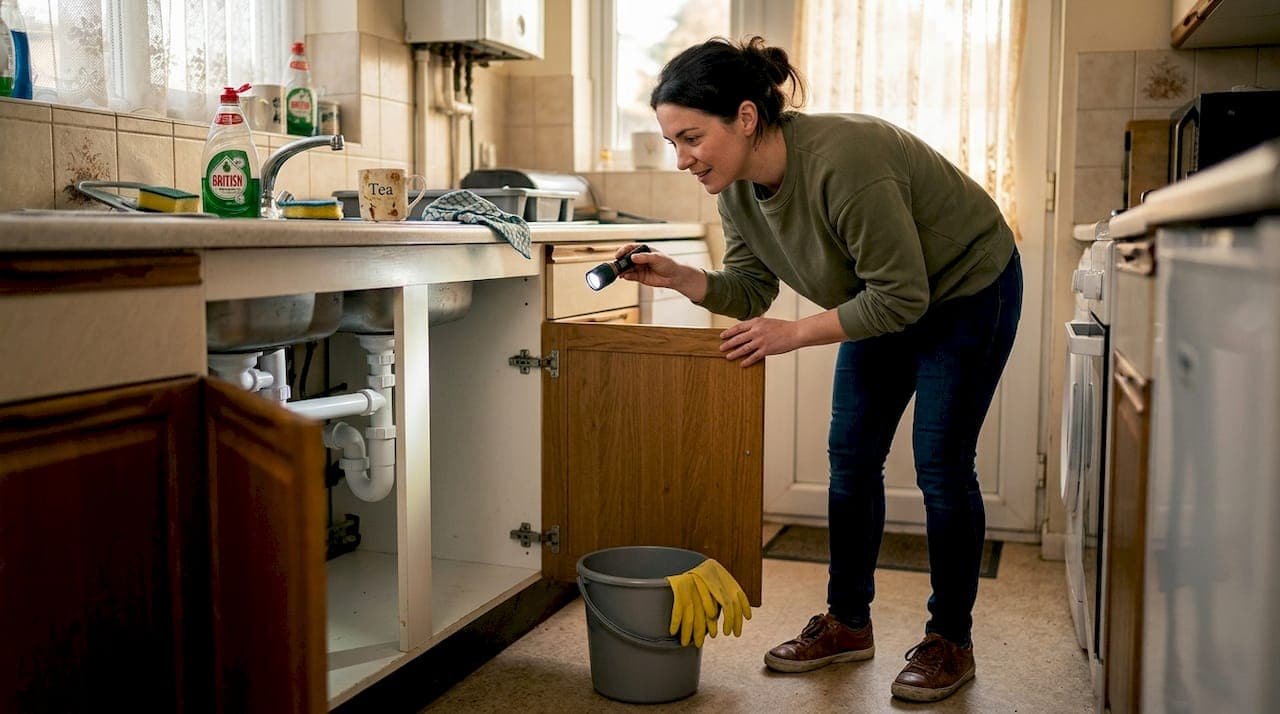
TL;DR:
- Regular inspections and maintenance can prevent costly drain blockages and damage.
- Recognising signs like slow drainage and odours helps determine when professional help is needed.
- Proper tools and safety precautions are essential for effective and safe drain system checks.
Discovering water pooling where it shouldn't be is enough to make any homeowner's stomach drop. Whether it's a soggy patch near your outside gully or a sink that drains at a snail's pace, the anxiety is real. The good news is that many drain problems are entirely preventable, and you don't need to be a plumber to stay on top of them. With a few basic tools, a bit of know-how, and a routine check once a year, you can catch small issues before they spiral into expensive repairs. This guide walks you through everything: understanding your drainage layout, choosing the right tools, and knowing when to hand things over to a professional.
Table of Contents
- Understanding your drain pipe system
- Tools and safety precautions for checking drain pipes
- Step-by-step guide to checking your drain pipes
- Common problems when checking drains (and how to fix them))
- When to call a professional for drain pipe checks
- Why prevention is better than cure for drain pipes
- Need help with your drain pipes? Get professional support
- Frequently asked questions
Key Takeaways
| Point | Details |
|---|---|
| Know your system | Understand where blockages most often occur in your home’s drains for quicker checks. |
| Use the right tools | Gloves, a torch, and a bucket enable safe, effective inspections before you need expert help. |
| Follow safety steps | Wearing PPE and following safety basics reduces health risks during DIY inspections. |
| DIY versus expert help | Simple checks can be done by most, but persistent or severe issues require calling professionals. |
Understanding your drain pipe system
Before you start poking around outside, it helps to have a clear picture of how your household drainage actually works. Most UK homes have two main drainage systems running side by side: one for surface water (rain from roofs and driveways) and one for foul water (from sinks, toilets, and baths). These eventually connect to the shared public sewer at the boundary of your property, and from there it's the water company's responsibility.
The key components you'll be inspecting as a homeowner include:
- Waste pipes: The smaller pipes inside your home carrying water away from sinks, baths, and appliances.
- Soil stack: The large vertical pipe (usually 110mm in diameter) that takes waste from toilets down to the underground drains.
- Gulleys: The open drain points at ground level, often found near downpipes and kitchen waste outlets.
- Inspection chambers: Covered access points (usually plastic or concrete covers at ground level) that allow you to look into the main underground drain runs.
- Traps: The U-shaped or P-shaped sections beneath every sink and bath, designed to hold a small amount of water and block sewer gas from rising up.
Blockages don't appear randomly. Drains block most commonly at bends, joints, and trap areas, which is exactly why these spots deserve your closest scrutiny. When you're scanning your drainage layout, pay particular attention to anywhere pipes change direction or connect.
For more useful drainage advice on understanding your system before you begin, it's worth familiarising yourself with a simple diagram of your home's layout first.
| Drain component | What to check for |
|---|---|
| Gulleys | Leaves, debris, standing water |
| Inspection chamber | Blockage, water level, damage to cover |
| Waste pipes (under sinks) | Leaks, slow draining, odour |
| Traps | Blockage, foul smell, poor seal |
| Soil stack | Cracks, external damage, joint separation |
| Underground drain runs | Roots, collapsed sections, scale build-up |
Knowing your layout is the foundation of effective drain maintenance. Once you can picture where water travels in and around your home, spotting something unusual becomes much easier.
Tools and safety precautions for checking drain pipes
With a clear picture of your drainage layout in mind, make sure you're properly equipped before you get started. The right tools not only make the job easier, they keep you safe.
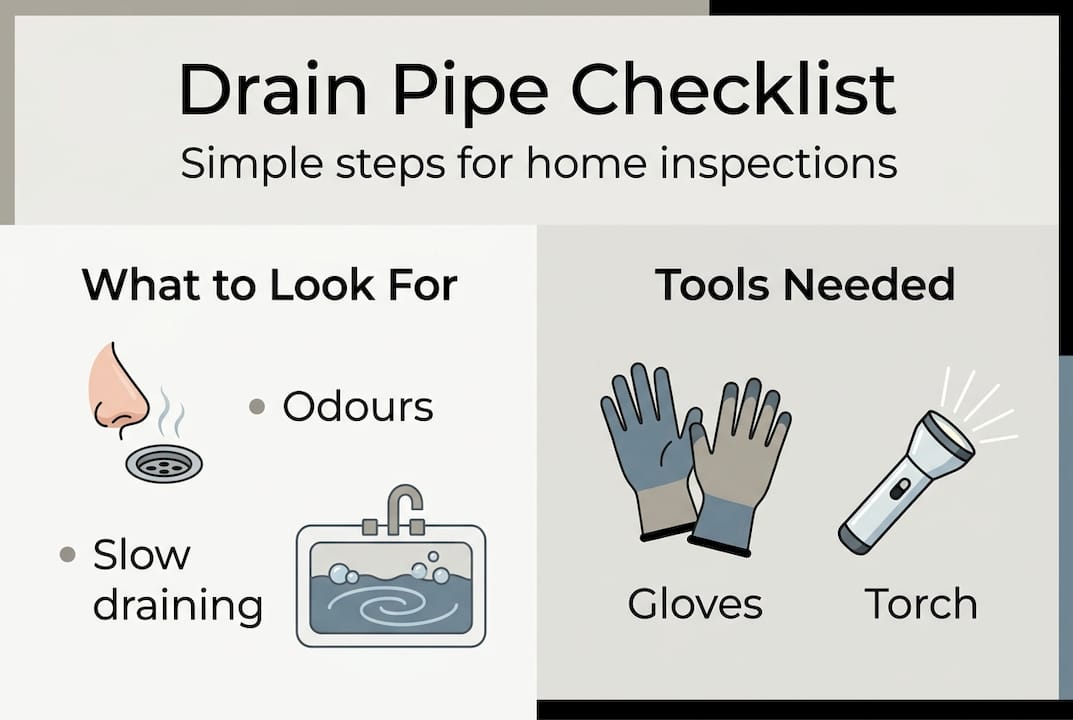
For a basic inspection, you'll need:
- Heavy-duty rubber gloves (long-cuffed if possible)
- A good torch or head torch (both hands free is ideal)
- A bucket for scooping out debris from gulleys
- A drain rod set for probing or dislodging soft blockages
- Eye protection (safety glasses or goggles)
- A face mask rated for odour and fine particles
Optionally, a small handheld CCTV camera (available to hire or buy online) can be slid down pipes for a clearer view of what's happening below ground. These are increasingly affordable and genuinely useful if you suspect a blockage you can't see.
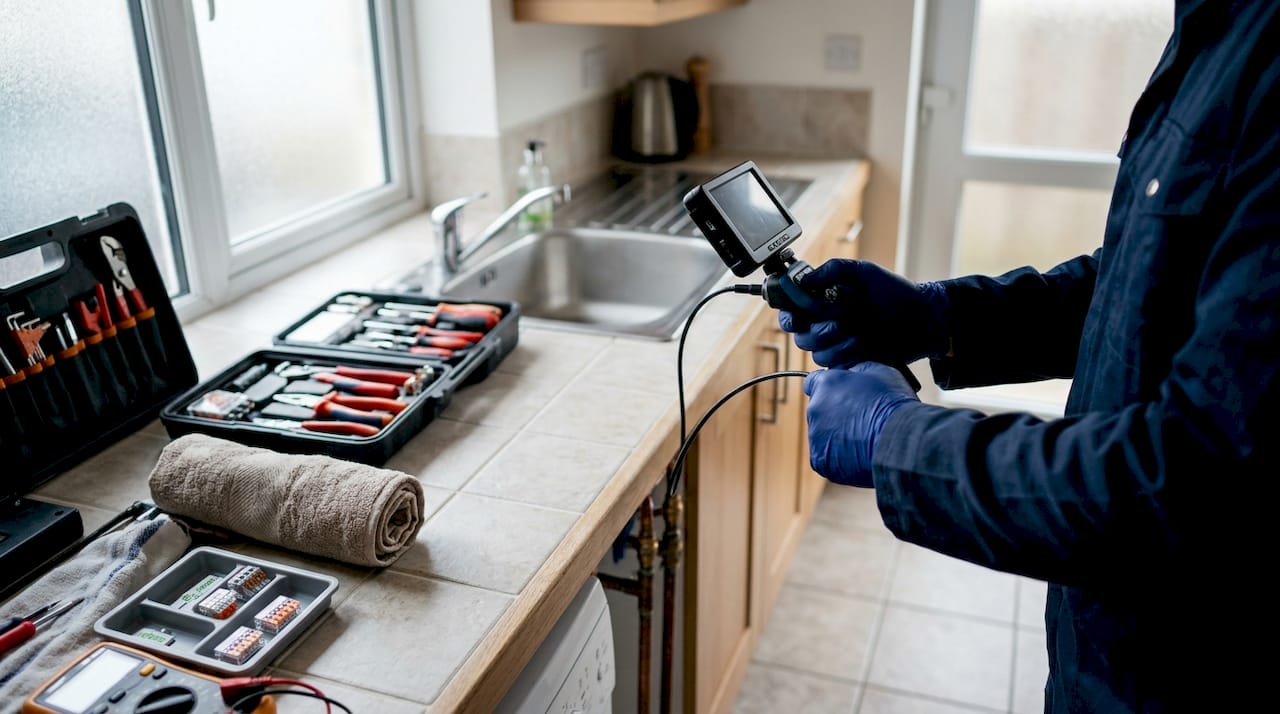
| Tool | Homeowner standard | Professional grade |
|---|---|---|
| Inspection | Torch, naked eye | CCTV drain camera |
| Unblocking | Basic rod set | High-pressure water jetter |
| Protection | Rubber gloves, mask | Full PPE suit, respirator |
| Recording | Notes, phone camera | Digital diagnostic report |
| Access | Manual cover lift | Specialist lifting equipment |
As the HSE guidance on wastewater makes clear, always use appropriate PPE to avoid exposure to harmful bacteria present in drains. This isn't scaremongering; foul water drains carry genuine biological hazards.
Important safety warning: Never reach bare-handed into a drain, even if it looks clean. Bacteria in wastewater can cause serious illness. Always wash your hands thoroughly after any drain work, even if you wore gloves throughout.
Pro Tip: Never pour caustic chemical drain cleaners into a pipe before inspecting it first. If the blockage is solid or structural, chemicals will sit in the pipe, creating a corrosive hazard for anyone who later needs to rod or camera the drain. Inspect first, treat second.
Step-by-step guide to checking your drain pipes
Now that your toolkit is assembled and your safety gear is on, here's how to work through a practical drain inspection from start to finish.
- Start outside at the gulleys. Look for standing water, debris, or an unpleasant smell. Clear leaves and surface grime with a gloved hand or small brush, then flush with a bucket of water to see how freely it drains.
- Locate your inspection chamber covers. These are usually square or rectangular covers set into the ground, often near the house wall or at the base of downpipes. Lift carefully using a screwdriver or cover key.
- Check the chamber interior. Look at the water level. If it's higher than the pipe outlet, there's a blockage downstream. If it's empty and dry, the issue may be upstream between the house and the chamber.
- Test each sink, bath, and toilet. Run water and observe whether it drains freely. Water pooling or slow drainage is a reliable sign of an underlying blockage somewhere in the system.
- Check under-sink traps. Place a bucket beneath the trap, unscrew it, and clear any build-up of soap, hair, or grease. These are the single most common cause of slow drainage inside the home.
- Use rods if you find a blockage. Working from the inspection chamber, push rods gently into the pipe run. Never force rods aggressively, as this can damage pipe joints.
- Document your findings. Note which areas you checked, what you found, and any action taken.
Pro Tip: Keep a simple logbook, even just notes on your phone, of when you inspected each part of the system and what you discovered. This record is invaluable for spotting patterns, and it impresses buyers if you ever sell your home. For practical guidance on resolving blocked drains in your area, local experience really does make a difference.
Common problems when checking drains (and how to fix them)
Even with a methodical approach, homeowners regularly hit snags. Knowing the typical mistakes in advance can save you time, money, and a lot of frustration.
The most frequent errors include:
- Forcing drain rods: Aggressive pushing can cause rods to unscrew underground, leaving them lodged in the pipe. Always turn rods clockwise only.
- Relying on chemical cleaners: Caustic products can mask the problem without solving it, and cause pipe corrosion over time, especially in older clay or cast iron systems.
- Skipping inspection chamber checks: Many homeowners only look at the surface and miss the fact that the chamber is surcharging (filling up), which indicates a far deeper problem.
- Ignoring recurring issues: If a drain blocks twice in a season, that's not bad luck; it's a pattern that signals something structural.
"Persistent bad smells or repeated blockages often signal deeper structural pipe issues that DIY methods simply cannot resolve."
If after rodding a blockage returns within a few weeks, or if you notice persistent foul odours even after clearing visible debris, these are firm signs that the problem lies deeper than surface maintenance can reach. A CCTV drain survey will identify root ingress, pipe collapse, or displaced joints that rods cannot detect or fix.
Knowing when to stop and call someone is genuinely a skill. There's no shame in it; in fact, continuing to push rods into an already compromised pipe can make a straightforward repair into a costly excavation.
When to call a professional for drain pipe checks
Some situations are simply beyond the scope of a domestic inspection kit, and recognising those moments early can prevent a manageable problem from becoming a major one.
Call a professional drainage engineer when:
- Blockages keep returning despite repeated clearing at home
- Foul odours persist indoors or near inspection chambers even after gulleys are cleared
- Water backs up into multiple fixtures simultaneously, suggesting a main drain blockage
- You spot cracks or gaps in visible pipe sections or around inspection chamber walls
- Tree roots are visible in or near your drainage run
- The inspection chamber is overflowing or significantly surcharged
As drain survey specialists confirm, CCTV surveys and persistent sewer smells both require professional intervention rather than continued DIY attempts.
What happens when you call in expert help? A drainage engineer will typically carry out a CCTV camera inspection to pinpoint the exact location and cause of the problem, then advise on repair options ranging from high-pressure jetting to patch lining or excavation. For professional drainage services that cover both emergency and scheduled visits, having a reliable company on hand makes a significant difference. Homeowners in Berkshire can also find dedicated support for drain unblocking in Newbury and surrounding areas.
Periodic professional inspections, even every two or three years, are worth every penny. Engineers spot slow deterioration that's invisible to the untrained eye.
Why prevention is better than cure for drain pipes
Here's something we've seen repeatedly: homeowners who call us in a panic almost always say the signs were there for months. A bit of slow drainage here, a faint smell there. They assumed it would sort itself out. It never does.
The reactive approach to home maintenance costs far more than the preventive one, not just in repair bills but in disruption, stress, and in some cases, insurance headaches when water damage is involved. Regular annual checks, as covered in this guide, can realistically keep your drainage running well for years without emergency intervention.
Challenging the mindset of "fix it when it breaks" is really what drain maintenance tips come down to. Drains don't announce their failures politely. They build up gradually until something gives.
Pro Tip: Set a recurring reminder in your calendar every October, before autumn leaves peak, to run through the checks in this guide. That one hour a year can prevent a very stressful and expensive winter.
Need help with your drain pipes? Get professional support
Sometimes DIY checks reveal something that needs more than a rod and a bucket. That's exactly where 777 Drains steps in.

We provide professional drainage services across the UK, covering everything from blocked drain clearance and drain repairs to full CCTV drain surveys that give you a precise picture of what's happening underground. Whether you need an emergency call-out today or want to book a routine inspection for peace of mind, our experienced engineers are ready to help. No guesswork, no unnecessary upselling, just clear diagnosis and effective solutions that last.
Frequently asked questions
How often should I check my drain pipes at home?
Yearly drain checks are the recommended minimum for most UK homes, though you should inspect more frequently if you notice slow drainage, gurgling sounds, or unpleasant smells developing between annual checks.
What are the signs that my drains may be blocked?
Slow drainage and odours are classic early indicators, along with gurgling noises from plugs or toilets and water backing up into sinks or baths during use.
Do I need special tools to check my drains myself?
Basic drain checks require only gloves, a torch, and a bucket for surface inspection, though persistent blockages or deeper investigation will benefit from drain rods or professional camera equipment.
Is it dangerous to check drains myself?
Surface-level checks are generally safe with gloves and sensible precautions, but bacteria exposure risks mean that deep or sewage-related work should always be left to professionals with proper protective equipment.
Who is responsible for fixing blocked drains outside my property?
Drains within your property boundary are your responsibility to maintain, while shared sewers and public drains are managed and maintained by your local water company.