
TL;DR:
- Most household drain blockages can be fixed with simple DIY methods like plunging and snaking.
- Regular maintenance, such as using strainers and monthly flushes, prevents costly future clogs.
- Seek professional help if multiple drains slow down or DIY methods fail repeatedly.
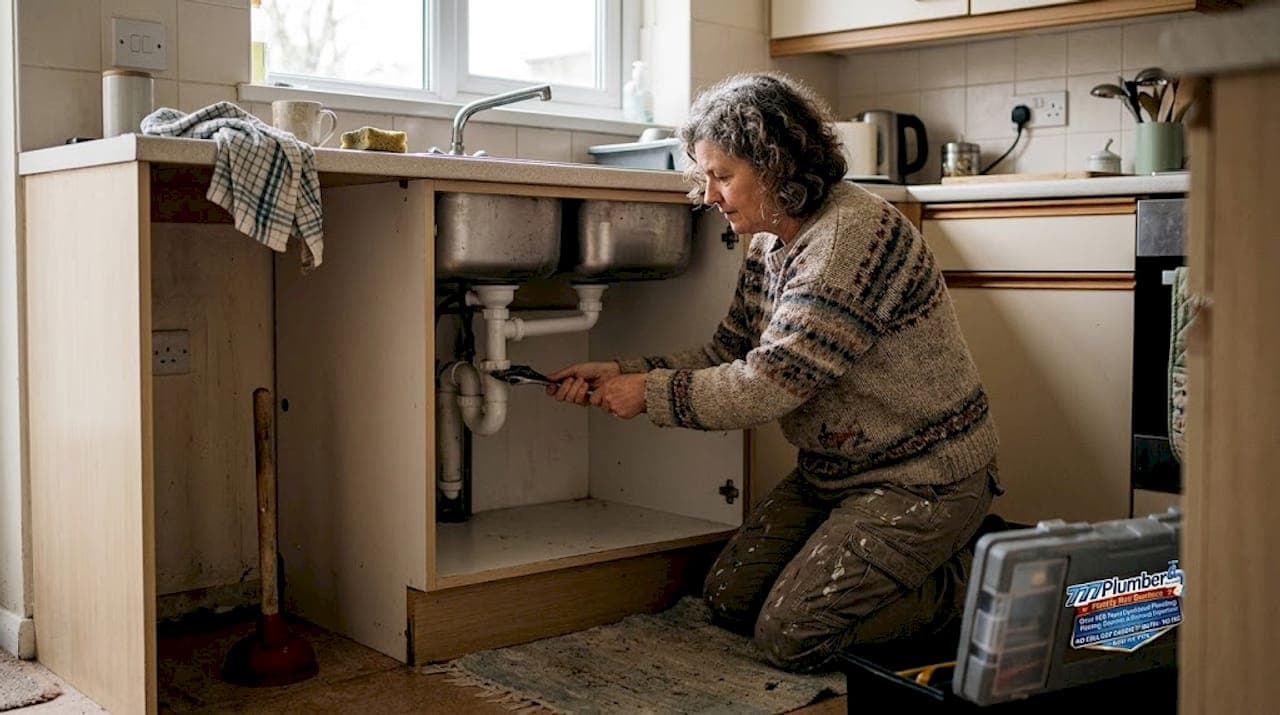
A blocked drain has a way of ruining your day at the worst possible moment. Whether it's a kitchen sink backing up with murky water or a bathroom drain that gurgles ominously every time you shower, the stress is very real for homeowners across Reading and the surrounding area. The good news is that DIY handles 90% of clogs, and tackling them yourself can save you 50 to 80% compared to repeated emergency call-outs. This guide walks you through exactly what tools to gather, how to clean your drain pipes step by step, how to troubleshoot stubborn blockages, and when it genuinely makes sense to call in a professional.
Table of Contents
- What you need before you start cleaning drain pipes
- Step-by-step: how to clean your drain pipes
- Troubleshooting: what to do if your drain remains blocked
- Preventing future drain blockages
- Why methodical, mechanical cleaning beats quick fixes
- Professional drain cleaning and support near you
- Frequently asked questions
Key Takeaways
| Point | Details |
|---|---|
| Mechanical comes first | Use plungers and drain snakes before considering chemicals for most blockages. |
| Boiling water caution | Never use boiling water in PVC pipes—hot tap water is the safer choice. |
| Act methodically | Tackle clogs by escalating from simplest to most advanced method step by step. |
| Prevention saves money | Regular maintenance and good habits can prevent most future blockages and costly repairs. |
| Know when to get help | If multiple drains are slow or DIY fails, consult a drainage professional. |
What you need before you start cleaning drain pipes
Before you touch a single pipe, having the right kit ready makes the whole job quicker and safer. Rummaging under the kitchen sink mid-job is frustrating and wastes time you could spend actually fixing the problem.
Essential tools and materials
| Item | Purpose |
|---|---|
| Cup plunger | Creates suction to dislodge blockages |
| Drain snake or auger | Bores through deeper clogs mechanically |
| Bicarbonate of soda | Natural cleaning agent |
| White vinegar | Reacts with bicarbonate to loosen buildup |
| Rubber gloves | Protects hands from bacteria and chemicals |
| Bucket | Catches overflow and dirty water |
| Mesh strainer | Catches debris before it enters the pipe |
| Enzyme cleaner | For regular maintenance flushes |
According to drainage guidance, non-chemical methods first such as boiling water on metal pipes, bicarbonate of soda with vinegar, a plunger, and a drain snake are always the safest starting point. Chemical products should come much later in your approach, if at all.
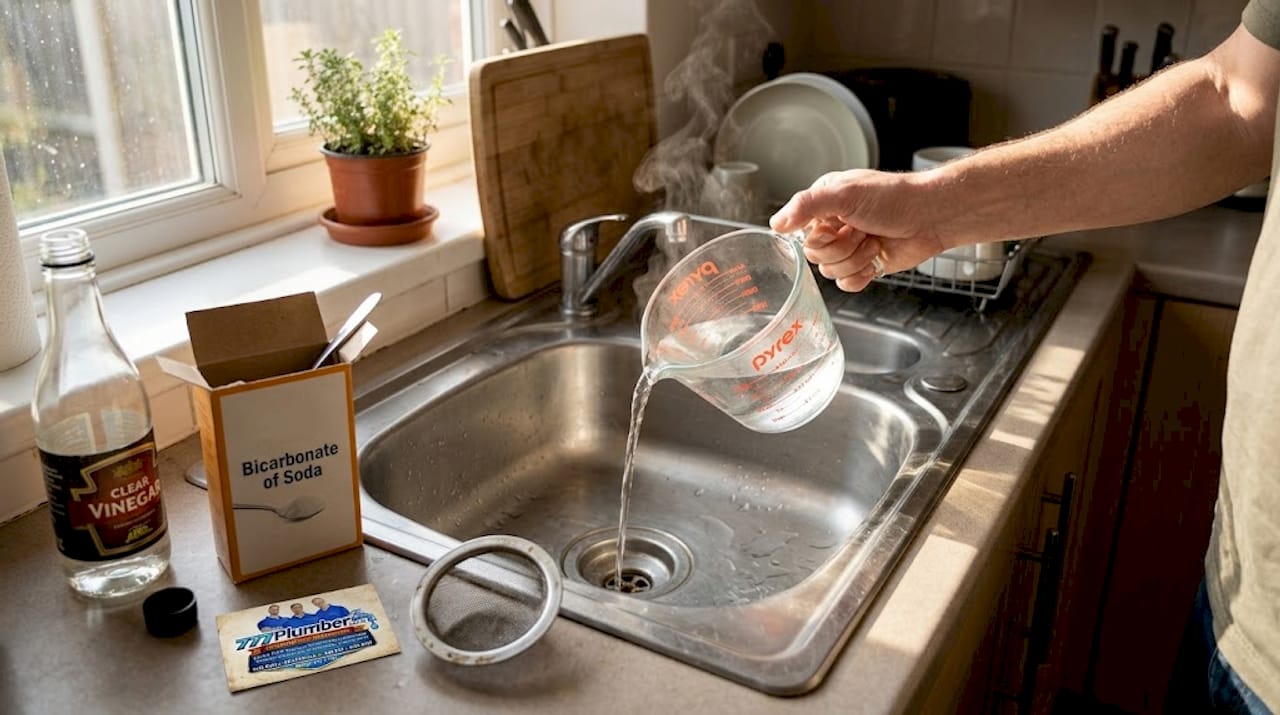
You can find a full breakdown of the tools for unclogging drains on our services page, which covers both domestic and more involved outdoor systems.
A few important safety points before you begin:
- Always wear rubber gloves. Drain water contains harmful bacteria.
- Keep your face clear of the drain opening when pouring any liquid.
- Open a window. Ventilation is essential, especially if you later use any chemical products.
- Never pour boiling water down PVC pipes. Most homes built after 1970 have PVC pipework, and boiling water can soften or warp plastic joints, causing leaks further down the line. Use very hot tap water instead.
Pro Tip: Store your drain-cleaning kit in a dedicated box under the sink or in a utility cupboard. When a blockage strikes, you'll be ready in minutes rather than searching through three different rooms.
Mesh strainers are genuinely worth buying for every plughole in your home. They cost very little and stop hair, food debris, and soap scum from entering the pipes in the first place.
Step-by-step: how to clean your drain pipes
With everything at hand, here's how to tackle that troublesome drain step by step. The key is to escalate gradually. Start with the simplest method and only move to the next if it fails.
First, assess the situation. Is the water draining slowly, standing completely still, or are you hearing gurgling from nearby drains? A slow drain usually means a partial blockage. Standing water suggests a full blockage. Gurgling from multiple drains is a sign the problem may be further down the system.
- Hot water flush. For metal pipes, carefully pour boiling water directly down the drain in two or three stages, pausing 30 seconds between each pour. For PVC pipes, use the hottest water from your tap instead. This melts grease and loosens organic buildup like soap scum effectively.
- Bicarbonate of soda and vinegar. Pour half a cup of bicarbonate of soda down the drain, followed immediately by half a cup of white vinegar. The fizzing reaction works to loosen debris clinging to pipe walls. Cover the drain opening, wait 20 minutes, then flush thoroughly with hot water.
- Plunging. Block the overflow opening (usually found near the top of a sink or bath) with a damp cloth, then place the plunger cup firmly over the drain. Push down and pull up rapidly 10 to 15 times. The suction and pressure shift is what dislodges the clog, so a tight seal is critical.
- Drain snake or auger. Feed the cable into the drain and rotate it slowly. When you feel resistance, you've hit the blockage. Continue turning to break it up or hook it and pull it out.
Pro Tip: Never mix different chemical cleaners. The reactions can produce harmful gases. If one product fails, flush thoroughly with water before trying anything else.
Method comparison at a glance:
| Method | Best for | Key risk |
|---|---|---|
| Hot water | Grease and soap buildup | Damage to PVC if boiling |
| Bicarbonate + vinegar | Minor organic clogs | Limited on deep or solid blockages |
| Plunger | Partial clogs near the drain opening | Ineffective without a good seal |
| Drain snake | Deeper, more stubborn blockages | Can scratch pipe walls if forced |
For persistent outdoor or main line drain clogs, the methods above may not be sufficient on their own.
Troubleshooting: what to do if your drain remains blocked
Even with the best methods, some blockages are too stubborn for basic DIY approaches. Here's what to try next before deciding whether to escalate further.
Signs you're dealing with a more serious blockage:
- Two or more drains in your home are draining slowly at the same time
- You can hear gurgling in your toilet when you run the bathroom sink
- Water backs up into the bath when you flush the toilet
- A foul smell persists even after cleaning
Multiple slow drains are a strong indicator of a main line clog rather than a localised blockage. Main line issues often require a powered drain snake or hydrojet equipment, and in some cases, tree root intrusion or significant scale buildup that needs mechanical clearing first.
On chemical cleaners, they should genuinely be a last resort. Caustic cleaners generate heat during the chemical reaction, which can soften and distort PVC pipework, and they rarely solve deep or solid blockages. If you do reach for a chemical product, choose an enzyme-based drain cleaner instead. These use natural bacteria to break down organic matter gradually and are far safer for your pipes.
Caustic chemical cleaners are the plumbing equivalent of treating a sprained ankle by removing your foot. They seem like a solution, but you're often creating a bigger problem.
When to stop and call a professional:
- All DIY methods have failed after two or three attempts
- You suspect a main line blockage
- There's visible damage to the pipe or fittings
- Sewage is backing up anywhere in the home
Our professional drainage services cover everything from emergency unblocking to full pipe assessments. For problems that keep coming back, CCTV and repairs for persistent clogs can identify hidden issues like cracks or root intrusion that no plunger will ever fix. If the trouble is outside the house, we can also address outdoor or main drain clogs with the right equipment.
Preventing future drain blockages
With your drains now clear, keeping them that way is straightforward if you take a few key steps. Prevention genuinely costs far less, in money and stress, than repeated clearing.
Daily habits that make a real difference:
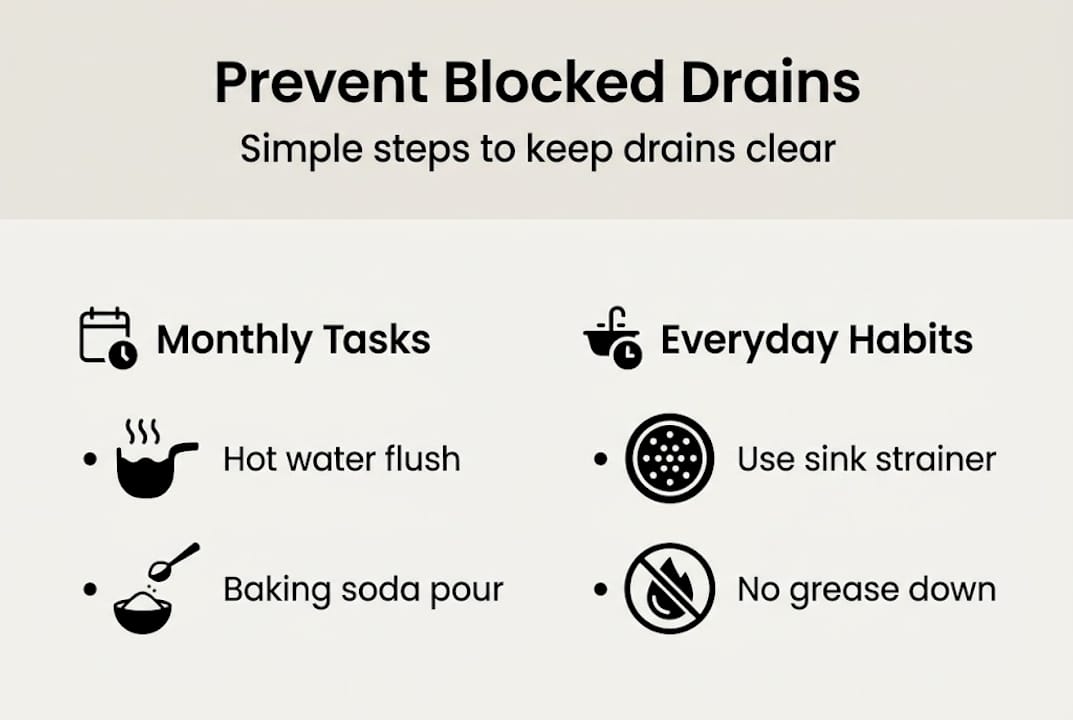
- Never pour cooking fat, oil, or grease down the kitchen sink. Pour it into an old container and bin it instead. Fat cools and solidifies inside pipes, building up layer by layer until nothing gets through.
- Fit mesh strainers over every plughole. Hair is the single biggest cause of bathroom blockages, and a £2 strainer stops almost all of it.
- Scrape plates into the bin before washing up, even if you have a washing-up bowl.
- Keep wet wipes, cotton pads, and any so-called flushable wipes out of the toilet. They do not break down and are a leading cause of sewer blockages.
Monthly maintenance routine:
Once a month, pour a kettle of very hot tap water down each drain (hot tap for PVC, boiling for metal). Follow it with a bicarbonate of soda and vinegar flush as described above. This takes about ten minutes per drain and keeps minor organic buildup from becoming a full blockage.
Regular enzyme treatments every four to six months add another layer of protection. These products work slowly overnight, breaking down grease and soap residue before it hardens.
As a practical benchmark, professional sewer cleaning every 18 to 22 months is a sensible investment for most households, particularly older properties with cast iron pipework. For more ongoing drainage advice tailored to homes in Reading and the surrounding area, our blog is updated regularly with practical guidance.
Statistic to keep in mind: Consistent DIY maintenance resolves around 90% of common household clogs, meaning most homeowners who stay on top of basic care rarely need emergency call-outs.
Why methodical, mechanical cleaning beats quick fixes
After years of responding to blocked drains across Reading, one pattern stands out clearly: the homeowners who reach straight for a bottle of caustic cleaner tend to call us back far sooner than those who take a methodical approach.
Chemical shortcuts feel satisfying because they involve very little effort. Pour, wait, flush. But they rarely solve the root cause, and over time they can thin or distort pipework, making future blockages worse and repairs more expensive. Prioritising mechanical methods such as plunging and snaking is not only safer but often reveals what's actually going on inside the pipe. A drain snake that catches a clump of hair and grease tells you something useful. A bottle of chemical cleaner tells you nothing except that it temporarily shifted the problem further down the line.
There is a time and place for enzyme cleaners as a maintenance tool, and we'd recommend them. But the instinct to escalate to chemicals before trying mechanical methods is one of the most common and costly mistakes we see. Work through the steps methodically, starting with the simplest approach, and you'll resolve most blockages without putting your pipework at risk. Our local expert experiences in Reading back this up entirely.
Professional drain cleaning and support near you
Sometimes a blockage is simply beyond what DIY tools can reach, and that's nothing to be embarrassed about. Main pipe clogs, repeated blockages in the same drain, or suspected root intrusion all benefit from professional attention before they become genuinely expensive problems.

At 777 Drains, we offer fast local response across Reading and surrounding towns, with no unnecessary waiting around. Our drainage services range from straightforward unblocking to full CCTV drain surveys that show exactly what's happening inside your pipes, without guesswork. If you've tried the DIY steps in this guide and the problem persists, our team is ready to help with lasting solutions. Get in touch for drain repairs in Reading and the surrounding area.
Frequently asked questions
Can I use boiling water to clean all types of drain pipes?
Boiling water is safe only for metal pipes; for PVC pipes, which are standard in most post-1970 homes, use hot tap water to avoid warping or melting joints.
How effective is baking soda and vinegar for stubborn blockages?
Bicarbonate of soda and vinegar work well for minor organic buildup and regular maintenance, but limited on deep clogs such as compacted hair tangles or hardened grease plugs further down the pipe.
When should I call a professional for a blocked drain?
Call a professional if several drains are slow simultaneously, you suspect a main line blockage, or DIY methods have not resolved the issue after a few attempts.
Are chemical cleaners safe for all pipes?
No. Caustic cleaners risk PVC damage by generating heat during the reaction; enzyme-based drain cleaners are a much safer choice for plastic pipework.
How can I prevent future blockages in my drains?
Fit mesh strainers on every plughole, never pour fats or oils down the sink, and flush your pipes monthly with hot water followed by a bicarbonate of soda and vinegar treatment.