
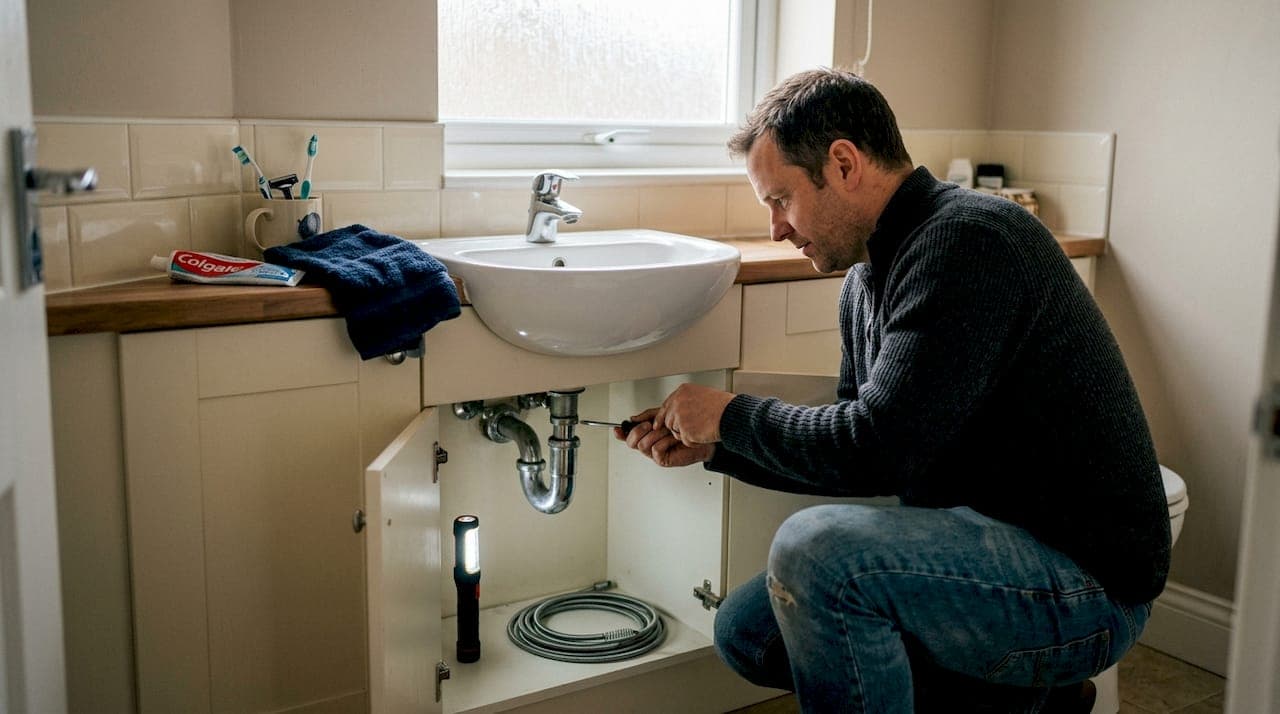
That sinking feeling when you step into the shower and find yourself standing in a pool of water is something most homeowners know all too well. A slow drain might seem like a minor inconvenience, but left untreated, it can escalate into a full blockage, water damage, or even a costly repair bill. Whether it's your kitchen sink backing up after washing the dishes or your bathroom basin taking an age to empty, the good news is that most slow drains can be sorted with the right knowledge and a bit of effort. This guide walks you through the causes, fixes, and habits that keep your drains flowing freely.
Table of Contents
- Understanding why drains get slow
- Essential tools and materials for fixing a slow drain
- Step-by-step guide to clearing a slow drain
- Troubleshooting and common mistakes
- Preventative maintenance for healthy drains
- Local drain experts ready to help
- Frequently asked questions
Key Takeaways
| Point | Details |
|---|---|
| Know the cause | Finding out what's causing your slow drain saves time and helps you choose the best fix. |
| DIY first steps | Most slow drains can be cleared with basic household tools like plungers or drain snakes. |
| Avoid harsh chemicals | Using strong chemical cleaners may damage your pipes and cause more problems later. |
| Prevent future issues | Simple regular maintenance, such as cleaning and using drain filters, prevents slow drains from recurring. |
| Local expert help | If simple fixes fail, local drainage specialists offer fast solutions and peace of mind. |
Understanding why drains get slow
Before you reach for any tools, it helps to know what you're actually dealing with. Slow drains rarely happen overnight. They build up gradually as debris accumulates inside your pipes, narrowing the passage water needs to flow through.
Common causes of slow drains include build-up of debris, soap scum, grease, and hair. In the kitchen, cooking fat and food particles are the usual culprits. In the bathroom, it's almost always hair and soap residue. Over time, these materials cling to the inside of your pipes and create a sticky, stubborn layer that traps even more debris.
Beyond the obvious, there are structural factors too. Older pipes with a shallow slope may not carry water away efficiently. Narrow pipe diameters restrict flow. In some cases, particularly in properties with mature gardens in areas like Reading or Oxford, tree roots can infiltrate underground drainage and cause persistent slow flow. For broader drain advice and tips, it's worth understanding which type of blockage you're facing before attempting any fix.
Safety note: Never mix different drain-cleaning chemicals together. Combining products can create toxic fumes or cause dangerous reactions. Always read labels carefully and ensure the area is well ventilated before using any chemical cleaner.
Common debris types that cause slow drains:
- Hair and soap scum in bathroom basins and showers
- Cooking grease and food particles in kitchen sinks
- Toothpaste residue and product build-up
- Dirt and sediment from outdoor drainage
- Tree root intrusion in older or garden-adjacent properties
Essential tools and materials for fixing a slow drain
With causes established, the next step is making sure you have the right equipment to hand. The good news is that most slow drain situations can be resolved with items you either already own or can pick up cheaply from a hardware shop.
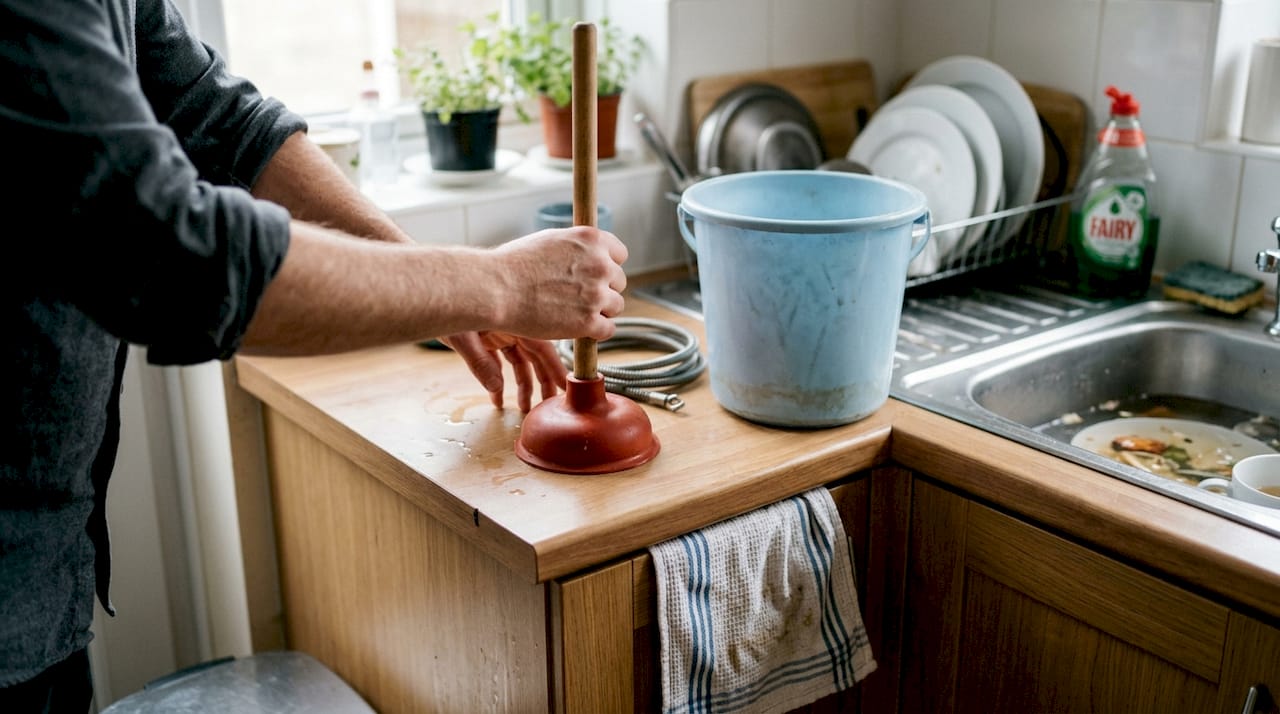
Basic tools like plungers, drain snakes, and a bucket can resolve most slow drain situations without the need for specialist equipment. That said, knowing when to upgrade your toolkit matters.
| Tool | Household option | Specialist option |
|---|---|---|
| Blockage removal | Cup plunger | Drain snake or auger |
| Pipe inspection | Torch and mirror | CCTV drain camera |
| Debris removal | Wire coat hanger | Drain rod set |
| Cleaning solution | Baking soda and vinegar | Enzymatic drain cleaner |
| Protection | Rubber gloves | Chemical-resistant gloves |
Here's what to gather before you start:
- A rubber cup plunger (not a toilet plunger)
- A drain snake or flexible wire
- A bucket and old towels
- Baking soda and white vinegar
- Rubber gloves
- A screwdriver for removing drain covers
Pro Tip: Avoid using caustic soda or bleach-based drain cleaners regularly. While they may clear a blockage short-term, they can corrode older pipes and damage rubber seals over time. If you're unsure, professional drainage services are a safer and more effective long-term option.
Step-by-step guide to clearing a slow drain
With your tools ready, it's time to tackle the problem directly. Work through these steps in order, starting with the least invasive method.
- Remove the drain cover. Use a screwdriver if needed and clear any visible debris by hand. Wear gloves.
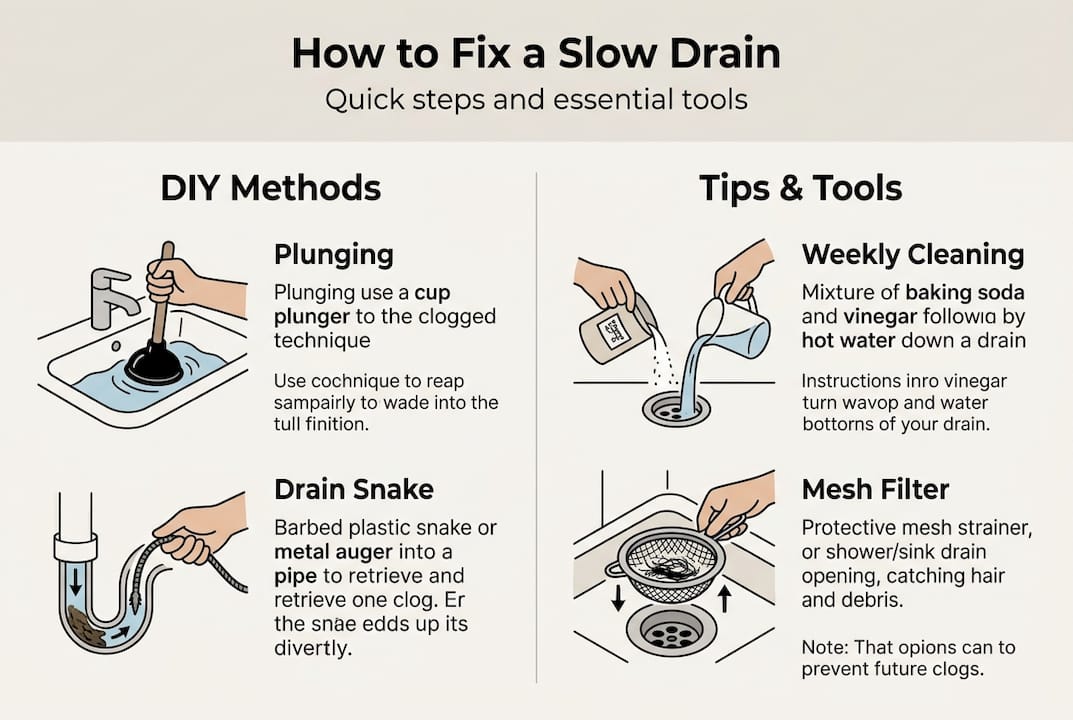
- Plunge the drain. Place the cup plunger firmly over the drain opening, ensuring a good seal. Push down and pull up sharply, repeating 10 to 15 times. This pressure shift can dislodge soft blockages.
- Try the baking soda and vinegar method. Pour half a cup of baking soda down the drain, followed by half a cup of white vinegar. Leave it for 20 to 30 minutes, then flush with hot (not boiling) water.
- Use a drain snake. Feed the flexible wire or snake into the drain and rotate it to break up or hook the blockage. Pull it out slowly and dispose of any debris.
- Flush thoroughly. Run hot water for two to three minutes to clear any remaining residue.
Manual methods like plunging and snaking are often effective for household drains and should always be your first approach before considering anything more aggressive.
Pro Tip: Clean your drain covers every two weeks. A quick wipe and rinse takes under a minute and stops debris from building up in the first place.
| DIY method | Best for | Expected result |
|---|---|---|
| Plunging | Soft, recent blockages | Immediate improvement |
| Baking soda and vinegar | Grease and soap build-up | Gradual clearing over 30 mins |
| Drain snake | Hair and solid debris | Direct removal of blockage |
| Hot water flush | Light residue | Maintenance and prevention |
For more detailed drainage expertise or if you're dealing with a recurring issue, it's worth reading up on blocked drain solutions specific to the Reading area.
Troubleshooting and common mistakes
Even with the right tools and method, things don't always go to plan. Here are the most common mistakes homeowners make when trying to fix a slow drain.
- Overusing chemical cleaners. Repeated use damages pipes and rarely solves the root cause.
- Not removing the drain cover first. Plunging without clearing surface debris just pushes it further down.
- Using boiling water on plastic pipes. This can warp or crack PVC pipework. Use hot tap water instead.
- Giving up too soon. Plunging often needs 15 to 20 repetitions to be effective.
- Ignoring multiple slow drains. If more than one drain is slow at the same time, the problem is likely further down the system.
Important: Never mix bleach with ammonia-based cleaners or acidic products like vinegar. The resulting fumes are toxic and can cause serious harm. If you've already used one chemical product, flush the drain thoroughly with water before trying anything else.
Persistent slow drains may indicate more severe blockages or problems with pipe structure, which DIY methods simply cannot address.
Pro Tip: If your DIY efforts haven't worked after two or three attempts, stop and call a professional. Continuing to force tools into a damaged or root-affected pipe can make things significantly worse. You can find blocked drain guidance or explore emergency drain unblocking options if the situation becomes urgent.
Preventative maintenance for healthy drains
Fixing a slow drain is satisfying. Preventing one from happening again is even better. A few simple habits can make a real difference to the long-term health of your drainage system.
Regular maintenance reduces the likelihood of recurring drain issues, and most of it takes just a few minutes each week. Think of it like brushing your teeth. A little effort consistently beats a big problem later.
Here's what to build into your routine:
- Weekly: Remove and rinse drain covers in the bathroom and kitchen. Clear any visible hair or debris.
- Monthly: Pour a mixture of baking soda and white vinegar down each drain, leave for 20 minutes, then flush with hot water.
- Always: Never pour cooking fat, oil, or grease down the kitchen sink. Let it cool and dispose of it in the bin.
- Install drain filters: Simple mesh or silicone filters sit over the drain opening and catch hair and food particles before they enter the pipe. They cost very little and save a great deal of trouble.
- Periodically: Flush outdoor drains with a garden hose to clear leaves and sediment, especially in autumn.
For ongoing drain maintenance advice, keeping a simple monthly checklist on your fridge can be enough to stay ahead of most blockages. Small habits really do add up.
Local drain experts ready to help
Sometimes a slow drain is more than a DIY job. If you've worked through the steps above and the problem keeps coming back, or if you suspect a deeper issue with your pipework, it's time to bring in the professionals.

At 777 Drains, we provide fast, reliable professional drainage services across Reading, Oxford, Newbury, Didcot, Swindon, Basingstoke, and Bracknell. Our engineers use modern CCTV diagnostic equipment to pinpoint the exact cause of your drainage problem, whether it's a stubborn blockage, a collapsed pipe, or root intrusion. We offer emergency call-outs and long-term solutions designed to stop the same issue from returning. If you're in Oxford and need drain repairs or require Newbury drain unblocking, our local teams are ready to respond quickly and get your drains back to full flow with minimal disruption to your day.
Frequently asked questions
What causes slow drains most often in UK homes?
Hair, grease, and soap scum build-up are the top causes of slow drains in UK households, particularly in bathrooms and kitchens where these materials enter the drain daily.
How can I safely unblock a slow drain without chemicals?
Use a plunger, drain snake, or a hot water flush with baking soda and vinegar. Manual methods like plunging are often effective and far gentler on your pipework than chemical alternatives.
When should I call a professional for a slow drain?
If drains remain slow after several DIY attempts or multiple drains are affected at once, call a professional. Persistent slow drains can signal structural pipe problems that need specialist equipment to diagnose.
What's the best way to prevent slow drains?
Clean drain covers weekly, avoid pouring grease down the sink, and use mesh filters to trap debris. Regular maintenance is far cheaper and less stressful than dealing with a full blockage.
Do slow drains mean there's a bigger plumbing problem?
Not always, but they can. If several drains in your home are slow simultaneously, pipe structure problems or a major blockage further down the system may be the cause, and a CCTV inspection is the most reliable way to find out.