
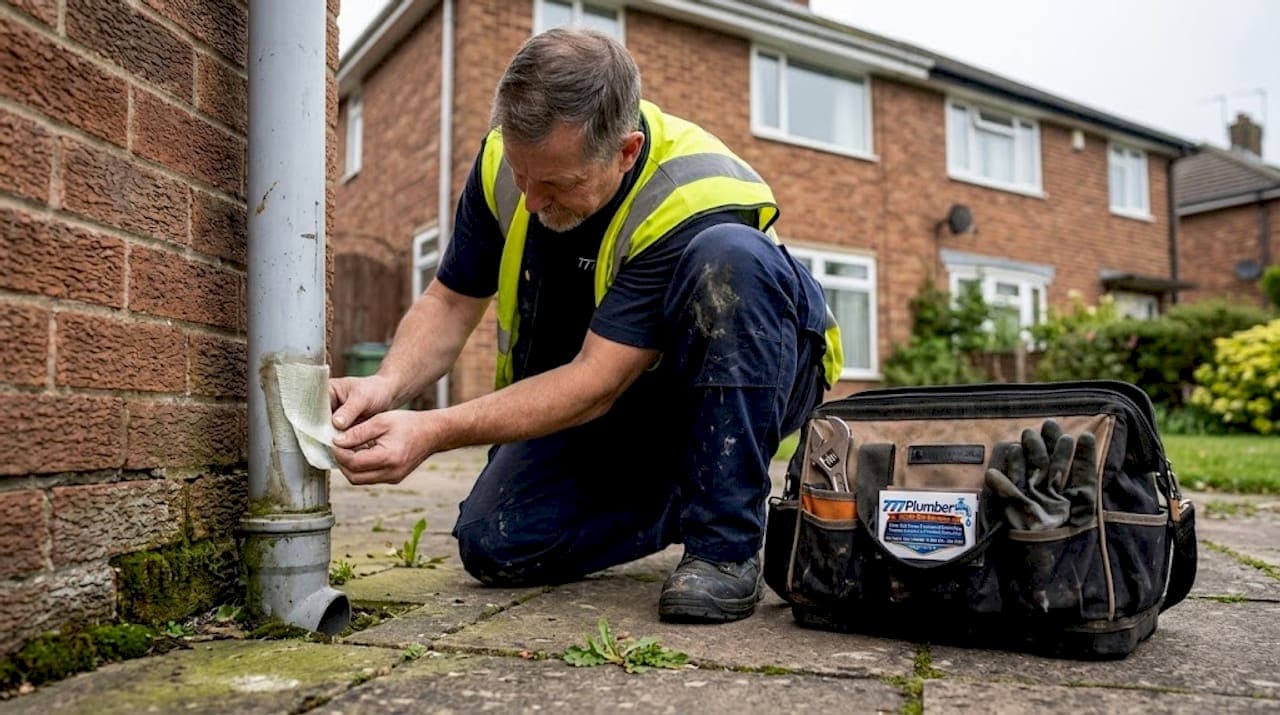
TL;DR:
- Pipe patch repair is a trenchless method that fixes localized pipe damage without excavation.
- It involves inserting a resin-impregnated patch that bonds internally to restore pipe integrity.
- Suitable for cracks, leaks, and root intrusion, it offers quick, cost-effective solutions with minimal disruption.
When a drain starts leaking or cracking, most homeowners brace themselves for torn-up gardens and weeks of disruption. That assumption stops many people from acting quickly, which only makes the problem worse. Pipe patch repair is a trenchless, minimally invasive technique that fixes localised pipe damage without any digging at all. In this article, we explain exactly what pipe patch repair is, how it works, when it is the right choice, and how it compares to traditional replacement. If you are in Reading, Oxford, or the surrounding areas, this guide will help you make a confident, informed decision.
Table of Contents
- What is pipe patch repair?
- How pipe patch repair works: step by step
- Pipe patch repair vs. traditional pipe replacement
- When should you consider pipe patch repair?
- The truth most homeowners miss about drain repairs
- Find rapid, expert pipe repairs in Reading and Oxford
- Frequently asked questions
Key Takeaways
| Point | Details |
|---|---|
| Trenchless pipe repairs | Pipe patch repair fixes drains without costly excavation, saving time and hassle. |
| Localised solution | It is ideal for minor cracks or leaks, especially under gardens or driveways. |
| Quick and durable | Most repairs are completed in hours and offer long-lasting protection if done professionally. |
| Know your options | Comparing patch repair to traditional methods helps homeowners choose the best approach. |
What is pipe patch repair?
Pipe patch repair is precisely what it sounds like: a targeted fix applied to a specific damaged section of a pipe, rather than replacing the whole thing. As a trenchless repair method, it addresses localised problems without requiring engineers to excavate the ground above the pipe. That means no broken paving, no ruined flower beds, and no weeks of upheaval.
The technique works by inserting a specially prepared patch into the pipe at the point of damage. The patch is impregnated with resin and pressed against the interior pipe wall, then cured in place to create a smooth, watertight seal. Once set, it bonds firmly to the existing pipe and restores its structural integrity. The result is a repair that functions as part of the original pipe.
Pipe patch repair is commonly used for:
- Hairline cracks and fractures caused by ground movement or age
- Minor leaks at joints or along pipe runs
- Root intrusion where tree roots have begun to penetrate the pipe wall
- Corrosion damage on older clay or cast iron pipes
- Isolated joint failures where two pipe sections have separated slightly
It is worth noting what pipe patch repair is not suited for. If a pipe has fully collapsed, is extensively deformed, or has suffered damage along a long stretch, a patch will not provide a lasting solution. That is where full pipe relining or replacement becomes necessary.
Pro Tip: If your property sits near mature trees or has older clay drainage pipes, ask your drainage engineer whether a patch repair could resolve the issue before agreeing to any excavation. You may save considerable time and money.
For homeowners across Reading and Oxford, accessing quality drainage repair services that include patch repair as a standard option is increasingly straightforward. The key is knowing to ask for it.
How pipe patch repair works: step by step
Understanding the process removes the uncertainty that makes many homeowners hesitant. Patch repairs follow a clear, methodical sequence, and the whole job is typically completed in a single visit.
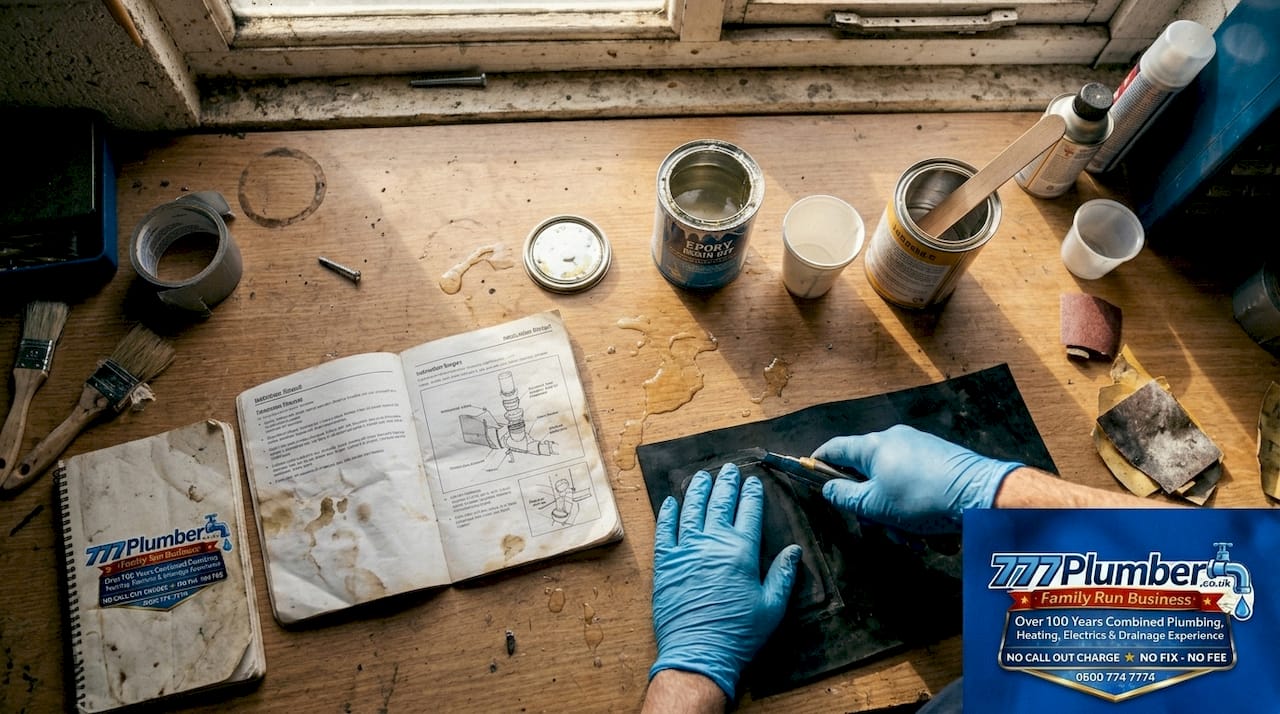
Most patch repairs use specially impregnated fibreglass or resin sheets that cure hard inside the damaged pipe section. These materials are chosen for their durability, flexibility during installation, and resistance to the chemical environment inside drainage systems.
Here is how the process unfolds:
- CCTV drain survey. A small camera is fed through the pipe to identify the exact location, type, and extent of the damage. This step is non-negotiable. Without it, engineers are guessing, and guesswork leads to wasted effort.
- High-pressure jetting. Before any patch is applied, the pipe interior is thoroughly cleaned using high-pressure water jetting. Grease, debris, and root fragments are removed so the resin bonds cleanly to the pipe wall.
- Patch preparation. The fibreglass or resin patch is cut to the correct size and saturated with the curing resin. It is then loaded onto an inflatable packer, which is a cylindrical device that holds the patch in place during curing.
- Patch insertion and positioning. The packer is guided through the pipe to the exact location identified during the CCTV survey. Precision matters here. A misaligned patch can cause further problems.
- Inflation and curing. The packer is inflated, pressing the resin patch firmly against the pipe wall. Depending on the resin type, curing takes between 30 minutes and a few hours. Some resins are UV-cured for even faster results.
- Post-repair inspection. Once cured, the camera goes back in to confirm the patch has bonded correctly and the pipe is flowing freely.
Pipe patch repair restores full pipe integrity without a single spade going into the ground. For properties with pipes running beneath driveways, patios, or established gardens, this is not just convenient. It is the only sensible option.
For homeowners dealing with recurring blockages alongside structural damage, working with experienced drain unblocking experts who also offer patch repairs means both problems can be addressed in one visit.
Pipe patch repair vs. traditional pipe replacement
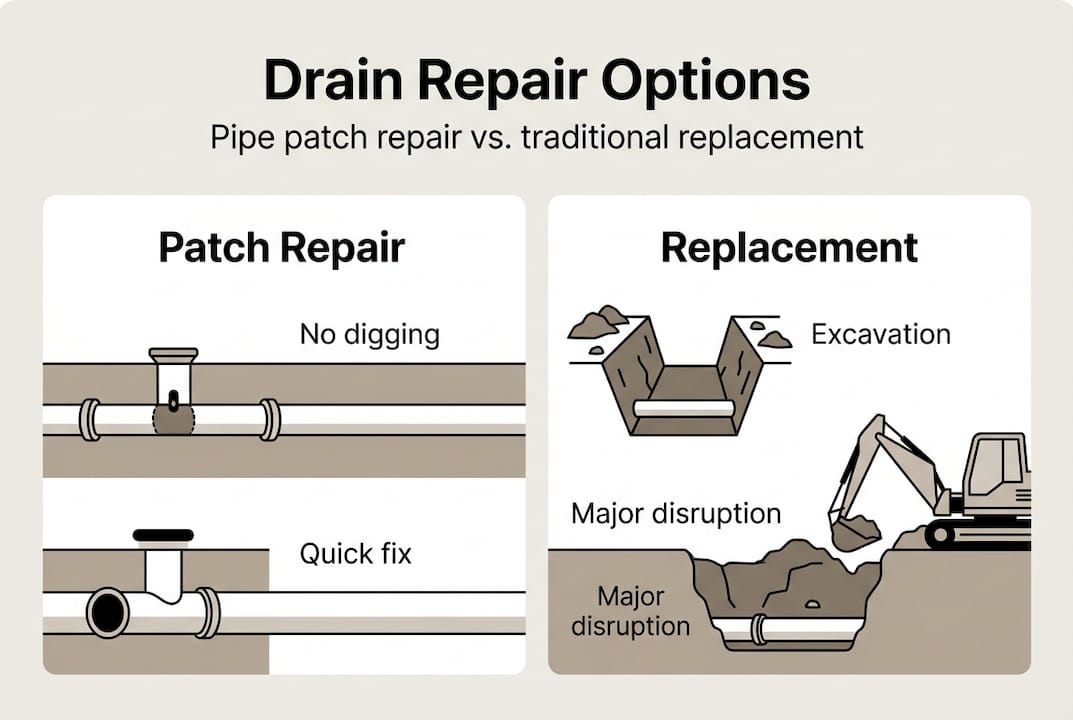
Choosing between patch repair and full pipe replacement is not always obvious. Both have their place, and the right answer depends on the nature and extent of the damage. Trenchless repairs like patching can be completed in a fraction of the time and cost of open excavation, but they are not a universal solution.
| Feature | Pipe patch repair | Traditional replacement |
|---|---|---|
| Method | Trenchless, internal | Excavation required |
| Disruption | Minimal | Significant |
| Typical duration | Hours to one day | Days to weeks |
| Cost | Lower for localised damage | Higher overall |
| Longevity | Excellent for localised fixes | Full pipe lifespan |
| Best for | Cracks, leaks, root ingress | Collapsed or extensively damaged pipes |
The table makes the trade-offs clear. Patch repair wins on speed, cost, and convenience when the damage is contained. Traditional replacement is unavoidable when the pipe is beyond localised repair.
Choose pipe patch repair when:
- CCTV confirms the damage is isolated to a short section
- The pipe retains its basic shape and structural form
- The surrounding area would be costly or difficult to excavate
- You need a fast resolution with minimal disruption
Choose traditional replacement when:
- The pipe has fully collapsed or is heavily deformed
- Damage runs along a significant length of the pipe run
- The pipe material is too degraded to hold a patch bond
- A full system upgrade is being planned
For homeowners exploring blocked drains solutions in the Reading and Oxford areas, understanding this distinction means you can have a more productive conversation with your drainage engineer from the outset.
When should you consider pipe patch repair?
Knowing the method exists is one thing. Knowing when to request it is another. The clearest signal is a CCTV survey result showing isolated cracks or joint failures in an otherwise structurally sound pipe. That is the ideal scenario for a patch repair.
Here are the most common situations where patch repair is the right call:
- A CCTV survey reveals a crack or fracture at a single point
- You notice damp patches in your garden with no obvious surface cause
- Slow drainage persists after jetting, suggesting a structural issue
- Tree roots have entered the pipe at one joint but have not spread further
- You have an older property in Reading or Oxford with clay pipes showing age-related wear
| Scenario | Recommended action |
|---|---|
| Single crack in otherwise sound pipe | Pipe patch repair |
| Root ingress at one joint | Pipe patch repair |
| Multiple cracks along a long run | Consider full relining or replacement |
| Fully collapsed section | Pipe replacement required |
| Joint separation with pipe intact | Pipe patch repair |
| Heavy corrosion throughout | Full replacement |
Pro Tip: Never assume a patch repair is suitable without a CCTV survey first. Even experienced engineers cannot confirm the right repair method without seeing inside the pipe. A survey protects you from paying for the wrong solution.
For homeowners across the region, getting local drainage help from engineers who carry out CCTV surveys as standard means you will always get the right diagnosis before any repair begins. The survey is not an optional extra. It is the foundation of a proper repair.
The truth most homeowners miss about drain repairs
In our experience working across Reading, Oxford, and the surrounding areas, the most common mistake homeowners make is assuming that any drain problem automatically means digging. That assumption is understandable. It is what most people have seen or heard about. But it is wrong far more often than it is right.
The reality is that a large proportion of drainage faults are localised. A single crack. A joint that has shifted slightly. A small section where roots have found a way in. These are exactly the scenarios where CCTV inspection benefits become clear, because without a survey, even well-meaning engineers may default to more invasive methods simply because they are familiar.
Pipe patch repair is reliable, fast, and proven. When it is applied to the right problem, the results are excellent and long-lasting. The issue is that it requires engineers to carry the right equipment and to have confidence in the technique. Not every drainage company prioritises it.
Our advice: if you are told excavation is necessary, ask whether a CCTV survey has been completed first. If not, request one. You may find that a patch repair resolves the issue entirely, saving you significant cost and disruption.
Find rapid, expert pipe repairs in Reading and Oxford
If your drains are showing signs of trouble, the worst thing you can do is wait. Small cracks become bigger problems, and localised damage can spread if left unaddressed.

At 777 Drains, we offer complete drainage services including CCTV surveys, high-pressure jetting, and pipe patch repairs across the region. Whether you need Reading drain repair or Oxford drain repair, our engineers are available around the clock for urgent call-outs. We diagnose first and repair second, so you only ever pay for the work that is genuinely needed. Get in touch today for fast, expert help with minimal disruption to your property.
Frequently asked questions
How long does pipe patch repair take?
Most patch repairs are completed within a single day, often in just a few hours, depending on the extent of the damage. The quick, minimal disruption nature of the method is one of its strongest advantages.
Is pipe patch repair suitable for all types of pipe damage?
Patch repairs work best for isolated cracks or joint failures; extensive structural damage or fully collapsed sections require replacement rather than patching.
Does pipe patch repair last as long as full pipe replacement?
When professionally installed, a patch repair offers considerable longevity, though trenchless repairs restore integrity most effectively on pipes that retain their basic structure. Heavily corroded or aged pipes may benefit more from full replacement.
Will pipe patch repair disrupt my garden or driveway?
No. Patch repairs are trenchless and require no excavation, so gardens, driveways, and paved areas remain completely undisturbed throughout the process.