
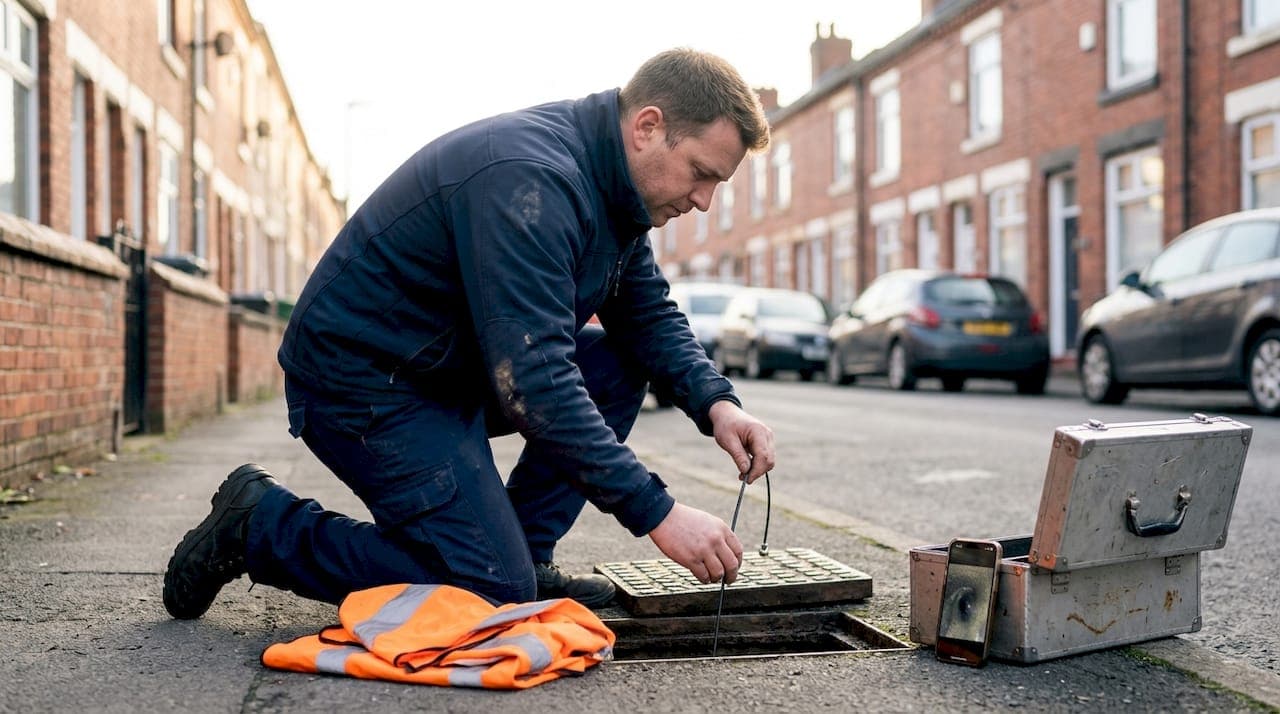
Most homeowners reach for a plunger or a bottle of drain cleaner the moment water starts pooling in the sink. It feels like a quick fix, and sometimes it is. But when the same blockage returns two weeks later, or when a foul smell lingers no matter what you pour down the drain, the problem is almost certainly deeper than any household remedy can reach. Over 300,000 sewer blockages occur across the UK every year, costing up to £200 million in damage and repairs. A professional drainage engineer does not just clear the immediate problem. They find out why it happened and make sure it does not happen again.
Table of Contents
- What is a drainage engineer?
- Typical services and specialist techniques
- Common causes of drain blockages in UK homes
- When to call a drainage engineer: signs, solutions and what to expect
- How expert drainage engineers solve your home's problems
- Frequently asked questions
Key Takeaways
| Point | Details |
|---|---|
| Expert diagnostics prevent recurrence | Drainage engineers use CCTV and advanced techniques to get to the root cause, not just clear blockages. |
| FOG and wipes are main causes | Most UK blockages come from fats, oils, grease and wipes, so prevention and skilled clearing are crucial. |
| No-dig repairs avoid disruption | Modern methods such as CIPP lining let engineers fix pipes without messy excavation. |
| Recognise warning signs early | Slow drains, smells and recurring blockages often mean a bigger problem that needs expert attention. |
What is a drainage engineer?
A drainage engineer is a specialist who focuses on external drains, underground pipework, and sewer systems. This is a crucial distinction that many homeowners miss. A plumber handles the pipes inside your home, the ones connected to your boiler, taps, and radiators. A drainage engineer works on everything from your outside drain covers to the point where your property connects to the public sewer.
The scope of drainage engineer services is broader than most people expect. Engineers are trained to diagnose faults, clear blockages, carry out structural repairs, and respond to emergencies like flooding or fatbergs. They use specialist equipment that simply is not available over the counter.
A drainage engineer is not a reactive trade. The best ones combine emergency response with long-term prevention, identifying the root cause of a problem rather than just treating the symptom.
Core responsibilities include:
- CCTV surveys to inspect pipes internally and identify faults
- High-pressure water jetting to clear stubborn grease and debris
- Rodding for targeted mechanical clearance of localised blockages
- No-dig pipe repairs using CIPP lining for cracked or collapsed sections
- Preventative maintenance programmes to reduce the risk of future failures
- Emergency response to flooding, sewage backups, and fatbergs
These drainage diagnostics capabilities set engineers apart from general tradespeople and explain why calling the right specialist matters so much.
Typical services and specialist techniques
Understanding the tools a drainage engineer uses helps you ask the right questions and know what to expect when one arrives at your property.
CCTV drain surveys are often the starting point for any complex or recurring issue. A small camera is fed through the drain to produce a live video feed of the pipe interior. Engineers can spot cracks, root intrusion, grease buildup, and misaligned joints without digging a single hole. This is the foundation of accurate drain survey process work.
Rodding involves feeding a flexible rod into the drain to physically break up or dislodge a blockage. It is fast and effective for localised obstructions, particularly solid items that have become lodged in the pipe. It does not, however, clean the pipe walls.
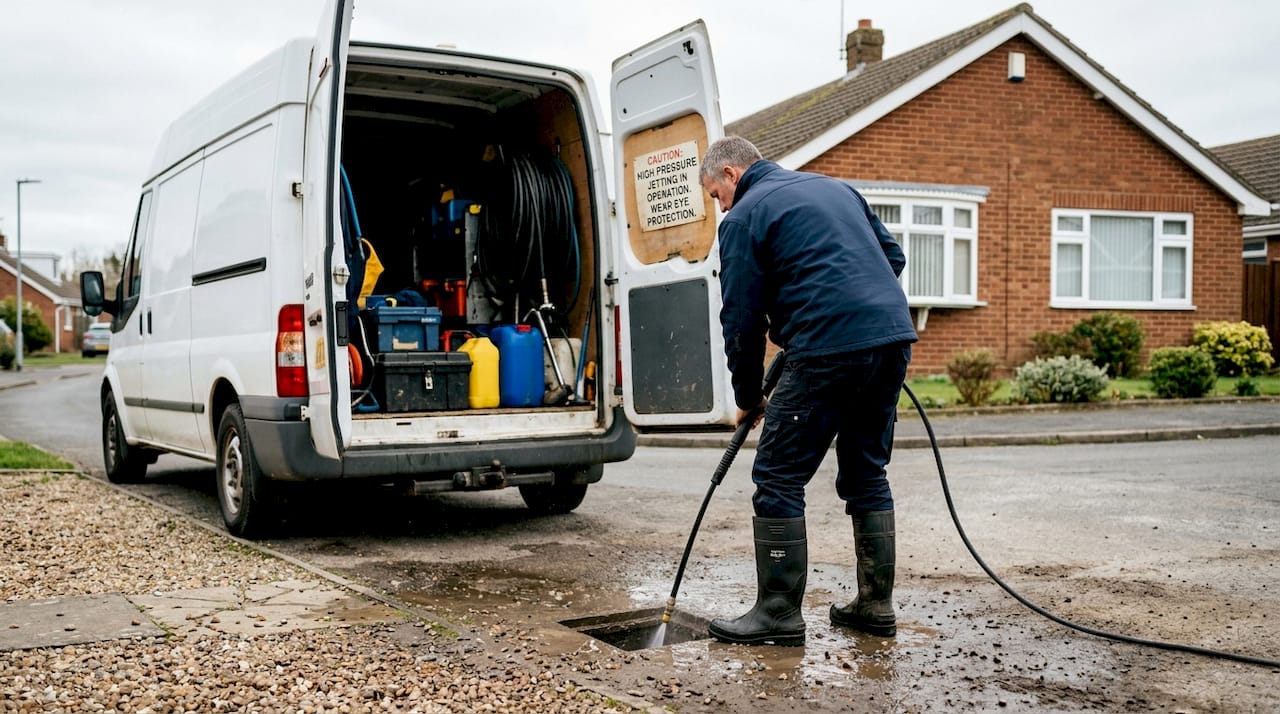
High-pressure water jetting is a more thorough approach. Water is blasted through the pipe at high pressure, stripping grease, scale, and debris from the walls and flushing it downstream. It is the preferred method for drain repairs involving heavy grease accumulation or widespread buildup.
| Technique | Best use case | Disruption level |
|---|---|---|
| Rodding | Localised, solid blockages | Very low |
| Water jetting | Grease, scale, widespread buildup | Low |
| CCTV survey | Diagnosis before or after clearing | None |
| CIPP lining | Cracked or collapsed pipe sections | Minimal |
| Jet vacuuming | Removing loose debris and silt | Low |
CIPP lining (cured-in-place pipe lining) deserves special mention. Rather than excavating a damaged pipe, engineers insert a resin-coated liner that hardens inside the existing pipe, effectively creating a new pipe within the old one. According to UK drain blockages statistics, the scale of the UK's drainage problem makes no-dig solutions increasingly important for cost-effective, low-disruption repairs.
Pro Tip: If your drain blocks more than once in a six-month period, do not just book another clearance. Request a CCTV survey first. Repeated blockages almost always point to a structural issue or a persistent buildup that jetting alone will not permanently resolve.
Common causes of drain blockages in UK homes
Knowing what causes blockages helps you prevent them, and it also helps you understand why professional intervention is sometimes unavoidable.
Fats, oils, and grease (FOG) are the single biggest culprit, responsible for 37.5% of blockages in UK drains. When hot cooking fat is poured down the sink, it cools and solidifies inside the pipe, gradually narrowing the channel until flow stops entirely. Wipes, including those labelled "flushable," account for a further 33.3% of blockages. They do not break down in water the way toilet paper does.
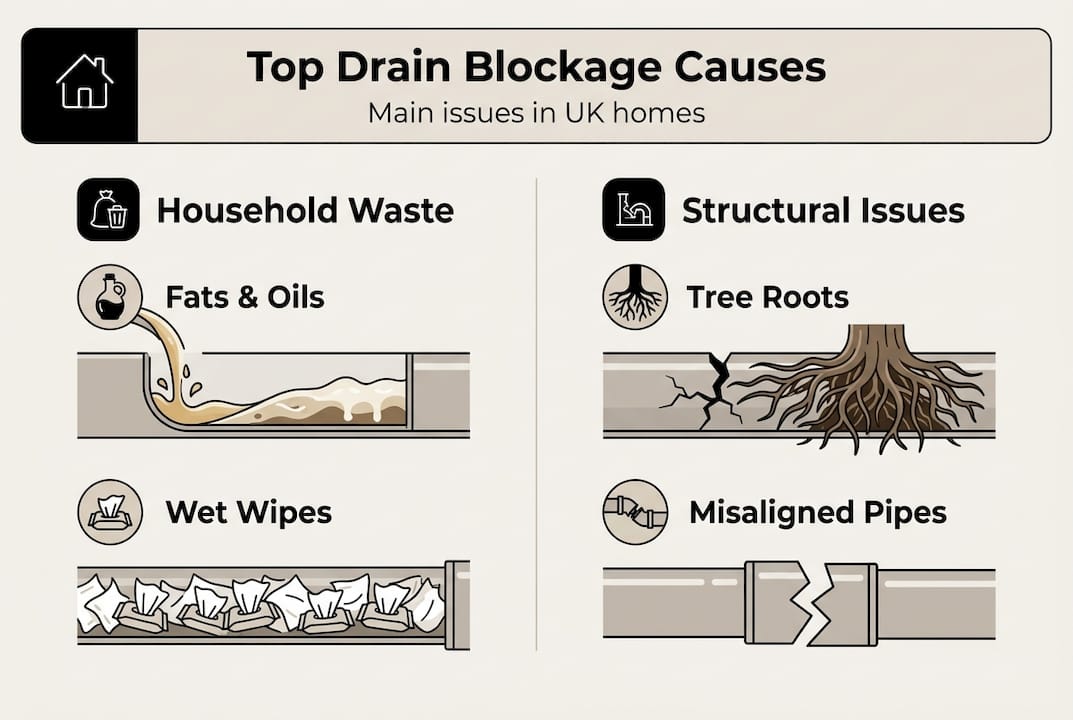
Beyond what people put down their drains, the condition of the pipes themselves plays a major role. Misaligned pipes account for 12.5% of blockages, and tree roots are responsible for 8.3%. Both of these causes are invisible from the surface and impossible to diagnose without a CCTV survey.
The most common blockage causes in UK homes:
- Fats, oils, and grease poured down kitchen sinks
- Wet wipes and sanitary products flushed down toilets
- Hair and soap scum accumulating in bathroom drains
- Misaligned or collapsed pipe sections
- Tree root intrusion into older clay or concrete pipes
- Silt and debris buildup in outdoor drains
Stat to know: The UK spends up to £200 million every year dealing with sewer blockages. Most of them are preventable.
For practical guidance on protecting your drains day to day, the drainage tips on our blog cover everything from kitchen habits to seasonal maintenance. If you are already dealing with a blockage, our drain unblocking services are available for fast, professional resolution.
When to call a drainage engineer: signs, solutions and what to expect
Some drainage problems are obvious. Others creep up slowly until they become impossible to ignore. Knowing the warning signs means you can act before a minor issue becomes a major repair.
Warning signs that warrant a professional call:
- Water draining slowly from sinks, baths, or showers
- Gurgling sounds coming from drains or toilets after use
- Persistent foul smells from drains inside or outside the property
- Sewage or dirty water backing up into fixtures
- Wet patches or sunken ground near drain runs in the garden
- The same drain blocking repeatedly despite previous clearance
When an engineer arrives, the process typically follows a clear sequence. First, they assess the situation visually and ask about the history of the problem. Then, if the issue is not immediately obvious, they carry out a CCTV inspection to identify the exact cause and location. Once the diagnosis is confirmed, they select the appropriate clearing or repair method, whether that is jetting, rodding, or a no-dig repair.
Repeated blockages often indicate deeper problems like pipe misalignment or root intrusion, which require a full survey rather than reactive clearing alone. This is where DIY attempts fall short. A bottle of drain cleaner might shift a soft grease blockage temporarily, but it will not straighten a misaligned pipe or remove a tree root.
For urgent situations, our emergency drain repairs service provides rapid response when you cannot afford to wait. For recurring issues in your area, our blocked drains solutions team can carry out a full investigation and lasting repair.
Pro Tip: When booking an engineer for a recurring blockage, always ask for a written report alongside the CCTV footage. A good report will identify the root cause, recommend a permanent fix, and give you documentation if the issue ever becomes a dispute with a neighbour or your local water authority.
"Plumbers handle internal pipework. Drainage engineers handle everything external, from your drain covers to the public sewer connection. Getting the right specialist in from the start saves time, money, and repeat call-outs."
How expert drainage engineers solve your home's problems
If anything in this article sounds familiar, whether it is a slow-draining sink, a recurring blockage, or a smell you cannot trace, it is worth speaking to a specialist rather than waiting for the problem to escalate.

At 777 Drains, our engineers combine rapid response with proper diagnostics. We do not just clear the blockage and leave. We use CCTV surveys and targeted techniques to find the real cause, carry out lasting repairs, and help you avoid the same problem recurring. Our professional drain services cover everything from emergency call-outs to planned maintenance, and our drain survey specialists are equipped to handle even the most complex underground faults. Booking early, before a small issue becomes a structural failure, is always the smarter and more cost-effective choice.
Frequently asked questions
What makes drainage engineers different from plumbers?
Drainage engineers focus on external drains, underground pipes, and sewer systems, while plumbers handle internal household water and waste lines. Calling the wrong trade can mean delays and additional costs.
How quickly can a drainage engineer respond to emergencies?
Many drainage engineers offer 24-hour call-out for flooding and major blockages. Emergency response to events like sewage backups or fatbergs is a core part of the service.
Are CCTV drain surveys always needed before clearing blockages?
Not always for a straightforward first-time blockage, but for recurring or complex issues, a CCTV survey ensures the real cause is identified and the same problem does not return within weeks.
What are the main culprits for blocked drains in UK homes?
FOG accounts for 37.5% of UK blockages, with wipes at 33.3%, misaligned pipes at 12.5%, and tree roots at 8.3%. Most blockages are preventable with better habits and routine maintenance.
Can drainage engineers repair pipes without excavation?
Yes. CIPP lining allows engineers to repair cracked or leaking pipes from the inside, with no digging required and minimal disruption to your property or garden.