
TL;DR:
- Drain jetting uses high-pressure water to quickly and permanently clear blockages.
- It cleans pipe walls better and is safer than chemical treatments or manual rodding.
- Professional jetting helps prevent future drain issues and is cost-effective with regular maintenance.
A blocked drain doesn't always mean ripping up your garden or paying for expensive excavation work. Many homeowners resign themselves to repeated chemical treatments or manual rodding, not realising there's a faster, cleaner, and more permanent solution available. Drain jetting uses controlled high-pressure water to blast through blockages, clean pipe walls, and restore full flow — often within a couple of hours. This guide explains exactly what drain jetting is, how it works, what causes the blockages it treats, and when you should call in a professional rather than reaching for the plunger.
Table of Contents
- What is drain jetting?
- How does drain jetting work?
- Main causes of blocked drains and how jetting helps
- When to use drain jetting and what to expect
- Our perspective: Why most homeowners underuse drain jetting
- How 777 Drains can help with fast, professional drain jetting
- Frequently asked questions
Key Takeaways
| Point | Details |
|---|---|
| What it is | Drain jetting uses high-pressure water to clear and clean blocked household pipes quickly and efficiently. |
| When to use it | Call for drain jetting if you notice persistent slow draining, bad smells, or repeated blockages. |
| Advantages | It is faster, less invasive, and more thorough than most DIY or chemical methods. |
| Professional care | Always use qualified specialists for jetting, especially for old or complex drainage systems. |
What is drain jetting?
Drain jetting, sometimes called high-pressure water jetting, is a professional method of clearing blocked or partially blocked drains using a powerful, directed stream of water. Unlike manual rodding, which physically pushes debris further along the pipe, or chemical treatments, which dissolve only certain types of blockage, jetting scours the inside of the pipe clean. The technique has been used in commercial and municipal drainage for decades and has become increasingly available to domestic customers as equipment has become more compact and accessible.
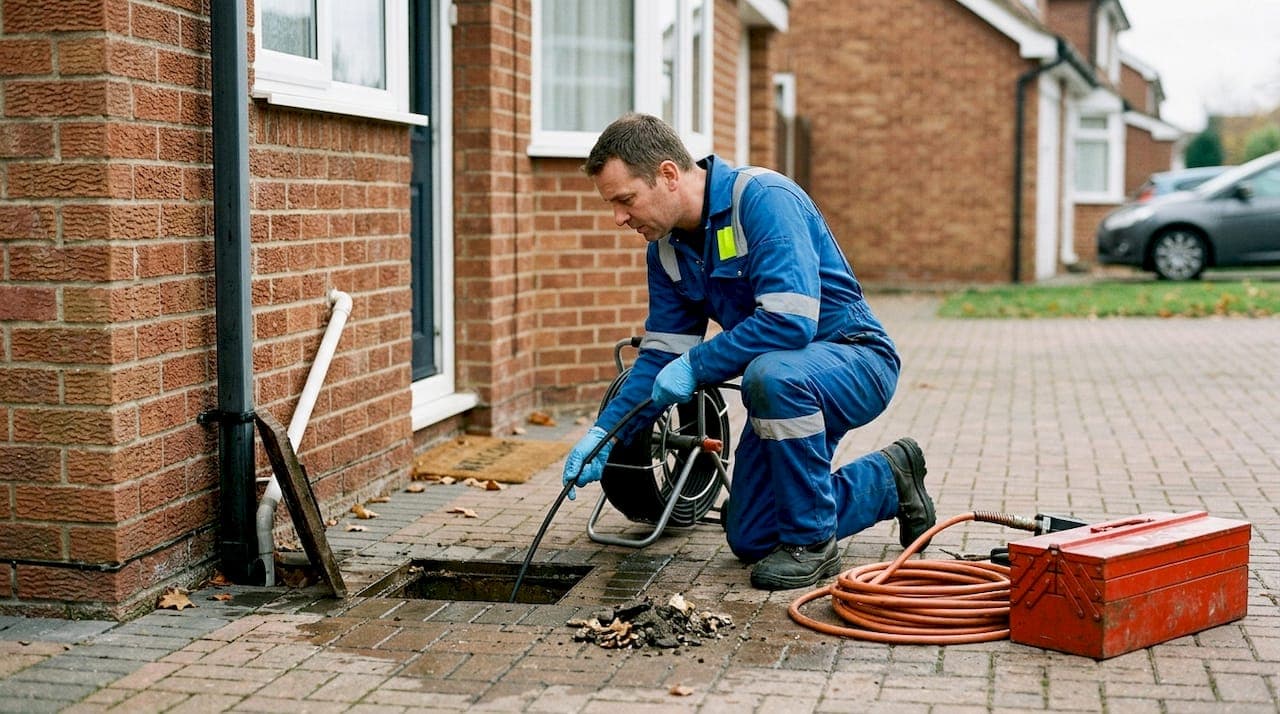
At its core, the drainage jetting process involves feeding a flexible hose fitted with a specialist nozzle into the drain. Water is pumped through at pressures typically ranging from 1,500 to 4,000 PSI (pounds per square inch), depending on the pipe size, material, and severity of the blockage. As the WRAS guide to drain jetting confirms, drain jetting is a professional method using high-pressure water to clear pipes, and it requires proper equipment and training to be carried out safely.
How drain jetting compares to other methods:
| Method | Removes grease build-up | Clears root ingress | Cleans pipe walls | Risk of pipe damage |
|---|---|---|---|---|
| Drain jetting | Yes | Yes (partial) | Yes | Low (if done correctly) |
| Manual rodding | Partial | No | No | Medium |
| Chemical treatments | Partial | No | No | Low to medium |
Some homeowners worry that high-pressure water might crack or loosen older pipework. In practice, professionals assess the pipe condition before beginning and adjust the pressure accordingly. Modern jetting equipment gives engineers precise control, making it far less likely to cause damage than forcing a metal rod through a stubborn blockage.
- Cuts through grease and fat deposits that coat pipe walls over time
- Breaks up compacted debris, silt, and scale
- Flushes dislodged material out of the system completely
- Leaves pipes significantly cleaner than chemical or mechanical alternatives
Pro Tip: If your drain has been slow for several weeks rather than suddenly blocked, jetting is often more effective than rodding because it addresses the gradual build-up on pipe walls, not just the central plug of debris.
How does drain jetting work?
With a clear understanding of what drain jetting is, here's how the process usually takes place in UK homes.
A trained engineer arrives with a van-mounted or portable unit containing a high-capacity water tank, a motorised pump, and reels of specialist jetting hose. Personal protective equipment is always worn, and the site is assessed before any jetting begins. According to water jetting safety guidance from the Health and Safety Executive, specialist equipment is used by trained professionals to jet water at controlled pressures — this is not a job for improvised DIY approaches.
A typical drain jetting appointment follows these steps:
- Initial assessment: The engineer inspects the drain access point, checks for visible blockages, and determines whether a CCTV inspection is needed first.
- Equipment set-up: The jetting hose is connected to the pump unit and the correct nozzle is selected based on pipe diameter and blockage type.
- Jetting begins: The hose is fed into the drain and water is pumped at the correct pressure. Rear-facing jets on the nozzle propel it further into the pipe while simultaneously cleaning the walls.
- Debris clearance: Dislodged fat, silt, and debris is flushed downstream into the main sewer or collected at the access point.
- Post-jetting check: Flow is tested and, if required, a CCTV camera is passed through to confirm the pipe is clear.
- Clean-up: The access area is left clean, with no mess left behind.
Most domestic jobs take between one and two hours. The equipment is noisy during operation, similar in volume to a pressure washer, so it's worth letting neighbours know if the access point is near a shared boundary.
"The difference between a properly jetted drain and a rodded one is like the difference between cleaning your oven with a scrub brush versus a steam cleaner. One shifts the problem; the other eliminates it."
For urgent situations, rapid response jetting is available, and you can also find practical guidance in our emergency drain cleaning solutions resource.
Pro Tip: Ask your engineer to carry out a quick CCTV check after jetting if you've had recurring blockages. This confirms the cause has been fully addressed and can identify any structural issues in the pipe that jetting alone won't fix.
Main causes of blocked drains and how jetting helps
Having covered how jetting is performed, it's crucial to understand why drains get blocked and how jetting is particularly effective.
The most common culprits in UK households are not mysterious or unusual. Fat, oil, grease, wipes, and roots are consistently the top causes of household drain blockages in the UK, and they each respond differently to clearing methods.
Fat and grease from cooking congeal on pipe walls as they cool. Over months, this layer thickens and narrows the internal diameter of the pipe until flow is reduced to a trickle. Manual rodding creates a hole through the plug but leaves the fatty coating intact, meaning the pipe blocks again within weeks. Jetting strips that coating from the pipe wall entirely.
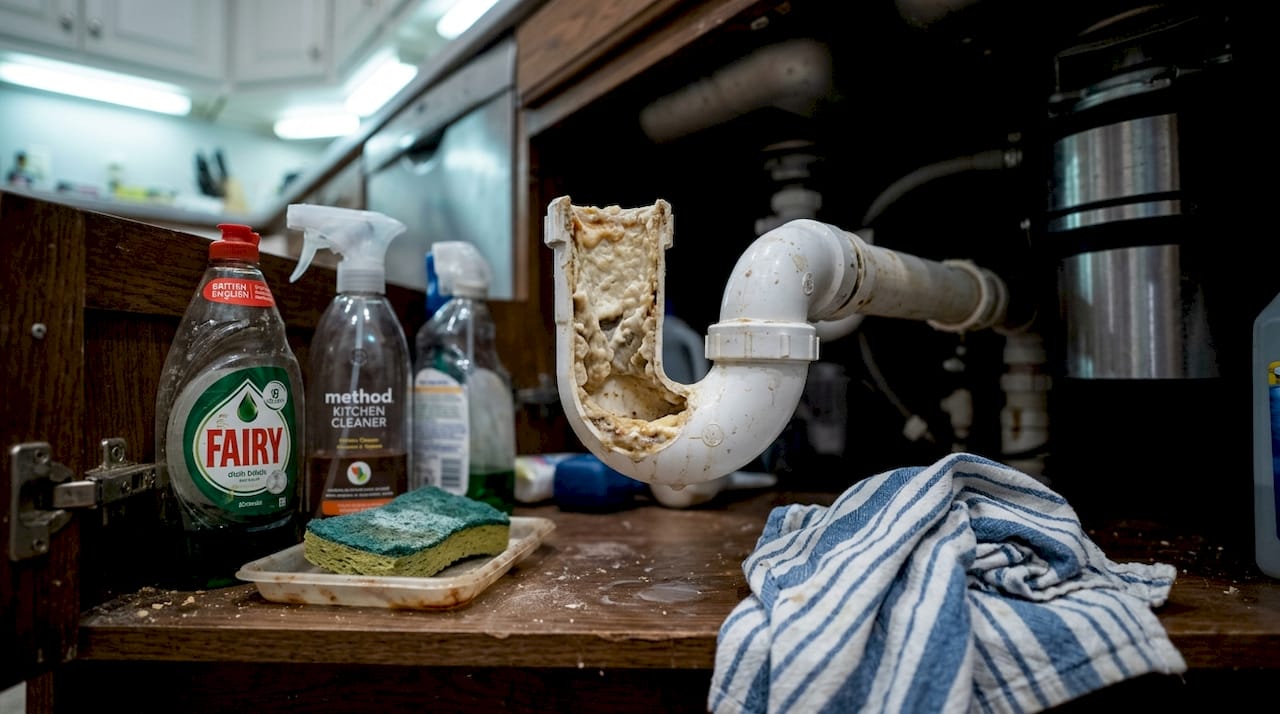
Wet wipes, even those labelled "flushable," do not break down in water the way toilet paper does. They snag on rough pipe joints, catch other debris, and form solid mats. Jetting breaks these apart and flushes the fragments through. Similarly, hair accumulates in bathroom drains, binding with soap scum into dense, gel-like masses that resist chemical treatments but are no match for a directed jet.
How jetting compares for specific blockage types:
| Blockage type | Jetting effectiveness | Chemical effectiveness | Rodding effectiveness |
|---|---|---|---|
| Fat and grease | Excellent | Moderate | Poor |
| Wet wipes and rags | Excellent | None | Moderate |
| Hair and soap scum | Excellent | Moderate | Moderate |
| Tree root ingress | Good (partial) | None | None |
| Scale and mineral build-up | Good | Moderate | Poor |
Tree roots are a particular issue in older UK properties where clay pipes have cracked or joined poorly. Roots enter through these gaps in search of moisture and nutrients, eventually filling the pipe. Jetting cuts back root growth and restores flow, though a structural repair is typically needed long-term.
Simple prevention habits that reduce blockage risk:
- Scrape plates into the bin before washing up
- Never pour cooking fat down the sink, even diluted with hot water
- Use a shower hair catcher and clean it weekly
- Only flush the three Ps: pee, paper, and poo
- Pour a kettle of hot (not boiling) water down kitchen drains monthly
For ongoing drain maintenance advice and practical tips between professional visits, our blog is a useful resource.
When to use drain jetting and what to expect
Knowing what causes blockages, let's explore when you should choose drain jetting and what to expect from a service visit.
Not every slow drain needs a professional response immediately, but there are clear warning signs that jetting is the right call. Persistent slow draining, gurgling sounds, and recurring smells signal the need for professional intervention, especially when these symptoms return after you've already tried home remedies.
Signs you need professional drain jetting:
- Water drains slowly in multiple fixtures simultaneously
- Gurgling noises from toilets or sinks when other appliances run
- Unpleasant odours rising from drains, particularly in the evening
- Drain has blocked more than twice in the past six months
- Water backs up into the bath or shower when the toilet is flushed
If you recognise any of these, consider booking professional drain unblocking sooner rather than later. Ignoring these signs of a blocked drain often leads to more serious pipe damage or sewage backing up inside the home.
What to expect during a jetting appointment:
- A qualified engineer arrives and assesses drain access points
- You're given a clear explanation of the proposed approach and any costs
- Jetting is carried out with minimal disruption to your household
- The engineer tests flow and confirms the blockage has cleared
- Aftercare advice is provided to help prevent a repeat
In terms of cost, most domestic drain jetting jobs in the UK fall between £100 and £250, depending on the severity of the blockage, location, and access. This is significantly less than the cost of repeated chemical treatments over the same period, and far below the bill for excavation if a pipe becomes damaged through neglect.
One important caveat: very old clay or lead pipes may not withstand standard jetting pressures. A reputable engineer will identify this during the assessment and recommend a lower-pressure approach or an alternative method to avoid causing damage.
Pro Tip: Schedule a preventative jetting service every 12 to 18 months for kitchen drains, even if they seem to be flowing fine. You'll be surprised how much grease accumulates without any visible symptoms until a full blockage occurs.
Our perspective: Why most homeowners underuse drain jetting
With the practical details covered, let's reflect on why some homeowners wait too long to consider jetting — and what they miss out on.
In our experience, two things stop homeowners from calling sooner: the assumption that jetting is expensive, and the belief that it's only for serious emergencies. Both are genuinely unhelpful myths. Most domestic jetting jobs cost less than a restaurant meal for two, and the best time to jet a drain is before it blocks completely, not after sewage has backed up into the kitchen.
The homeowners who benefit most from jetting are the ones who treat it as routine maintenance, not crisis management. A drain that's jetted annually rarely causes emergencies. One that's only attended to when it overflows tends to develop structural problems that cost far more to fix. We've seen pipes that could have been saved with a timely jet end up needing full replacement because grease build-up was left for years.
Our expert insight on unblocking reinforces a simple truth: prevention costs less than cure, every single time. The shift from reactive to proactive drain maintenance is one of the best financial decisions a homeowner can make.
How 777 Drains can help with fast, professional drain jetting
If you're dealing with a blocked drain right now, or you want to get ahead of problems before they start, 777 Drains is here to help.

We provide rapid-response drain jetting across the UK, with transparent pricing and no hidden fees. Our experienced engineers carry full equipment to every job and can often attend the same day. Whether you need a one-off clearance, a routine maintenance visit, or a full CCTV drain survey to identify the root cause of recurring issues, we've got it covered. Explore our full range of drainage services or visit 777 Drains to book a call-out or request a quote. Fast, reliable, and built around minimal disruption.
Frequently asked questions
Is drain jetting safe for old pipes?
Drain jetting is generally safe when carried out by a trained professional, as jetting pressure can be adjusted to suit delicate or older pipework without causing damage.
How long does a typical drain jetting appointment take?
Most home jetting jobs are completed within one to two hours, though duration depends on the blockage severity and how easily the drain can be accessed.
Can I do drain jetting myself with hired equipment?
It's strongly recommended to use a professional, as specialist training and safety controls are required to operate jetting equipment safely and avoid pipe damage or personal injury.
Does jetting prevent future blockages?
Yes. Jetting strips the pipe walls clean rather than just clearing a central plug, meaning repeat blockages are far less likely when paired with sensible maintenance habits.
How much does drain jetting cost in the UK?
Most domestic jobs cost between £100 and £250, though actual cost varies depending on your location, the type of blockage, and how accessible the drain is.