
TL;DR:
- Drain failures are mainly caused by grease buildup, non-flushable objects, and structural faults.
- Signs include slow drains, foul smells, bubbling sounds, and garden wet patches.
- Regular professional inspections and maintenance help prevent costly drain damage.
Most homeowners in the South-East of England blame heavy rain when their drains back up. It feels logical. But the truth is that weather is rarely the villain. The real causes are hiding in plain sight, buried in everyday habits and years of overlooked maintenance. Blocked drains, collapsed pipes, and foul smells are almost always preventable once you understand what actually drives them. This guide walks you through the genuine causes of drainage failure, the warning signs you should never ignore, and the practical steps that genuinely work to keep your drains flowing freely.
Table of Contents
- The hidden causes of drainage failure
- Spotting the warning signs of a failing drain
- How weather and environment affect your drainage
- Preventative maintenance: What works and what doesn't
- Why the old advice on drainage isn't enough anymore
- Prevent drainage failures with expert support
- Frequently asked questions
Key Takeaways
| Point | Details |
|---|---|
| Main causes addressable | Most drainage failures are preventable with simple changes in household habits. |
| Early signs matter | Spotting issues early, such as slow drainage or bad smells, significantly reduces repair costs. |
| Environment impacts | Weather and local factors do affect drainage but rarely act alone. |
| Prevention is key | Consistent maintenance and professional inspections are more effective than quick fixes. |
The hidden causes of drainage failure
Most people picture a dramatic storm when they think of drainage failure. In reality, the damage is usually done long before the rain arrives. The accumulation of fats, oils, and grease is a primary cause of blockages in residential pipes. Every time you rinse a greasy pan or pour cooking oil down the sink, a thin layer coats the inside of your pipes. Over months and years, those layers build up into a solid, stubborn mass that water cannot pass through.
Non-flushable items cause just as much damage. Wet wipes, cotton buds, and sanitary products are routinely flushed despite being labelled as disposable. They do not break down in water. Instead, they snag on rough pipe joints and form the scaffolding for larger blockages.
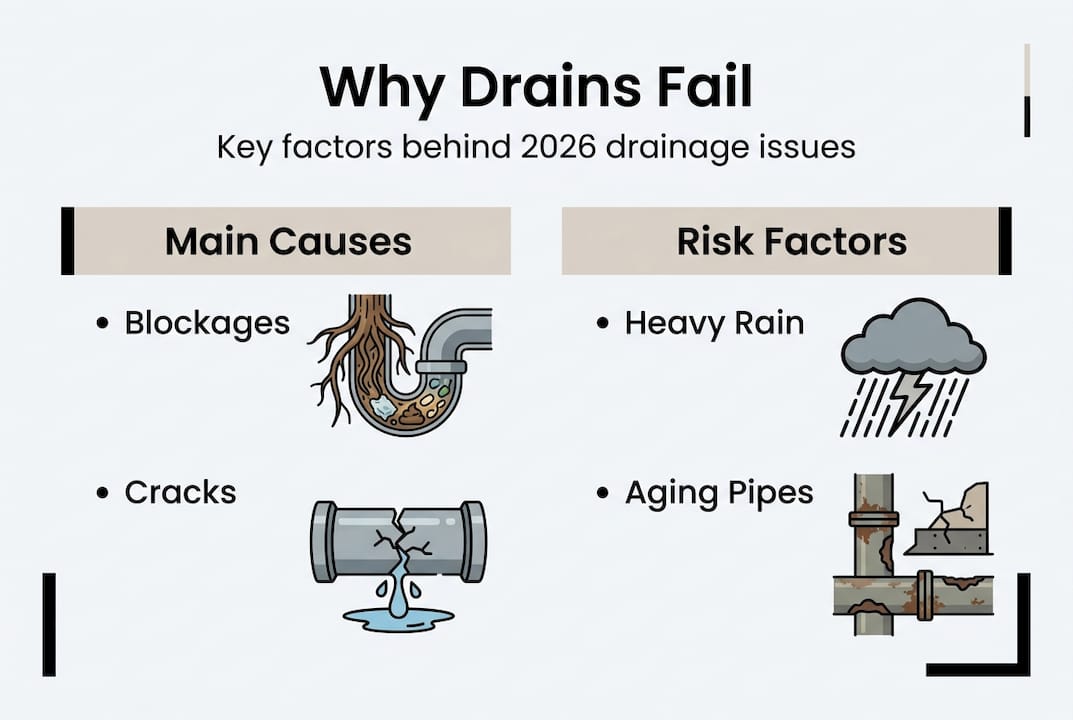
Structural faults are the other major culprit. Older properties across Surrey, Kent, and Essex often have clay or cast-iron pipes that have been in the ground for decades. These crack, shift, and collapse under the weight of soil movement and tree root intrusion. Roots are particularly destructive because they seek out moisture and grow directly into pipe joints, widening cracks as they expand.
| Cause | Typical impact | How quickly it develops |
|---|---|---|
| Fats, oils, and grease | Gradual blockage | Months to years |
| Non-flushable items | Sudden blockage | Days to weeks |
| Root intrusion | Pipe damage and blockage | Years |
| Pipe collapse | Total failure | Sudden or gradual |
| Soil movement | Misaligned joints | Years |
Weather does play a role, but it is almost always a trigger rather than the root cause. A heavy downpour overwhelms a drain that was already compromised. A healthy, well-maintained system handles rainfall without any trouble.
Common signs that structural issues may already be present:
- Persistent gurgling sounds after flushing
- Drains that clear slowly even after cleaning
- Recurring blockages in the same location
- Unexplained wet patches in the garden
Pro Tip: Booking a CCTV drain survey every few years gives you a clear picture of what is happening inside your pipes before a small crack becomes a costly collapse. It is far cheaper than an emergency repair.
If you are unsure about the condition of your pipes, exploring the full range of drainage services available to you is a sensible first step.
Spotting the warning signs of a failing drain
Understanding why drains fail sets up the importance of recognising the signs before disaster strikes. The good news is that drainage problems rarely appear without warning. The frustrating part is that the early signs are easy to dismiss.
Slow draining water and foul smells commonly indicate partial blockages that are already restricting flow. If your bathroom basin takes noticeably longer to empty than it used to, that is not just a minor inconvenience. It is your drainage system telling you something is wrong.
Here are the key warning signs to watch for:
- Slow drainage in sinks, baths, or showers
- Bubbling or gurgling sounds from plug holes or toilets after flushing
- Foul smells coming from drains, particularly sulphurous or sewage-like odours
- Localised flooding in the garden or near the property
- Unusually green or lush patches of grass, which can indicate a leaking drain fertilising the soil beneath
- Soggy or waterlogged lawn areas that do not dry out after rain
Smells deserve special attention. A faint odour might seem minor, but a persistent sewage smell often means waste is sitting in a partially blocked pipe rather than moving through the system. Left alone, that partial blockage becomes a full one.
"A single slow-draining sink, ignored for a few weeks, can escalate into a full blockage that requires emergency clearance. The cost difference between early intervention and emergency call-out is significant."
Surface signs in the garden are particularly easy to overlook. Homeowners often attribute soggy patches to rainfall or poor soil. But if the wet area keeps returning in the same spot regardless of weather, a leaking or cracked drain below ground is a likely cause. You can find further drainage advice on spotting these subtle signs before they worsen.
The CCWater guidance on leaks and blockages also highlights how early reporting and action protects both your property and the wider water network. Understanding blocked drain warning signs in detail can help you act before a manageable issue becomes a major repair bill.
How weather and environment affect your drainage
Spotting problems is key, but understanding how the environment affects your drains brings even broader clarity. In the South-East of England, the combination of clay-heavy soils, ageing housing stock, and increasingly unpredictable rainfall creates a particularly demanding environment for residential drainage.
Clay soil is common across much of Kent, Surrey, and parts of Essex. It expands when wet and contracts when dry, and this constant movement puts stress on buried pipes. Joints shift, seals crack, and over time, even a well-installed pipe can develop faults simply because the ground around it has moved.
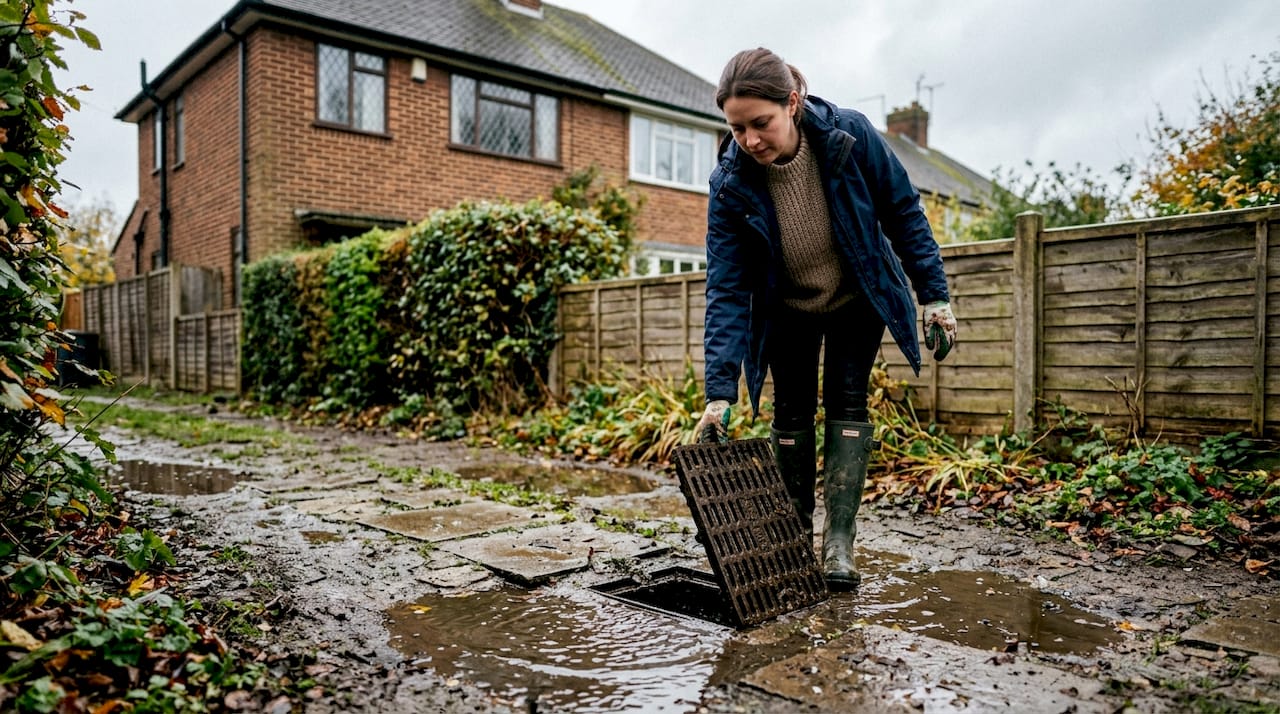
Heavy rainfall overwhelms poorly maintained drains, pushing debris and sediment into pipes that are already partially restricted. But the real damage often comes from the freeze-thaw cycle in winter, which widens existing cracks, and from summer droughts that cause soil to shrink dramatically around pipe joints.
| Weather event | Effect on drains |
|---|---|
| Heavy rainfall | Overwhelms restricted pipes, causes surface flooding |
| Prolonged drought | Soil shrinkage, pipe joint movement |
| Freeze-thaw cycles | Crack widening, pipe fractures |
| Autumn leaf fall | Gutter and surface drain blockages |
Older properties are especially vulnerable. A Victorian terrace in Canterbury or a 1930s semi in Guildford may have original drainage infrastructure that has never been fully inspected. These pipes were not designed for modern water usage volumes or the root systems of mature garden trees.
Three steps to protect your drainage from seasonal weather:
- Clear your gutters before autumn and winter. Blocked gutters overflow onto foundations and saturate the ground around buried pipes, accelerating soil movement.
- Check surface drains before forecast heavy rain. Remove leaves and debris from gully pots and surface drains so water can flow freely rather than pooling.
- Monitor trees close to your property. Roots from willows, poplars, and even large shrubs can travel several metres to find pipe joints. If you have large trees near the house, consider a root survey.
You can find practical tips for maintaining drains through the seasons, and Southern Water's guidance on heavy rain offers additional regional context for South-East homeowners.
Preventative maintenance: What works and what doesn't
Once you understand external factors, the next step is knowing what you can proactively do at home. This is where a lot of homeowners get misled, because the most heavily marketed solutions are often the least effective.
Regular professional inspections are more effective than chemical drain cleaners at preventing failures. That might surprise you, given how many products line the shelves promising to dissolve blockages instantly. The reality is more complicated.
| Maintenance approach | Effectiveness | Risk level |
|---|---|---|
| Professional CCTV inspection | High | None |
| Drain jetting by a professional | High | Low |
| Enzyme-based drain treatments | Moderate | Low |
| Commercial chemical cleaners | Low to moderate | High |
| Boiling water alone | Low | Low |
| DIY drain rods | Variable | Moderate |
Chemical cleaners can shift a soft grease blockage, but they work by generating heat and caustic reactions inside your pipes. Used repeatedly, they degrade plastic pipework and corrode older metal pipes. They also do nothing for structural faults or root intrusion.
Pro Tip: If you have used chemical cleaners more than twice in the same drain within a year, that drain almost certainly has an underlying issue that chemicals cannot fix. A drain camera inspection will show you exactly what you are dealing with.
Myths worth busting:
- "Bleach keeps drains clean." Bleach disinfects but does not dissolve grease or shift debris.
- "Fizzing drain sachets clear blockages." They may mask smells temporarily but rarely clear a real obstruction.
- "If water drains at all, the drain is fine." Partial blockages can sit for months before causing a full stoppage.
When a drain keeps blocking despite home remedies, that is the moment to call in professional drainage help. Persistent issues almost always have a structural or accumulative cause that only a trained engineer with the right equipment can properly diagnose. You can also review Water UK's advice on avoiding blocked pipes for further practical guidance.
Why the old advice on drainage isn't enough anymore
For years, the standard advice has been simple: do not pour grease down the sink, clear your gutters, and call a plumber if something goes wrong. That guidance is not wrong, but it no longer reflects the full picture for homeowners in the South-East.
Urban expansion, home extensions, and loft conversions have significantly increased the volume of water passing through residential drainage systems that were never designed to cope with it. A 1960s drainage layout built for a two-bedroom household is now often serving a four-bedroom home with two bathrooms and a kitchen extension.
At the same time, climate patterns are shifting. The South-East is experiencing more intense rainfall events alongside longer dry spells, and both extremes stress drainage infrastructure in different ways. Soil movement is accelerating in some areas, and tree root intrusion is becoming more common as roots search further for water during droughts.
The homeowners who avoid expensive emergencies are the ones who treat drainage as infrastructure to be maintained, not a system to be ignored until it fails. That means periodic professional inspections, not just reactive cleaning. It means understanding your soil type and the age of your pipes. You will find practical drainage advice that reflects these modern realities rather than the outdated assumptions that still dominate most guidance.
Prevent drainage failures with expert support
Knowing the causes, spotting the signs, and taking preventive steps puts you well ahead of most homeowners. But even the most attentive maintenance cannot replace a professional assessment of what is actually happening inside your pipes.

At 777 Drains, our engineers work across the South-East, providing rapid-response support for blocked drains, structural repairs, and thorough CCTV drain inspections that take the guesswork out of drain health. Whether you have noticed an early warning sign or simply want the reassurance of knowing your drainage is in good shape, our local drainage services are built around minimal disruption and lasting results. Booking is straightforward, and our team can advise you on the right approach from the first call. Explore all our expert drainage help to find the service that fits your situation.
Frequently asked questions
What is the most common reason residential drains fail?
The main cause is the build-up of fats, oils, and non-flushable objects, which restrict water flow and eventually block pipes. The Environment Agency confirms that grease accumulation is a leading driver of sewage blockages across residential properties.
How can I tell if my drains are starting to fail?
Slow drainage, bubbling sounds, unpleasant smells, and wet patches in the garden are all early symptoms of a problem. Thames Water notes that slow draining water and foul smells commonly point to partial blockages already in progress.
Does weather really cause drainage issues in the South-East?
Yes, extreme rainfall can overwhelm poorly maintained systems, but weather alone is rarely the sole cause. The Met Office highlights that heavy rainfall overwhelms drains that are already compromised by debris or structural faults.
Are chemical drain cleaners safe and effective?
Chemical cleaners may clear mild blockages but often damage pipes if overused, making professional inspections a safer and more thorough alternative. UKDN Waterflow's research confirms that regular professional inspections outperform chemical treatments for long-term drain health.