
TL;DR:
- Proper drainage prevents costly damage like flooding, subsidence, and mold inside homes.
- Regular maintenance, inspections, and awareness of early signs can save homeowners significant money.
- Specialized solutions are necessary for challenging soils and tree root intrusions to ensure effective drainage.
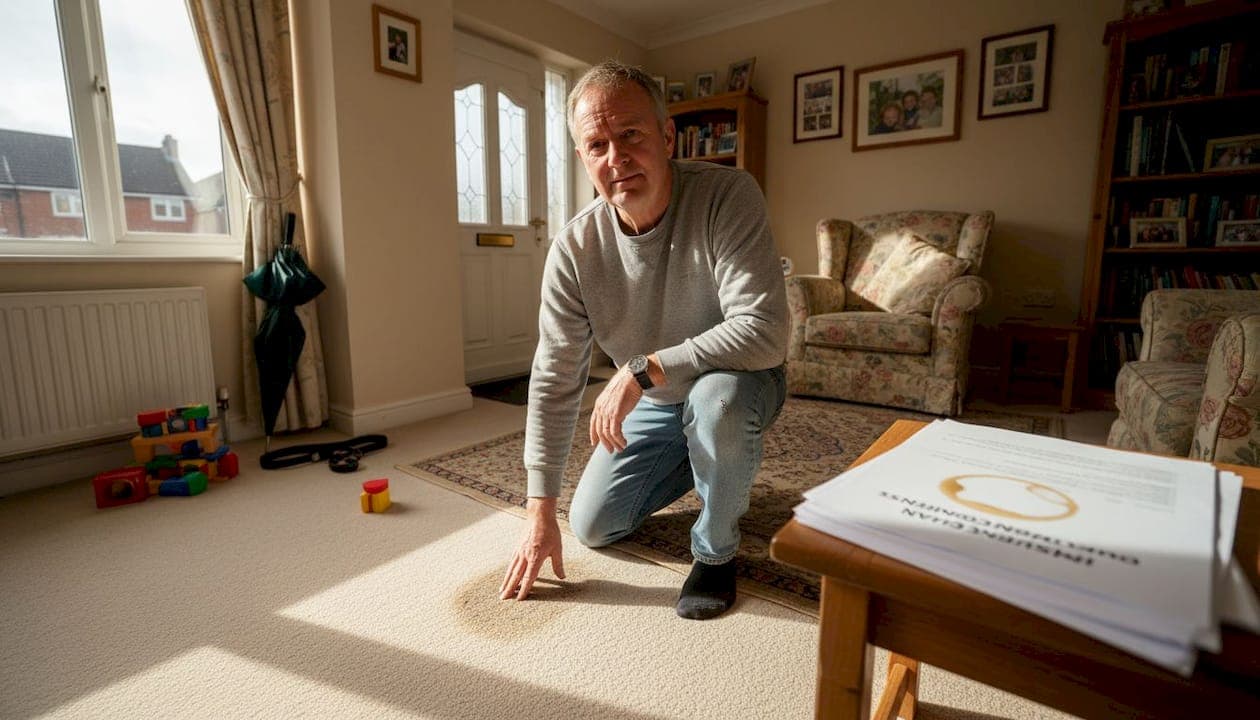
Most homeowners never think about their drains until water is backing up into the kitchen sink or a foul smell is drifting through the hallway. By that point, the damage is often already done. Poor drainage contributes directly to flooding risks that are rising with climate change, and the financial consequences for unprepared homeowners can run into thousands of pounds. This guide will walk you through how drainage actually works in a UK home, what goes wrong and why, and the practical steps you can take right now to protect your property before a small issue becomes a very expensive one.
Table of Contents
- How drainage systems work in UK homes
- The real-world impact of poor drainage
- Edge cases and special drainage scenarios
- Essential drainage maintenance for UK homeowners
- A fresh perspective: what most homeowners get wrong about drainage
- Need help? Professional drainage solutions for peace of mind
- Frequently asked questions
Key Takeaways
| Point | Details |
|---|---|
| Drains protect property | Effective home drainage prevents costly damage, mould, and insurance issues. |
| Regular checks matter | Seasonal maintenance and surveys help you spot and solve problems early. |
| Compliance is essential | Following Building Regulations Part H ensures safety, legality, and peace of mind. |
| Know when to call experts | DIY fixes have limits, so use professionals for deep or recurring problems. |
How drainage systems work in UK homes
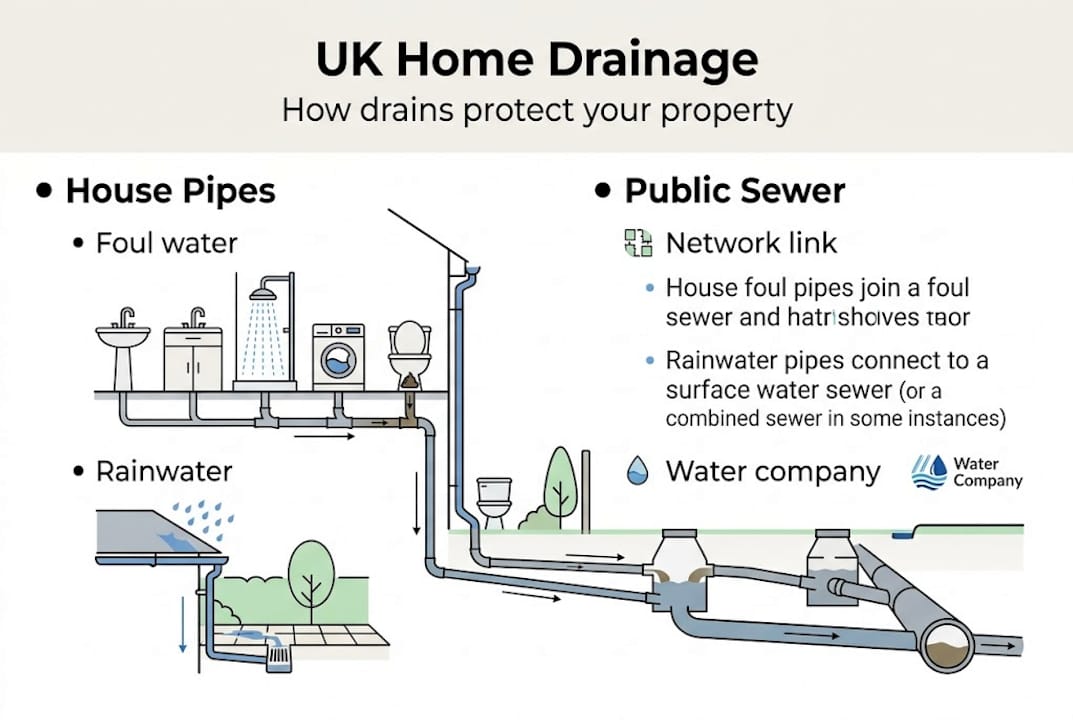
Understanding your home's drainage is not as complicated as it sounds, but it does require knowing the basics. UK homes use two entirely separate drainage systems running side by side. One handles foul water, which is the wastewater from toilets, sinks, baths, and appliances. The other handles surface water, which is rainwater collected from roofs, driveways, and patios. These domestic drainage systems are kept separate to prevent contamination and to comply with environmental standards.
Both systems rely on gravity. Pipes are laid at carefully calculated gradients so that waste flows freely without assistance. Foul drains use 100-110mm pipes at gradients between 1:40 and 1:80, which is the sweet spot for self-cleansing flow. Too steep and solids are left behind as water races ahead. Too shallow and everything slows to a crawl and begins to settle. Inspection chambers are required at every change in direction so that blockages can be accessed and cleared.
"Drainage systems in UK homes manage foul and surface water separately via gravity-fed pipes to prevent flooding, structural damage, health hazards from mould, and to comply with Building Regulations Part H."
Building Regulations Part H is the legal framework governing how drainage must be designed and installed in England and Wales. If you are extending your home, adding a bathroom, or paving over a front garden, Part H compliance is not optional. Ignoring it can invalidate your building insurance and create serious problems when you come to sell.
| System type | What it carries | Typical pipe size | Destination |
|---|---|---|---|
| Foul water | Sewage and wastewater | 100-110mm | Public sewer |
| Surface water | Rainwater and runoff | 75-110mm | Soakaway or watercourse |
The two systems eventually connect to the public sewer network, which is managed by your regional water company. Everything upstream of the public sewer boundary is your responsibility as a homeowner. That is worth remembering.
The real-world impact of poor drainage
With a basic grasp of how home drainage works, it is important to see the practical risks when things go wrong. The consequences are rarely limited to a soggy garden.
Water ingress caused by blocked or collapsed drains can saturate foundations, leading to subsidence. Persistent damp creates the conditions for mould growth inside walls and under floors, which poses genuine health risks and is notoriously difficult to remediate. Property valuations take a significant hit when drainage problems are identified during a survey. Buyers walk away or negotiate hard, and mortgage lenders sometimes refuse to lend entirely.
The wider picture is getting worse. Storm overflows spilled 31.8 times on average per outlet in 2024, and February 2026 brought rainfall at 170% of the long-term average across parts of the UK. When the public sewer network is overwhelmed, the pressure pushes back into private drainage. Homes with poorly maintained or partially blocked drains are the first to flood.
"The cost of reactive drainage repairs is typically three to five times higher than the cost of routine preventive maintenance."
Insurance is another consideration many homeowners overlook. Some household policies exclude flooding caused by a drain that was already in a poor state of repair. If you cannot demonstrate that you have maintained your drainage, a claim can be rejected. Checking your policy wording now costs nothing. Discovering the exclusion after a flood is a very different matter.
| Scenario | Preventive cost | Reactive repair cost |
|---|---|---|
| Blocked drain | £80-£150 jetting | £300-£800 emergency call-out |
| Root intrusion | £200-£400 relining | £1,500-£4,000 excavation |
| Subsidence from leak | £500 survey and repair | £10,000+ structural work |
Exploring your blocked drains solutions before a crisis hits, or understanding your drain unblocking options in advance, puts you in a far stronger position. Household water use data also shows that demand and strain on drainage infrastructure is only increasing, making proactive maintenance even more critical.
Edge cases and special drainage scenarios
Sometimes, drainage problems are not straightforward and require tailored solutions. Certain property types and locations create challenges that a standard rodding kit simply cannot address.
Clay soils are common across large parts of the UK, particularly in the south and midlands. Clay does not drain freely, so surface water has nowhere to go. Clay soils require French drains rather than traditional soakaways, because soakaways rely on the surrounding soil absorbing water. In clay, that absorption never happens. A French drain redirects water laterally to a more suitable outlet. Hard water areas, including much of the south-east, create a separate problem: limescale builds up inside pipes over time, narrowing the bore and reducing flow. Descaling is the solution, and the drain descaling process involves specialist equipment that most homeowners do not have access to.
Tree roots are one of the most common causes of serious pipe damage. Roots seek moisture and will find the tiniest crack in a joint, then expand until the pipe collapses or becomes completely obstructed. This is not always visible from the surface, which is why CCTV drain inspections are so valuable. A camera survey will reveal root intrusion, pipe misalignment, and partial collapses that would otherwise go undetected for years.
"Professional jetting is far superior to rodding for cleaning pipes, as it cleans the pipe walls thoroughly rather than simply pushing a blockage further along."
Pro Tip: If you have large trees within five metres of your drainage runs, a CCTV survey every two to three years is a wise precaution, not an extravagance.
Nature-based solutions such as Sustainable Drainage Systems (SuDS) are increasingly relevant, particularly for homeowners dealing with surface water flooding. Permeable paving, rain gardens, and swales all slow the movement of water and reduce the burden on the drainage network. Some local authorities now require SuDS as part of planning permission for new developments.
- Slow-draining surfaces after rain: possible clay soil issue
- Gurgling sounds from indoor drains: possible partial blockage or venting problem
- Wet patches in the garden away from water features: possible pipe leak
- Recurring blockages in the same location: possible root intrusion or pipe defect
Essential drainage maintenance for UK homeowners
Understanding special cases is only half the solution. Here is how any homeowner can stay ahead of drainage issues with a consistent, practical routine.
- Clear gutters and downpipes every autumn and spring. Blocked gutters overflow against the fascia and walls, causing damp ingress that has nothing to do with underground drainage but everything to do with water management.
- Check gully traps in your garden and driveway for debris. A blocked gully is one of the most common causes of surface water flooding around the home.
- Run water into infrequently used drains every few weeks. Traps dry out and allow sewer gases to enter the property.
- Book a professional drainage service for jetting every two to three years if you have older pipework or heavy household use.
- Commission drain surveys every three to five years. CCTV surveys every 3 to 5 years are the recommended standard for most UK homes, alongside seasonal gutter clearing and avoiding fats, wipes, and grease down drains.
| Item | DIY or professional | Frequency |
|---|---|---|
| Gutter clearing | DIY | Twice yearly |
| Gully trap cleaning | DIY | Quarterly |
| Drain jetting | Professional | Every 2-3 years |
| CCTV survey | Professional | Every 3-5 years |
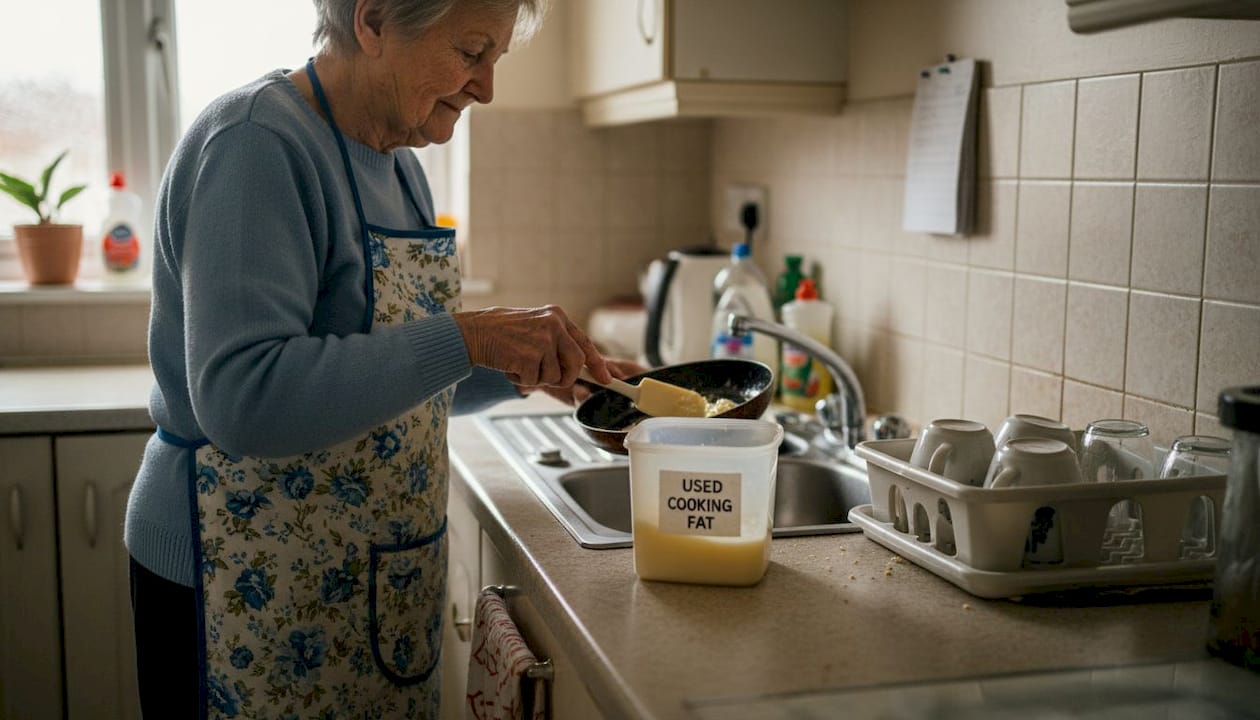
Pro Tip: Never pour cooking fat or oil down the sink. It solidifies inside the pipe and combines with other waste to form fatbergs, which are extremely difficult and expensive to remove. Use a container and dispose of it with your general waste instead.
What you should never put down a drain: wet wipes (even those labelled "flushable"), cotton wool, nappies, sanitary products, paint, solvents, or large quantities of food waste. These are the most common causes of blockages that require emergency call-outs. If you are in the Reading area and need urgent help, repair services in Reading are available. Following maintenance best practices consistently is the single most effective thing you can do to protect your drainage system long-term.
A fresh perspective: what most homeowners get wrong about drainage
Here is the uncomfortable truth: most homeowners treat drainage as invisible infrastructure until it fails spectacularly. The warning signs are almost always there beforehand. A faint smell near a manhole cover. A drain that takes just a little longer to clear than it used to. A patch of lawn that stays wet after dry weather. These are not minor quirks. They are early signals of a system under stress.
The tendency is to ignore them because nothing has gone badly wrong yet. That logic works right up until it does not. What we see repeatedly is that the homeowners who face the largest bills are not those with the oldest pipes or the worst soil conditions. They are the ones who waited. A small investment in a common drainage pitfalls review or a routine survey consistently prevents the kind of damage that costs ten times more to fix.
Drainage is not just pipes. It is structural protection, health protection, and financial protection. Treating it as a critical asset rather than a background utility is the shift in thinking that separates homeowners who manage their properties well from those who are perpetually caught off guard.
Need help? Professional drainage solutions for peace of mind
Knowing what to look for is a strong start, but some drainage issues genuinely require professional eyes and specialist equipment to resolve properly.

At 777 Drains, we offer all-in-one drainage services covering everything from emergency blockage clearance to full pipe repair and replacement. Our engineers use modern diagnostic equipment to find problems quickly and fix them with minimal disruption to your home. If you want to understand exactly what is happening inside your pipes, our detailed drain surveys provide a clear picture with no guesswork. Whether you need urgent help or a scheduled maintenance visit, our local drainage experts are ready to assist across the UK.
Frequently asked questions
Who is responsible for drainage problems within my property boundary?
UK homeowners are responsible for all drainage from their home up to the point where it connects with the public sewer at the property boundary. Beyond that point, your regional water company takes over. Responsibility ends at the boundary, so any blockage or damage inside your boundary is yours to resolve.
How often should domestic drains be professionally inspected?
CCTV surveys every 3 to 5 years are the recommended standard for most UK homes. If you have older pipework, large trees nearby, or a history of recurring blockages, inspecting more frequently is a sensible precaution.
What is the biggest mistake UK homeowners make with drains?
Most people wait until there is an obvious blockage before taking action. Ignoring early warning signs such as slow drainage or odours consistently leads to far larger expenses. Preventive maintenance saves costs compared to emergency repairs every single time.
Are special drainage solutions needed for clay soils?
Yes. Clay soils require French drains rather than traditional soakaways, because clay does not absorb water effectively. A French drain redirects surface water laterally to a more suitable outlet, preventing waterlogging and foundation damage.